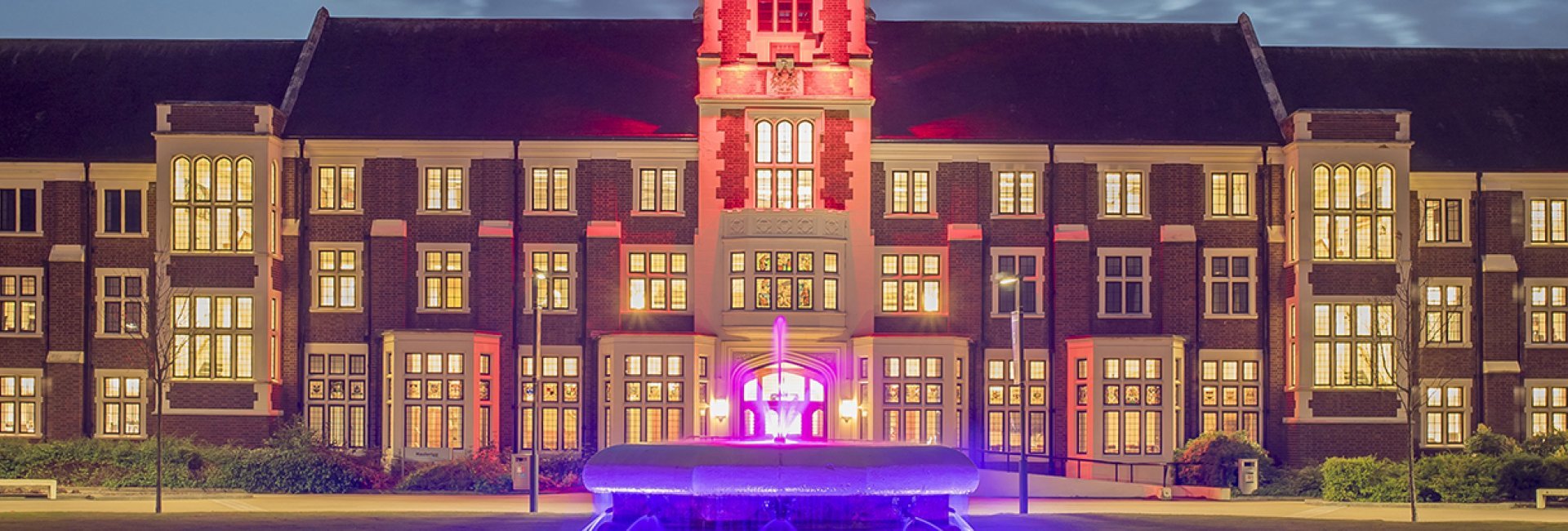
Loughborough University - open day event
19 Jun 2026, 08:00
Loughborough

This prestigious degree enables students to explore and analyse complex problems from three complementary disciplinary perspectives. Politics, Philosophy and Economics (PPE) provides a strong foundation for a wide range of distinguished careers.
PPE is designed for students who want to become effective problem solvers. The programme develops key skills and tools from all three disciplines, including policy analysis, data literacy, cost‑benefit analysis, rational argument, conceptual analysis, social science research methods, textual interpretation and debate. Together, these approaches allow students to understand complex issues, assess alternative solutions and communicate persuasive, well‑reasoned arguments.
The PPE degree is based in the Department of International Relations, Politics and History (IRPH) and is cross‑taught with Loughborough Business School. Students benefit from expertise in political science, political theory, international relations and philosophy, including specialisms with strong practical relevance such as environmental philosophy, feminist philosophy and the ethics of activism.
The course is designed to empower students to shape their own learning. In the second and final years, students can choose to specialise in particular disciplines or continue studying politics, philosophy and economics in equal balance. Module options include those focused on disciplinary intersections, such as political philosophy and political economy. In the final year, students complete an independent dissertation on a topic of their choice.
By studying PPE at Loughborough University, you will:
Study subjects that genuinely interest you, with a wide range of topics, teaching styles and assessment methods that support personal and academic development.
Join a highly ranked university and department, recognised for excellence in teaching, careers provision and sport.
Develop transferable skills valued by employers, including critical thinking, data analysis, communication, research, and independent and group working.
Learn from world‑leading academics who are internationally recognised experts, often teaching at the forefront of current research on major social and political challenges.
Receive strong academic and personal support through Personal Academic Tutors and wider university support services.
Become part of a supportive and inclusive community based in the refurbished Morag Bell building, with shared spaces for students and close access to staff.
Take part in a vibrant programme of events, including talks with MPs, public debates, guest lectures, student‑led activities and the annual School of Social Sciences and Humanities Ball.
Access opportunities for a placement year, year abroad or year in enterprise, leading to additional qualifications such as a Diploma in International Studies or a Diploma of Professional Studies.
For a full list of areas studied, see the 'What You'll Study' section of the course page on our website.
Students will be assessed using a variety of methods, including traditional essays and exams, but also source analysis, reports, political simulation exercises, presentations, portfolios and a final year dissertation on an original research topic of their own choice.
This is the equal consideration deadline. You can still apply after this date, but your application may not receive guaranteed consideration.

Loughborough University has participated in the Teaching Excellence Framework. These ratings were awarded in 2023, for four years.
See why these ratings were awarded
What does this TEF outcome mean?
The following entry points are available for this course:
AAB
T Level in Management and Administration is considered. Distinction overall with B in core component.
Other relevant T Level subjects may be considered on a case-by-case basis.
Pass Access to HE Diploma with 60 credits overall including 45 at Level 3. Please obtain: 30 Level 3 Credits at Distinction, rest at Merit.
GCSE Maths grade 6/B and GCSE English Language grade 6/B
GCSE Maths grade 6
There is no flexibility in this requirement. However, we will consider a grade B in Level 3 Core Maths as a suitable alternative.
GCSE English Language grade 6
If you have achieved grade 5 in GCSE English Language, we can still consider an application if you have:
Grade 6 or above in GCSE English Literature
OR
At least one essay-based subject* at A level
*Business Studies, Classical Civilisation, Economics, English Language/Literature, Geography, Government and Politics, History, Law, Philosophy, Psychology, Religious Studies, Sociology
We may also consider applicants with a contextual indicator who have achieved grade 4 or 5 in GCSE English Language who do not meet the above criteria. Please refer to our Contextual Admissions Policy for further information on the contextual indicators used by the University.
AA, plus Highers at majority B grades
BTEC Level 3 National Diploma: DD plus one A level at Grade A
Preferred BTEC: BTEC Level 3 National Extended Diploma Applied Science, Business, Health and Social Care, IT, Sport.
Other BTEC subjects may be considered when offered in combination with one A level from the following list: Biology, Business, Classical Civilisation, Chemistry, Economics, English Language/Literature, Geography, History, Languages, Law, Maths/Further Maths, Philosophy, Physics, Politics, Psychology, Religious Studies, and Sociology.
We recognise the benefit of the Extended Project in developing independent research and critical thinking skills. We would consider this as evidence of motivation to study a specific subject in more depth, and while we do not generally include it as part of our offer conditions, it may be used to further consider an application upon receipt of final examination results. www.lboro.ac.uk/study/undergraduate/apply/entry-requirements/
35 (6,6,5 HL)
BTEC Level 3 National Extended Diploma : DDD
Preferred BTEC: BTEC Level 3 National Extended Diploma Applied Science, Business, Health and Social Care, IT, Sport.
Other BTEC subjects may be considered when offered in combination with one A level from the following list: Biology, Business, Classical Civilisation, Chemistry, Economics, English Language/Literature, Geography, History, Languages, Law, Maths/Further Maths, Philosophy, Physics, Politics, Psychology, Religious Studies, and Sociology.
We accept a wide range of international qualifications for entry as outlined on our website – please view the individual course typical offers on our website and choose Ireland in the Country/region drop down field for more information.
BTEC Level 3 National Extended Certificate: D plus two A levels at Grades AB
Preferred BTEC: BTEC Level 3 National Extended Diploma Applied Science, Business, Health and Social Care, IT, Sport.
Other BTEC subjects may be considered when offered in combination with one A level from the following list: Biology, Business, Classical Civilisation, Chemistry, Economics, English Language/Literature, Geography, History, Languages, Law, Maths/Further Maths, Philosophy, Physics, Politics, Psychology, Religious Studies, and Sociology.
Applicants taking the Welsh Baccalaureate Advanced Diploma will be asked to achieve the A level requirements for their course as part of their qualification. The Skills Challenge Certificate will be accepted alongside two A levels as long as individual course entry and subject requirements are met. www.lboro.ac.uk/study/undergraduate/apply/entry-requirements/
Loughborough accepts a wide range of qualifications for entry as outlined on our website www.lboro.ac.uk/study/undergraduate/getting-started/applying/entrance-requirements/. This information details the general requirements and should be read in conjunction with the information given for each course.
Loughborough also accepts a wide range of international qualifications for entry as outlined on our website www.lboro.ac.uk/international/applicants/country/
Loughborough uses contextual data in the admissions process to provide insights into the context in which your academic qualifications have been achieved. This may influence the typical offers outlined in the information given for each course. www.lboro.ac.uk/study/undergraduate/getting-started/applying/contextual-data/ https://www.lboro.ac.uk/study/undergraduate/apply/entry-requirements/
We consider contextual information as part of the assessment of an application to provide us with further insight into your achievements. This may lead to reduced offers, up to two grades lower than the typical offer requirements, as well as additional consideration when your results are received. For further information about Contextual Admissions at Loughborough including our Access Loughborough Contextual Offer please visit our website.
This section shows the range of grades that students who received offers were previously accepted on to this course with (learn more).
It is designed to support your research but does not guarantee whether you will or won't get a place.
Admissions teams consider various factors, including interviews, subject requirements, and entrance tests. Check all course entry requirements for eligibility.
We are unable to show previous accepted grades for this course. This could be because the course is new, it's a postgraduate course, there isn't enough historical data, or the provider has opted out of sharing their entry grades data for this course - learn more.
| Location | Fee | Year |
|---|---|---|
| EU & International | TBC | |
| England, Scotland, Wales & Northern Ireland | £10050 |
Tuition fee status depends on a number of criteria and varies according to where in the UK you will study. For further guidance on the criteria for home or overseas tuition fees, please refer to the UKCISA website.
The fees stated above are for the 2027/28 academic year; international fees are still to be approved. We will update this information as soon as it is available. Fees are reviewed annually and are likely to increase to take into account inflationary pressures.
While the cost of your tuition covers lots of things, it doesn’t cover everything. For instance this course doesn’t cover the cost of any stationery, printing, books or re-assessments which you might need.
UK tuition fees align with the applicable fee caps set by the UK government, and as such they are subject to changes made to the agreed cap in a specific year.
Email:admissions@lboro.ac.uk
Phone:01509 274 403
Loughborough
LE11 3TU
At Loughborough University