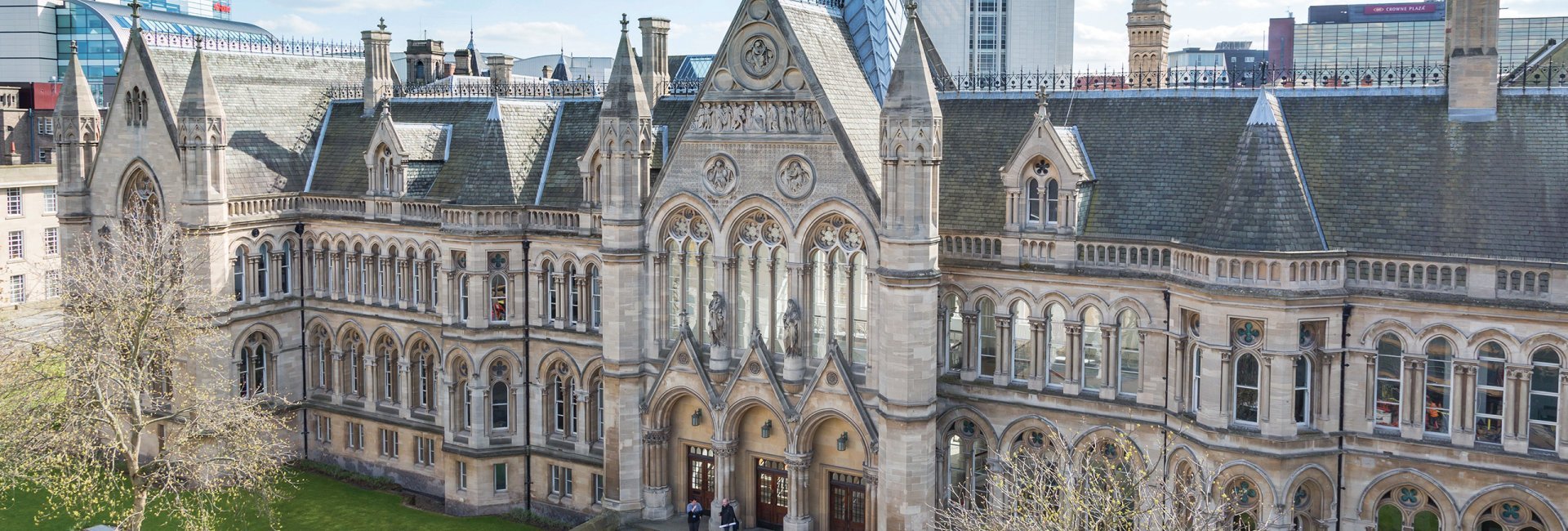
Nottingham Trent University - 27 June Open Day
27 Jun 2026, 08:00
Nottingham

Are you ready to take the next step towards making a positive impact on children’s lives? Our unique BA (Hons) Childhood and Society degree will equip you with the knowledge and skills needed to support your aspirations. Focusing on childhood from conception to 14 years, this degree is for those planning a rewarding future in a diverse range of areas including education, social care and health care.
You’ll gain a broad view of childhood; child development and how different societies consider childhood. In addition to studying the core childhood themes, you’ll focus on modules related to society.
Give real-life context to your studies and become even more attractive to future employers with our enhanced placement opportunities. You’ll be well prepared for the world of work with our extensive network of 600 partnerships in a wide range of settings. There’s even the opportunity to take your placement overseas.
This course is delivered through the Nottingham Institute of Education.
Why study Childhood and Society at NTU?
You will have the opportunity to undertake placement and work-like experiences through over 600 partnerships with local schools, colleges and organisations.
Take your placement overseas with optional opportunities from teaching in Sri Lanka, to working with young children in a Ghanian orphanages.
Study an interdisciplinary course ideal for students from a range of different backgrounds looking to pursue a career in a range of sectors.
Receive a guaranteed interview for a PGCE Primary teacher training course at NTU on completing your undergraduate degree (terms and conditions apply).
Placement
You will have the opportunity to undertake a placement in Year One and Year Two. Placements can be in a wide range of educational settings, locally, regionally, nationally or even internationally. Placement options include working with disadvantaged children at a local authority provision; educational and support provision in a hospital context; supporting the provision of activities for children / young people with a range of disabilities and additional needs at a local charity or experiencing an outdoor Kindergarten in Denmark.
Putting your studies into practice helps you to understand your subject and its application in real-life. Placement opportunities support you both professionally and personally by ensuring you develop the key skills that will make you more employable at the end of your studies.
This course will allow you to develop a solid understanding of childhood in the contexts of families, peers and society at both a national and international level. As you develop and broaden your understanding of childhood, you will undertake research enquiries and placement opportunities, enabling you to reflect critically on perspectives of childhood.
The broad range of modules available within this course gives opportunities for you to develop both personally as a learner and professionally by incorporating the world of work and global perspectives into your studies. Key transferable skills are embedded in the modules and are reinforced whilst working alongside experienced practitioners.
Here’s a breakdown of the modules you’ll be studying across your course:
Year One modules include:
Academic and Professional Focus
Environments for Learning
Understanding Children’s Holistic Development
Contemporary Childhoods
Children and Society
Year Two modules include:
Enabling Environments for Children and Communities
Researching Contemporary Childhoods
Social Constructions of Childhood
Global Childhoods
Societal Dimensions of Childhood - Part One
Societal Dimensions of Childhood - Part Two
Final Year modules include:
Research Dissertation
Leaderful Practice
Sustainable Childhoods
Digital Childhoods
Policy for Children and Families
Assessment will be on your coursework and there are no formal exams during the course. Academic support and guidance are provided through our tutor support structure. Regular tutor feedback is given on your work in order to help you improve, develop your skills and begin to plan for your future career.
This is the equal consideration deadline. You can still apply after this date, but your application may not receive guaranteed consideration.

Nottingham Trent University has participated in the Teaching Excellence Framework. These ratings were awarded in 2023, for four years.
See why these ratings were awarded
What does this TEF outcome mean?
The following entry points are available for this course:
104 - 112 UCAS Tariff points from up to four qualifications (two of which must be A-level equivalent)
We will consider T Levels for entry to this course, either as stand-alone qualifications or in conjunction with other Level 3 qualifications, in accordance with the specified course tariff points.
104 - 112 UCAS Tariff points from up to four qualifications (two of which must be A-level equivalent)
Pass your Access course with 60 credits overall with a minimum of 45 credits at level 3
104 - 112 UCAS Tariff points from your BTEC Level 3 National Diploma and up to two other qualifications.
DMM from a BTEC Extended Diploma
104 - 112 UCAS Tariff points from your BTEC Level 3 National Extended Certificate and up to three other qualifications (one of which must be A-Level equivalent).
A lower offer may be made based on a range of factors, including your background (such as where you live and the school or college you attended), your experiences and individual circumstances (you may have been in care, for example). This is called a contextual offer and we get data from UCAS to make these decisions. NTU offers a student experience like no other, and this approach helps us to find students who have the potential to succeed here, but may have faced barriers that can make it more difficult to access university.
We also consider equivalent qualifications and combinations. Please contact Nottingham Trent University Admissions team for further information.
NTU makes contextual offers for this course to give everyone a fair chance to access their chosen degree.
Contextual offers are lower than our standard entry criteria or may be an unconditional offer for courses that require a portfolio. We also take individual circumstances into account when we receive results and may accept grades lower than our published criteria.
We use a range of data from UCAS to make our offers and more information on our approach is available at the link below.
This section shows the range of grades that students who received offers were previously accepted on to this course with (learn more).
It is designed to support your research but does not guarantee whether you will or won't get a place.
Admissions teams consider various factors, including interviews, subject requirements, and entrance tests. Check all course entry requirements for eligibility.
We are unable to show previous accepted grades for this course. This could be because the course is new, it's a postgraduate course, there isn't enough historical data, or the provider has opted out of sharing their entry grades data for this course - learn more.
No fee information has been provided for this course
Tuition fee status depends on a number of criteria and varies according to where in the UK you will study. For further guidance on the criteria for home or overseas tuition fees, please refer to the UKCISA website.
Tuition fees for 2027 entry are yet to be confirmed. As a guide and to enable you to plan your finances, the fees for Home undergraduate students for 2026 are £9790 .The current expectation is that the University may increase this for future and subsequent years of study in line with inflation and as specified by the Government.
Phone:+44(0)115 848 4200
Phone:+44 (0) 115 848 4200
50 Shakespeare Street
Nottingham
NG1 4FQ
At Nottingham Trent University