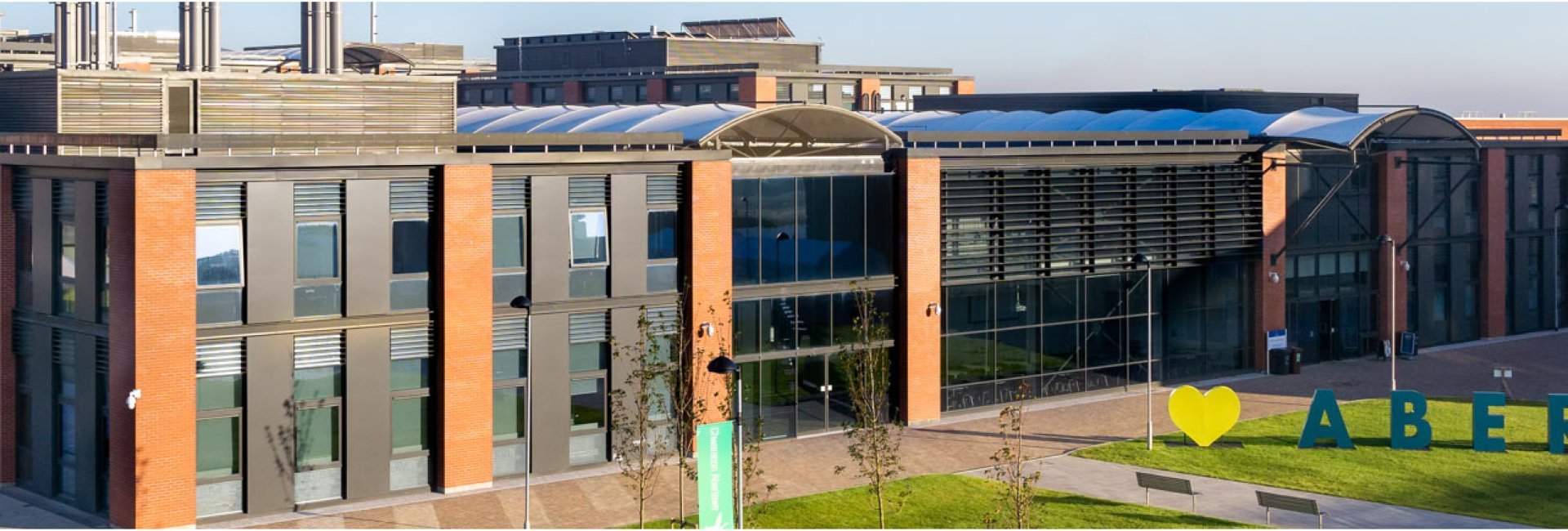
Undergraduate On-Campus Open Day at Swansea University - Singleton Park Campus and Bay Campus - 13 June 2026
13 Jun 2026, 07:30
Swansea

On this BSc programme, you will learn about the chemical processes that occur within living organisms and study how cells work at the sub-cellular and molecular levels.
You’ll gain an in-depth understanding of the biochemical function of living organisms, particularly animals and humans.
You will develop excellent project management skills and learn how to design experiments and plan work programmes.
You will benefit from access to the state-of-the-art research facilities at the Medical School, including bioanalytical equipment such as HPLC, gas chromatography, mass spectrometry, DNA and protein analytical equipment, computer-based image analysers for molecular or cellular studies.
This degree is a Pathway to Medicine programme. Provided you meet the minimum entry requirements for Graduate Entry Medicine. You have successfully completed this Pathway, you will be guaranteed an interview for our flagship Medicine (Graduate Entry) MBBCh course.
In Year 1, you will typically study areas including: Genetics, Genomics and Evolution, Biochemistry, Energy and Metabolism: The Reactions of Life, Microbiology, Human Physiology, Organic Chemistry: an Introduction for Life Sciences, Chemical Analysis: from Composition to Structure Elucidation, an Introduction for Life Sciences.
In Year 2, you will typically study areas including: Metabolic Regulation: Enzymes & Signal Transduction, Techniques in Molecular Biology, Clinical Biochemistry & Physiology, Advanced Metabolism, Skills for Researchers, Biostatistics, Human Immunology, Introduction to Neuroscience, Human and Medical Genetics, Infectious Diseases and Microbial Molecular Genetics.
In Year 3, you will typically study areas including: Membranes and Energy Transduction, Practical Quantitative Research, Nucleic Acids: Components, Metabolism and Modification, Animal Development, Membrane Trafficking, Advanced Biostatistics, Human Immunopathology, Tissue Engineering and Regenerative Medicine, Advanced Research Topics in Biochemistry, Bioinformatics: From Sequence to Function.
A wide variety of assessment methods is used in addition to the more traditional written exams, essays, lab reports and project dissertations. Students may undertake coursework such as: online web assignments, online problem solving, poster production, talks, slide presentations, screencasts, and literature reviews. Some of these tasks develop groupwork skills.
The following entry points are available for this course:
Discover what it's like to study Medical Biochemistry at Swansea University: insights on the course, making friends, personal statement tips, uni prep, and recommended books, podcasts, and videos.

Chemistry essential, plus at least one other science (usually Biology)
Scottish Advanced Higher at equivalent grade is accepted in place of any A-Level (A2).
At least 24 Distinctions and 15 Merits in Level 3 Credits including Distinctions in ALL Biology and Chemistry modules.
We recognise the EPQ as an excellent indicator of success.
If you are predicted a grade B or above in the EPQ, you will receive an offer with a one
grade reduction, to include your EPQ with a grade B.
To include Higher Level grades in Chemistry, plus at least one other science (usually Biology)
Swansea University accepts the Advanced Skills Baccalaureate Wales as fully equivalent to x1 A-Level.
Distinction (D) in a relevant BTEC Subsidiary Diploma (6 units) is accepted in place of one A-Level (A2) (other than Chemistry or Biology).
5 Higher subjects at min. H3 inc. Biology = H2 & Chemistry = H2
Welsh Baccalaureate at equivalent grade is accepted in place of one A-Level (A2) (other than Chemistry or Biology).
GCSEs: English Grade C, Maths Grade C
For applicants whose first language is not English we require a minimum overall IELTS score of 6.0 (or equivalent) and no less than 5.5 in each component.https://www.swansea.ac.uk/admissions/english-language-requirements/
UK applicants who meet course requirements are guaranteed a conditional offer. We assess applications on individual merit. We consider making reduced offers, eg. to Care Leavers or students with extenuating circumstances. We encourage you to disclose any relevant circumstances.
The Advanced Skills Baccalaureate Wales is considered as equivalent to one full A-Level and students can take x2 A-levels alongside this. EPQ students predicted Grade B or above will receive a one-grade offer reduction.
This section shows the range of grades that students who received offers were previously accepted on to this course with (learn more).
It is designed to support your research but does not guarantee whether you will or won't get a place.
Admissions teams consider various factors, including interviews, subject requirements, and entrance tests. Check all course entry requirements for eligibility.
We are unable to show previous accepted grades for this course. This could be because the course is new, it's a postgraduate course, there isn't enough historical data, or the provider has opted out of sharing their entry grades data for this course - learn more.
No fee information has been provided for this course
Tuition fee status depends on a number of criteria and varies according to where in the UK you will study. For further guidance on the criteria for home or overseas tuition fees, please refer to the UKCISA website.
Please refer to the Swansea course pages for tuition fee information.
Email:study@swansea.ac.uk
Phone:01792 295111
Email:study@swansea.ac.uk
Phone:01792 295111
Fax: 01792 295110
Singleton Park
Swansea
SA2 8PP
At Swansea University