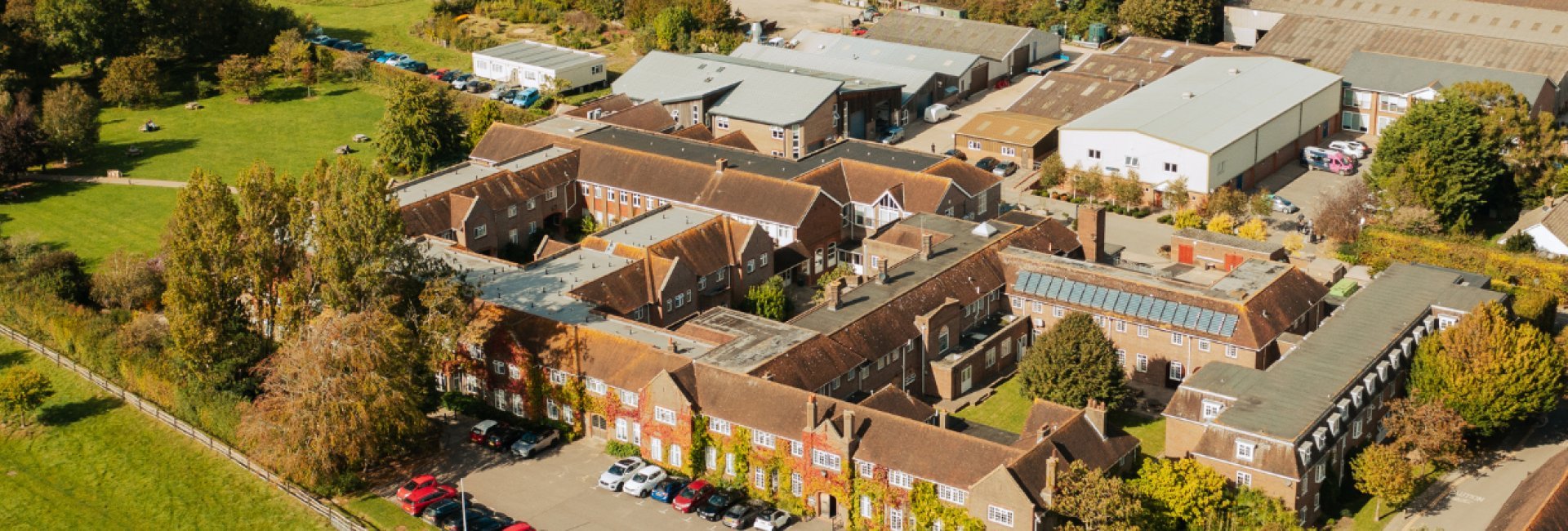
University Courses Open Morning
13 Jun 2026, 08:00
Nr Lewes

The FdSc Applied Animal Behaviour and Conservation is an ideal foundation degree for students interested in animal behaviour, zoology, wildlife conservation, and animal management careers. Whether you are fascinated by the anatomy and physiology of animals or passionate about the role that zoos and conservation organisations play in protecting wildlife, this programme provides the practical experience and academic knowledge needed to pursue a career working with animals.
This foundation degree develops applied knowledge and understanding across key subject areas that underpin zoology and conservation science, including animal biology, animal health and welfare, animal behaviour, conservation science, and animal husbandry. The curriculum is designed to prepare students for employment in the animal sector or progression to a related honours degree.
Applied learning and hands-on experience
A defining feature of this degree is its strong emphasis on applied learning and work-based experience. You will develop a wide range of vocational and employability skills valued by employers across the animal industry.
You will study and work directly with an extensive collection of companion, farm, and exotic animal species at Plumpton College’s Animal Management Centre, gaining practical experience in animal care, management, and welfare. The course also provides hands-on training in key field and laboratory techniques in zoology, including modern methods used in wildlife monitoring and conservation research.
Career progression and industry relevance
This Applied Animal Behaviour and Conservation foundation degree supports progression into a broad range of animal-related careers, including roles within the zoo industry, animal rehoming and rescue organisations, and conservation bodies. Graduates are well prepared for further study or employment within the animal behaviour and conservation sectors.
Top reasons to study animal behaviour and conservation at Plumpton College -
Develop an applied understanding of zoology, including the core principles underpinning animal behaviour and conservation
Enhance your practical animal husbandry skills, working with over 200 animal species at Plumpton College’s Animal Management Centre and 800-hectare College Estate
Study in the South Downs National Park, with direct learning opportunities focused on ecology, habitats, and wildlife conservation within a protected UK landscape
Expand your professional network and industry awareness through external visits and educational trips, including the opportunity to take part in a two‑week international study tour to a wildlife reserve in South Africa
Build employability through a 150‑hour industry work placement, supported by Plumpton College’s extensive network of animal industry partners
Learn from a highly experienced teaching team with specialist expertise across the animal sciences, supported by strong professional links with local, regional, and national animal organisations.
This course offers the following subject options:
You will study a structured suite of modules across two years of the FdSc Applied Animal Behaviour and Conservation, building core scientific knowledge, applied skills, and industry experience in animal behaviour, animal welfare, and conservation science.
Animal Health and Welfare – principles of animal health, welfare assessment, and best‑practice care across species
Animal Behaviour and Communication – foundations of animal behaviour, communication, and behavioural observation
Comparative Animal Anatomy and Physiology – structure and function of major animal body systems
Introduction to Business Management – basic business and management skills relevant to animal industries
Management of Animal Collections – practical management of animal collections, including husbandry and biosecurity
Principles of Animal Biology – core biological concepts underpinning animal science and zoology
Principles of Conservation Science – key concepts in conservation biology and wildlife protection
Study and Research Skills – academic writing, research skills, and professional development
Applied Sampling Methods in Conservation – field and data collection techniques used in conservation science
Applied Animal Behaviour Management – applying behavioural science to animal management and welfare contexts
Animal Welfare and Ethics – ethical frameworks, legislation, and welfare decision‑making
Independent Enquiry – supervised research project in animal behaviour or conservation
Research Methods and Statistics – research design, data analysis, and interpretation
Work Placement – industry placement developing practical skills and employability
You will also select optional modules to tailor your studies to your career interests:
Behavioural Ecology – relationships between behaviour, environment, and survival
Wildlife Conservation – applied conservation strategies and global case studies
Animal Learning and Training – learning theory and practical training techniques
Availability of elective modules may vary depending on cohort size.
Assessment on the FdSc Applied Animal Behaviour and Conservation uses a varied range of methods across modules to reflect both academic study and applied, industry‑relevant skills. Depending on the modules studied, assessment methods may include essays, practical portfolios, scientific reports, poster presentations, and field logbooks, allowing students to demonstrate knowledge, analysis, and practical competence in animal behaviour, welfare, and conservation science.
All modules include formative (practice) assessment activities, which are not formally graded. These are designed to support learning by helping students develop confidence, subject knowledge, and assessment skills ahead of summative assessment submission, in line with University of Greenwich assessment principles.
The following entry points are available for this course:
We consider a wide range of Level 3 equivalent qualifications in science related subjects, such as Biology, Chemistry, Physics, and Animal Science.
Level 3 qualifications considered include T levels, A levels, Extended Diplomas (Level 3), Irish Highers, Scottish Highers, and Access to HE qualifications.
In addition to the above Level 3 qualifications, candidates must have a minimum of five GCSEs at grade 4 (or above), including English Language (grade 4 or above) and Mathematics (grade 4 or above).
Candidates must demonstrate proficiency in Biology at both GCSE (Level 2) and Level 3. Applicants studying a Level 3 Extended Diploma in an animal related pathway must achieve a Pass or above in the Biology units.
Applicants must be a minimum of 18 years old at the point of course commencement.
Applicants whose first language is not English must have achieved IELTS 6.5 overall, with a minimum of 6.0 in Writing.
A period of relevant practical experience is also highly recommended.
Applicants may be required to attend an interview as part of the selection process.
Meeting the minimum entry requirements does not guarantee an offer. Applications are assessed on an individual basis, considering academic suitability, relevant experience, fitness to study, and professional aptitude.
Students with English as a second language will be required to have gained IELTS level 6.5 overall with level 6.0 in writing.
This section shows the range of grades that students who received offers were previously accepted on to this course with (learn more).
It is designed to support your research but does not guarantee whether you will or won't get a place.
Admissions teams consider various factors, including interviews, subject requirements, and entrance tests. Check all course entry requirements for eligibility.
We are unable to show previous accepted grades for this course. This could be because the course is new, it's a postgraduate course, there isn't enough historical data, or the provider has opted out of sharing their entry grades data for this course - learn more.
| Location | Fee | Year |
|---|---|---|
| England, Scotland, Wales, Northern Ireland & Republic of Ireland | £9275 |
Tuition fee status depends on a number of criteria and varies according to where in the UK you will study. For further guidance on the criteria for home or overseas tuition fees, please refer to the UKCISA website.
Tuition fee status depends on a number of criteria and varies according to where in the UK you will study. For further guidance on the criteria for home or overseas tuition fees, please refer to the UKCISA website.
We are unable to sponsor internationals students at present. If you are from the EU including the Republic of Ireland, please get in touch with our Admissions Team.
Plumpton College offers a Higher Education Hardship Support fund to eligible students. Please enquire with the Bursary Team
Email:heoffice@plumpton.ac.uk
Phone:01273 890454
Email:Will.Hughes@plumpton.ac.uk
Email:enquiries@plumpton.ac.uk
Phone:01273 890454
Ditchling Road
Lewes
BN7 3AE
At Plumpton College