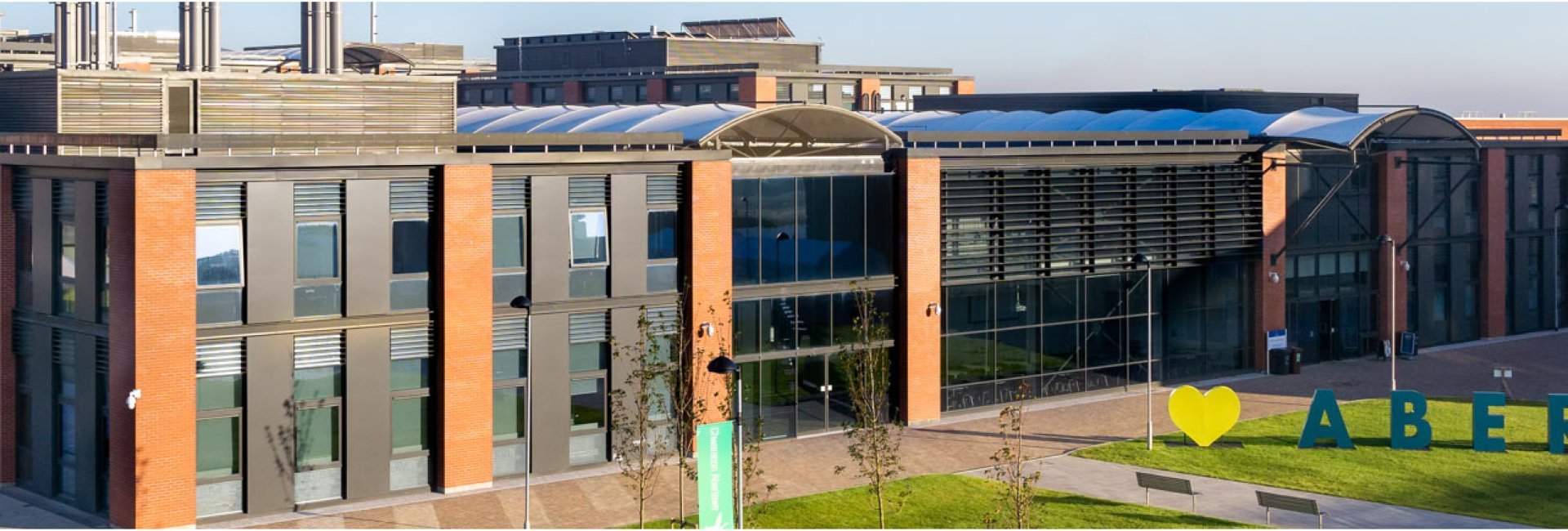
Undergraduate On-Campus Open Day at Swansea University - Singleton Park Campus and Bay Campus - 13 June 2026
13 Jun 2026, 07:30
Swansea

Our BSc Physical Geography degree gives you a broad, research informed understanding of the Earth’s physical systems, bringing together themes from physical geography, environmental science and geology. You will explore topics such as climate change, natural hazards, pollution, coastal management, wildfires and geophysics, developing a strong foundation in the science behind environmental change.
Throughout your degree, you will gain essential skills in writing, data analysis, statistics and critical thinking, alongside hands on laboratory and field based training. The programme offers the flexibility to tailor your module choices to your interests, allowing you to specialise in areas of physical and environmental geography that align with your academic strengths and future career ambitions.
This degree is designed to help you understand and address global environmental challenges while building the practical and analytical skills needed to succeed in a range of geography related careers.
Teaching is delivered by research active staff who bring their expertise and enthusiasm into the classroom. Your learning will take place through a blend of lectures, practical lab and IT sessions, tutorials and hands on fieldwork. Assessments reflect the varied skills needed in modern geographical careers, including stakeholder analyses, presentations, podcasts, lab reports, field notebooks and more traditional academic work.
At Swansea, you will study Physical Geography in one of the UK’s most varied natural and urban environments, with a curriculum designed to ensure fieldwork is central to your learning.
You will follow a flexible degree path that you can tailor to your interests by choosing from a wide mix of human and physical geography modules.
Fieldwork is a major part of your experience. Our location gives you access to exceptional local and regional environments, from the Gower National Landscape to the coastal and geological features of Brecon Beacons and Pembrokeshire. These regular, low‑cost field classes allow you to apply your learning in real‑world settings from the very start of your degree.
You will also have opportunities to take part in residential field courses in your second and third year, exploring geographical themes in a range of international locations. Depending on your interests, you might investigate geological and natural hazards in Iceland or Vancouver, study the climate emergency and sea‑level rise in the Isles of Scilly, explore urban, historical and Indigenous geographies in Vancouver, or examine memory and identity in Berlin. Students interested in Earth processes can also join our specialist Volcanology field trip to the Eifel region in Germany.
Together, these experiences help you build practical skills, confidence and a deeper understanding of the world, preparing you for your future career and giving you unforgettable opportunities to learn beyond the classroom.
In Year 1, you will typically study areas including: Introduction to Earth Systems; Field Methods - Physical and Environmental Geography; Introduction to Geology; Geographical skills; Natural Hazards and Society; Sustainability and the Climate Emergency.
In Year 2, you will typically study areas including: Methods and Data Analysis (Physical Geography and Environmental Sciences); Introduction to Geographic Information Systems; Dissertation Preparation Skills; Geographical Fieldwork skills: Isle of Arran and Glasgow; Geographical Fieldwork skills : Iceland; Geographical Fieldwork skills: Vancouver; Earth from Space: Monitoring Global Environmental Change; Sustainable Management from Catchment to Coast; Earth through time.
In Year 3, you will typically study areas including: Dissertation Report: Geography; Glaciology; Measuring Climate Change; Science Communication with Placement; Plate Tectonics and Global Geophysics; Volcanology.
On the BSc Physical Geography course you will be taught through a combination of lectures, tutorials, seminars, practical classes and field classes. You will be assessed through a variety of methods, including examinations, coursework, practical work, fieldwork and continuous assessment from tutorials. You will also complete a dissertation in Year Three.
Professionally accredited courses provide industry-wide recognition of the quality of your qualification.
The following entry points are available for this course:
If you are an International Student, please visit our International pages for more information about entry requirements: http://www.swansea.ac.uk/international/students/requirements/
Discover what it's like to study Physical Geography at Swansea University: insights on the course, making friends, personal statement tips, uni prep, and recommended books, podcasts, and videos.

To include Geography or a related subject (eg. Sociology or World Development, Geology or Environmental Science; or an additional Science subject)
Plus A-Level Grade B in Geography or a related subject
Access to HE (Science or Humanities): Pass with Distinction (27-24 Distinctions to include 3 in Geography or an appropriate subject, plus 15 Merits)
To include Grade B in Geography (or related subject)
To include 5 in Higher Level Geography
Swansea University accepts the Advanced Skills Baccalaureate Wales as fully equivalent to x1 A-Level.
Requirements are as for A-Levels where you can substitute the same non-specific grade for the Welsh Baccalaureate Advanced Level core Grade
We recognise the EPQ as an excellent indicator of success.
If you are predicted a grade B or above in the EPQ, you will receive an offer with a one
grade reduction, to include your EPQ with a grade B.
English Language Requirements at Swansea Universityhttps://www.swansea.ac.uk/admissions/english-language-requirements/
UK applicants who meet course requirements are guaranteed a conditional offer. We assess applications on individual merit. We consider making reduced offers, eg. to Care Leavers or students with extenuating circumstances. We encourage you to disclose any relevant circumstances.
The Advanced Skills Baccalaureate Wales is considered as equivalent to one full A-Level and students can take x2 A-levels alongside this. EPQ students predicted Grade B or above will receive a one-grade offer reduction.
This section shows the range of grades that students who received offers were previously accepted on to this course with (learn more).
It is designed to support your research but does not guarantee whether you will or won't get a place.
Admissions teams consider various factors, including interviews, subject requirements, and entrance tests. Check all course entry requirements for eligibility.
We are unable to show previous accepted grades for this course. This could be because the course is new, it's a postgraduate course, there isn't enough historical data, or the provider has opted out of sharing their entry grades data for this course - learn more.
No fee information has been provided for this course
Tuition fee status depends on a number of criteria and varies according to where in the UK you will study. For further guidance on the criteria for home or overseas tuition fees, please refer to the UKCISA website.
For the latest fee information, please check the individual course page on our website. Our full range of programmes are listed here: https://www.swansea.ac.uk/undergraduate/courses/
Further information on tuition fees can be found here: https://www.swansea.ac.uk/undergraduate/fees-and-funding/tuition-fees/
You may be eligible for funding to help support your study.
To find out about scholarships, bursaries and other funding opportunities that are available please visit the University's scholarships and bursaries page https://www.swansea.ac.uk/undergraduate/scholarships/
Academi Hywel Teifi at Swansea University and the Coleg Cymraeg Cenedlaethol offer a number of generous scholarships and bursaries for students who wish to study through the medium of Welsh or bilingually. For further information about the opportunities available to you, visit the Academi Hywel Teifi Scholarships and Bursaries page https://www.swansea.ac.uk/academi-hywel-teifi/learn/scholarships/
Ask us a question - undergraduate enquiries.
Email:study@swansea.ac.uk
Phone:01792 295111
Email:study@swansea.ac.uk
Phone:01792 295111
Fax: 01792 295110
Singleton Park
Swansea
SA2 8PP
At Swansea University