Izzy Dunbar
'Learning is a continuous journey' – Izzy's life has been transformed by education.
Every year, thousands of mature students go to university or college. It's a great chance to develop new skills and career options – at any age.
'Learning is a continuous journey' – Izzy's life has been transformed by education.
The term ‘mature student’ is usually used when referring to anyone going to university or college after a period of time out of full-time education.
Typically, this will mean students who are over 21 years of age at the beginning of their undergraduate studies, or over 25 years of age at the beginning of their postgraduate studies. Over half of mature students are aged between 21 and 24, and around 40% are over 30. Mature students often balance their studies alongside work or caring responsibilities.
Some mature students may have few or no previous qualifications, and may be taking Access to HE diploma courses, or enrolling on their first degree course based on their work or life experiences. Others may be returning to do a postgraduate qualification or a degree in a new subject area as part of their career progression.
'Life has become more satisfying' – Alan overcame tough personal problems and found his voice at university.
There are many ways you can experience higher education. Around a third of undergraduates are mature students – of all ages and backgrounds.
'Education was the only way to survive' – Najib fled Afghanistan at 15; higher education gave him strength and direction in the face of adversity.
For full-time courses, you do all your research and apply for courses online through the UCAS website.
For flexible and part-time courses, you would apply directly to the universities and colleges.
‘It is like seeing a whole other world’ – Amanda found university a transformative experience.
Take a look at our tips for mature students:
'I’ve achieved more than I thought possible' – not content with 'staid acceptance' of her disability, Elle went on to study and subsequently lecture other undergraduates.
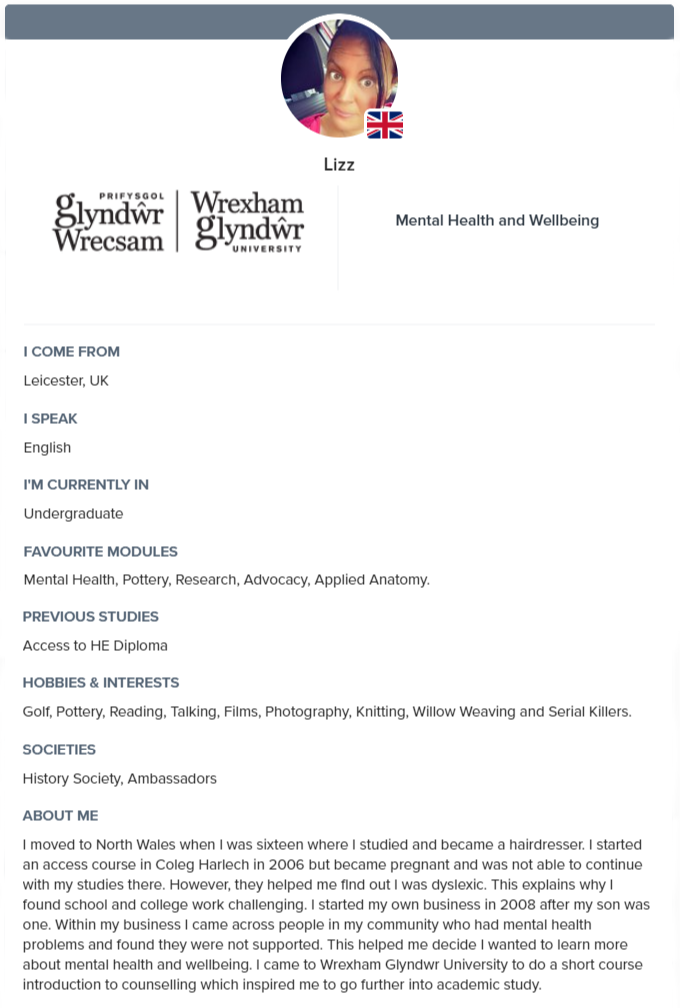
Speak to students like Lizz on Unibuddy
Ask me about my returning to study as a mature student, how I found the time to study around my family responsibilities, and anything else uni related you can think of!
'I wanted to prove something to myself' – Ged's experience working for his union prompted him to get back into education.