There are over 350 different NHS careers and everyone makes a difference every day. Whether you’re still in education or thinking about changing careers, you'll get the information you need.

Audiologist
Sponsored content
UCAS Media service
Audiologists diagnose and treat people with hearing loss and balance disorders. It’s a growing area of healthcare, with around 16% of people in the UK experiencing significant hearing loss.
On this page
Introduction to the role
Helping someone to hear better allows you to make a real difference to people’s lives.
Your focus will be working with those whose hearing or balance affects their daily lives. You’ll support them at different stages, from early diagnosis through to treatment, rehabilitation and how they can manage their condition in the long-term.
You might work with newborn babies, children, adults or older people. Most audiologists are based in hospitals or community clinics, while some roles in research, training and education are based in universities.
About the role
What does an audiologist do?
You’ll work as part of a wider healthcare team to identify and assess hearing and balance conditions.
You’ll work at a senior level, diagnosing hearing loss, offering initial therapeutic advice, and arranging referrals where further investigation is needed.
You may work in:
- paediatrics
- adult assessment and rehabilitation
- specialist services for people with additional needs
You may also get involved in research or service development. Some audiologists also teach or train others.
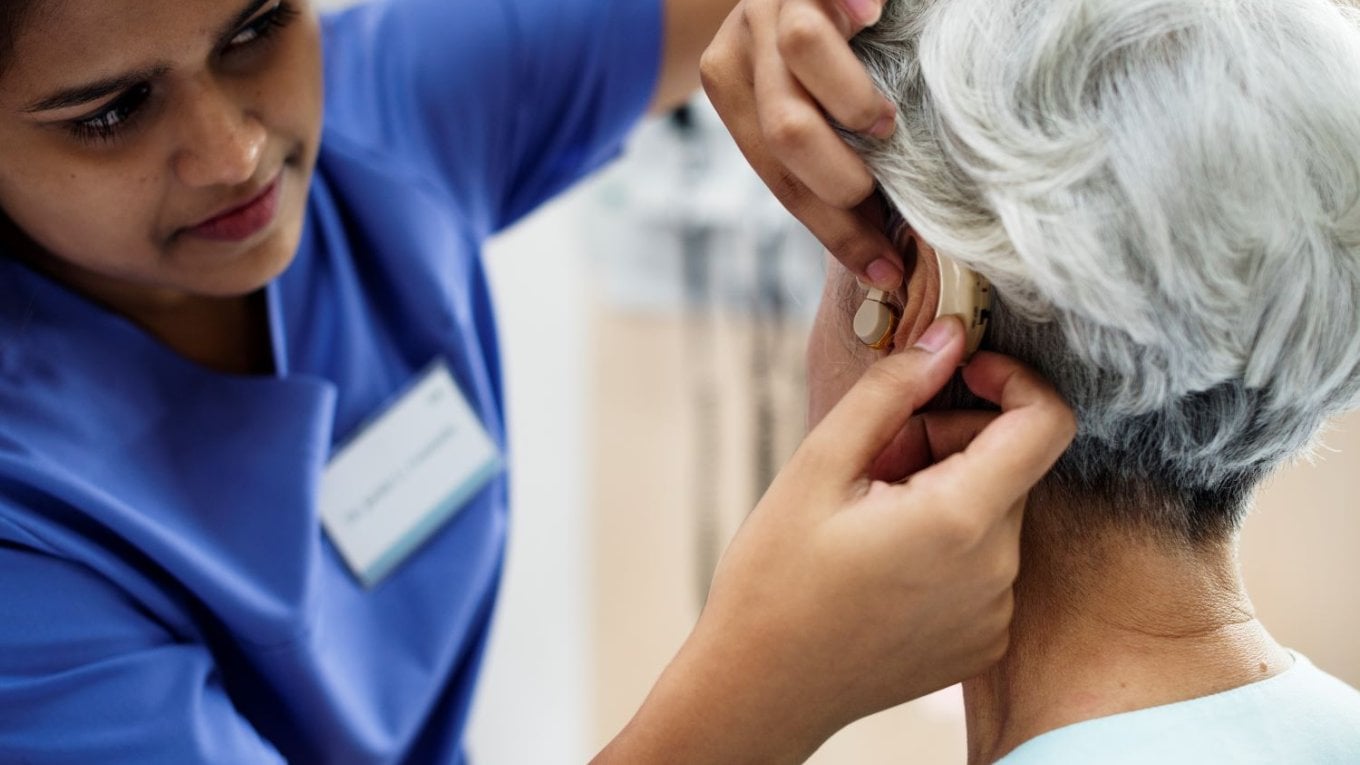
You could also work as a hearing aid audiologist, often called a hearing aid dispenser. You’ll assess hearing and provide ongoing support for people using hearing aids.
As your career progresses, you could become a clinical scientist in audiology. You’ll work at an advanced level, using specialist knowledge of hearing, acoustics and balance. You’ll develop and use complex diagnostic tests, interpret results, recommend care management strategies, and support patients through counselling and rehabilitation.
What are the pay and conditions like?
Audiologists and hearing aid audiologists are generally at band 5 earning more than £30,000 a year. Clinical scientists work across bands 6 to 8a, with consultant clinical scientist roles reaching bands 8a to 8d. Starting salary for band 6 is more than £38,000 and band 8d staff can earn more than £100,000 a year.
Other benefits include flexible and part-time working, good holiday entitlement, access to the NHS pension scheme, and staff discounts.
Many people are drawn to audiology because it offers the chance to make a difference, with strong career prospects and opportunities to work internationally.
Where can a career in audiology take you?
Once you’ve gained experience, there are a number of ways your career could develop.
You could:
- specialise further in areas such as paediatrics, balance disorders or hearing rehabilitation
- move into management roles, leading teams or services
- build a career in research or teaching
- progress into more senior healthcare science or clinical scientist roles
With further training and experience, you’ll be able to shape your career around your interests and strengths.
Find a course with UCAS
Want to explore the next step in traditional degree routes into the NHS? Explore courses related to audiology with UCAS today.
Person specification
Is audiology right for you?
If you enjoy building strong relationships with patients, their families, and colleagues across healthcare teams, then audiology could be for you.
You’ll need excellent communication skills to explain assessments, results and next steps clearly, often to people who may feel anxious or overwhelmed. Staying calm, patient and professional under pressure is an important part of the role.
Being an audiologist also requires strong problem-solving and diagnostic skills. You’ll need to interpret information accurately, make effective decisions, and manage your time and resources well to ensure patients receive the right care.
Teamwork is essential. You may also lead multidisciplinary teams.
Ask yourself:
Can I communicate clearly with patients, families and colleagues?
Am I able to stay calm and focused in pressured situations?
Do your values align with the NHS?
You’ll be expected to show that your values align with those of the NHS. This includes working with compassion and respect, making sound decisions, and always acting in the best interests of patients.
Your ability to organise your work effectively, manage time well, and use resources responsibly all contribute to delivering high-quality care.
Ask yourself:
Do I work well as part of a team and take responsibility for my decisions?
Am I motivated to provide the best possible care for patients?
Financial help at university
For eligible students on a healthcare science degree in England, support is available for travel and accommodation costs during your clinical placements. And the good news is, you won’t have to pay a single penny back.
Entry requirements and training
You’ll need a degree level qualification to work as an audiologist. You’ll require relevant level 3 qualifications, such as A levels including a science subject, an Access to Higher Education course, or a level 4 healthcare science apprenticeship for a degree and degree apprenticeships at level 6.
If you already hold a foundation degree in hearing aid dispensing, it may be possible to complete a shortened audiology degree or degree apprenticeship.
Other routes
You could begin with an entry-level role or a level 2 or 3 apprenticeship, which usually requires GCSEs at grades 9 to 4 (A to C) in maths, English and a science subject. To progress further through apprenticeships, a level 4 healthcare science apprenticeship is available and typically requires five GCSEs including maths, English and science, or a relevant level 2 or 3 apprenticeship.
Another route is to become an associate practitioner. This usually requires a foundation degree, a level 4 healthcare science apprenticeship, or equivalent experience supported by training to NVQ level 3.
Postgraduate routes are available. The Scientist Training Programme requires a first or upper second-class degree in a relevant subject, or a relevant higher degree, and is the route for those wanting to become a clinical scientist.
Higher Specialist Scientist Training is available for registered clinical scientists with a relevant MSc.
Work experience
Applying for a course or apprenticeship in audiology will be competitive. If you're seriously considering it, it is a great idea to try and gain some prior work experience to strengthen your application visit NHS England to find out more about gain work experience for NHS Careers.