There are over 350 different NHS careers and everyone makes a difference every day. Whether you’re still in education or thinking about changing careers, you'll get the information you need.

Vascular science practitioner
Sponsored content
UCAS Media service
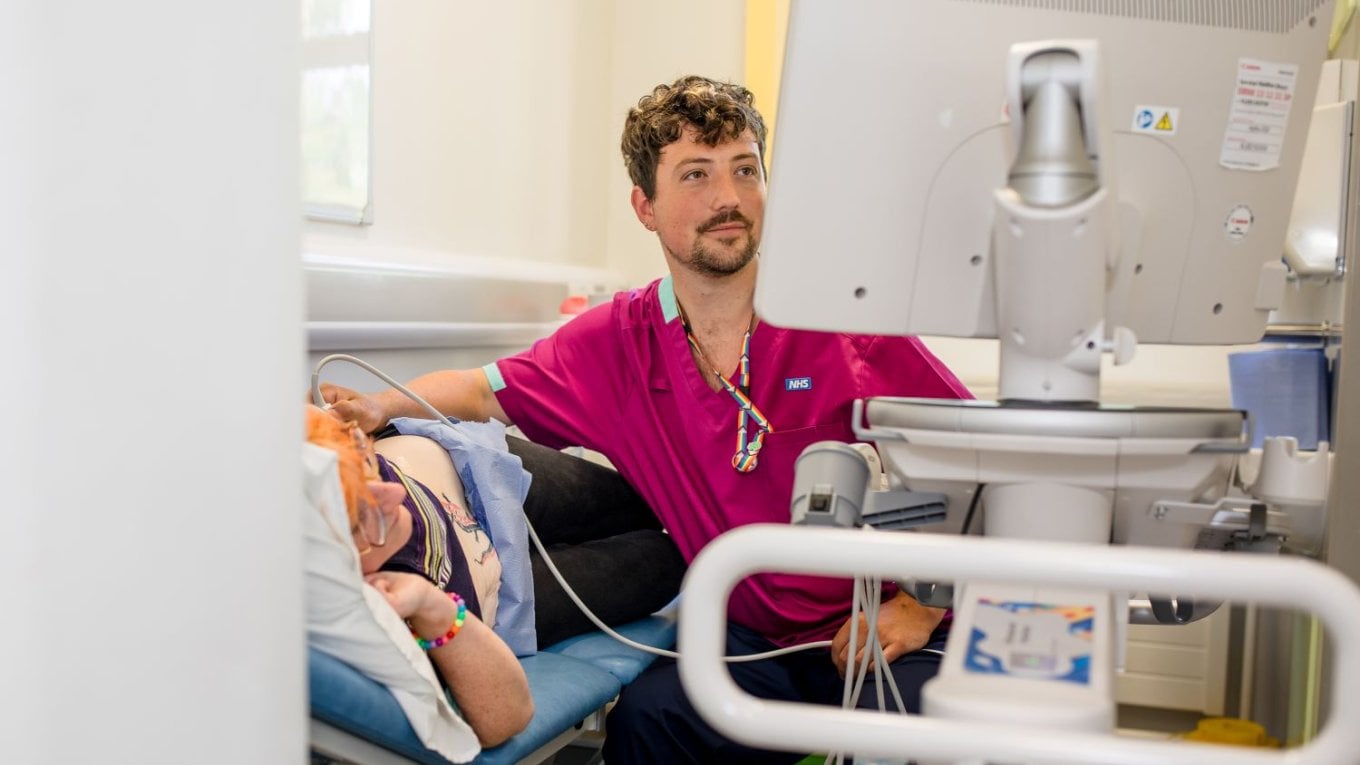
Vascular science practitioners use ultrasound and other non-invasive techniques to assess blood flow in patients with diseases of the arteries and veins. Their work supports diagnosis and treatment planning for conditions that affect circulation throughout the body.
On this page
Introduction to the role
Vascular science practitioners work with patients who have suspected or diagnosed vascular conditions. Your role focuses on assessing how blood flows through arteries and veins and identifying abnormalities that may require treatment.
You’ll use specialist imaging equipment and diagnostic tests to support clinical decision-making. Much of your work involves direct patient contact, explaining procedures clearly and helping patients feel at ease during investigations.
You’ll usually work in hospitals or clinics, although an increasing amount of vascular diagnostic testing is also carried out in GP surgeries. The role offers opportunities to develop specialist expertise.
About the role
What does a vascular science practitioner do?
As a vascular science practitioner, your are usually involved in diagnosing and monitoring conditions such as:
- transient ischaemic attack (TIA)
- stroke
- aneurysm
- peripheral arterial disease
- deep vein thrombosis
- varicose veins
You’ll mainly use ultrasound equipment, which transmits high-frequency sound waves into a patient’s body to produce images and measurements of blood flow. These images help identify abnormalities and assess how well blood is circulating.
You’ll also use other non-invasive equipment to measure circulation in areas such as the brain, limbs and vital organs. Your findings support clinicians in making decisions about treatment and ongoing care.
What is the pay and benefits?
Vascular science practitioners are generally at band 5 earning more than £30,000 a year. Clinical scientists work across bands 6 to 8a, with consultant clinical scientist roles reaching bands 8a to 8d. Starting salary for band 6 is more than £38,000 and band 8d staff can earn more than £100,000 a year.
Other benefits include flexible and part-time working, good holiday entitlement, access to the NHS pension scheme, and staff discounts.
Many people are drawn to vascular science because it offers the chance to make a difference, with strong career prospects and opportunities to work internationally.
Where can a career in vascular science take you?
A career in vascular science offers clear opportunities for progression.
You could become a clinical scientist in vascular science, working at a more senior level with responsibility for performing more complex investigations and interpreting results.
In senior roles, you may also be involved in:
- teaching and supervising other team members
- managing resources such as equipment and budgets
You could also choose to:
- move into management roles, leading teams or services
- build a career in research or teaching
- progress into more senior healthcare science or clinical scientist roles
Find a course with UCAS
Want to explore the next step in traditional degree routes into the NHS? Explore courses related to vascular science with UCAS today.
Person specification
Vascular science is a patient-focused role that combines technical skill with clear communication and teamwork.
You’ll need excellent communication skills to explain assessments, results and next steps, often to patients who may feel anxious or uncertain. Staying calm, patient and professional under pressure is an important part of the role.
Strong problem-solving and diagnostic skills are also essential. You’ll need to interpret information accurately, make effective decisions, and manage your time and resources well to ensure patients receive appropriate care.
Teamwork is central to vascular science, and you may also take on leadership responsibilities within multidisciplinary teams.
Ask yourself:
- Can I communicate clearly with patients, families and colleagues?
- Am I able to stay calm and focused in pressured situations?
Do your values align with the NHS?
You’ll be expected to show that your values align with those of the NHS. This includes working with compassion and respect, making sound decisions, and always acting in the best interests of patients.
Your ability to organise your work well, take responsibility for decisions, and use resources responsibly all contribute to delivering high-quality care.
Ask yourself:
- Do I work well as part of a team and take responsibility for my decisions?
- Am I motivated to provide the best possible care for patients?
Financial help at university
For eligible students on a healthcare science degree in England, support is available for travel and accommodation costs during your clinical placements. And the good news is, you won’t have to pay a single penny back.
Entry requirements and training
To work as a vascular science practitioner, you’ll need a degree-level qualification.
Most people will require relevant level 3 qualifications, such as A levels including a science subject, an Access to Higher Education course, or a level 4 healthcare science apprenticeship, before progressing to a degree or degree apprenticeship at level 6.
Other routes in
You could begin with an entry-level role or a level 2 or level 3 apprenticeship, which usually requires GCSEs at grades 9 to 4 (A to C) in maths, English and a science subject.
To progress further through apprenticeships, a level 4 healthcare science apprenticeship is available. This typically requires five GCSEs including maths, English and science, or a relevant level 2 or 3 apprenticeship.
Another route is becoming an associate practitioner. This usually requires a foundation degree, a level 4 healthcare science apprenticeship, or equivalent experience supported by training to NVQ level 3.
Postgraduate routes
Postgraduate routes are also available. The Scientist Training Programme is the route for those who want to become a clinical scientist and requires a first or upper second-class degree in a relevant subject, or a relevant higher degree.
Higher Specialist Scientist Training is available for registered clinical scientists with a relevant MSc.
Work experience
Applying for a course or apprenticeship in vascular science will be competitive. If you're seriously considering it, it is a great idea to try and gain some prior work experience to strengthen your application visit NHS England to find out more about gain work experience for NHS Careers.