Course contact details
BNU Admissions Team
Email:admissions@bnu.ac.uk
Phone:01494 605060
BNU Enquiries
Email:advice@bnu.ac.uk
Phone:01494 605060
Buckinghamshire New University
Queen Alexandra Road
High Wycombe
HP11 2JZ

Completed a foundation-level degree, HND, or equivalent qualifications in a relevant Art and Design subject? Top-up your studies to gain a full bachelor’s degree in Photography. Are you full of ideas and how to create powerful and innovative photographic images? Whether you want to specialise in editorial, fashion, product, portrait, documentary or arts-based photography, you can develop your skills and unleash your ideas at BNU.
Why study BA (Hons) Interior and Spatial Design at BNU?
A degree for you
A top-up degree is the equivalent of the final year of an undergraduate degree, and offers a chance to deepen your knowledge, skills and understanding of your subject, while also getting an internationally-recognised qualification.
If you have completed a foundation-level degree, HND, or equivalent qualifications in a relevant Art and Design subject, you can choose to top-up your studies to gain a full bachelor’s degree.
Accredited Degree
The photography degree is an accredited member of the Association of Photographers (AOP). The course meets the AOP’s criteria for the appropriate professional development of students during their studies. This accreditation also offers all students on the course their own free AOP membership for the duration of their studies, providing them with additional support and networking opportunities.
Expert facilities and equipment
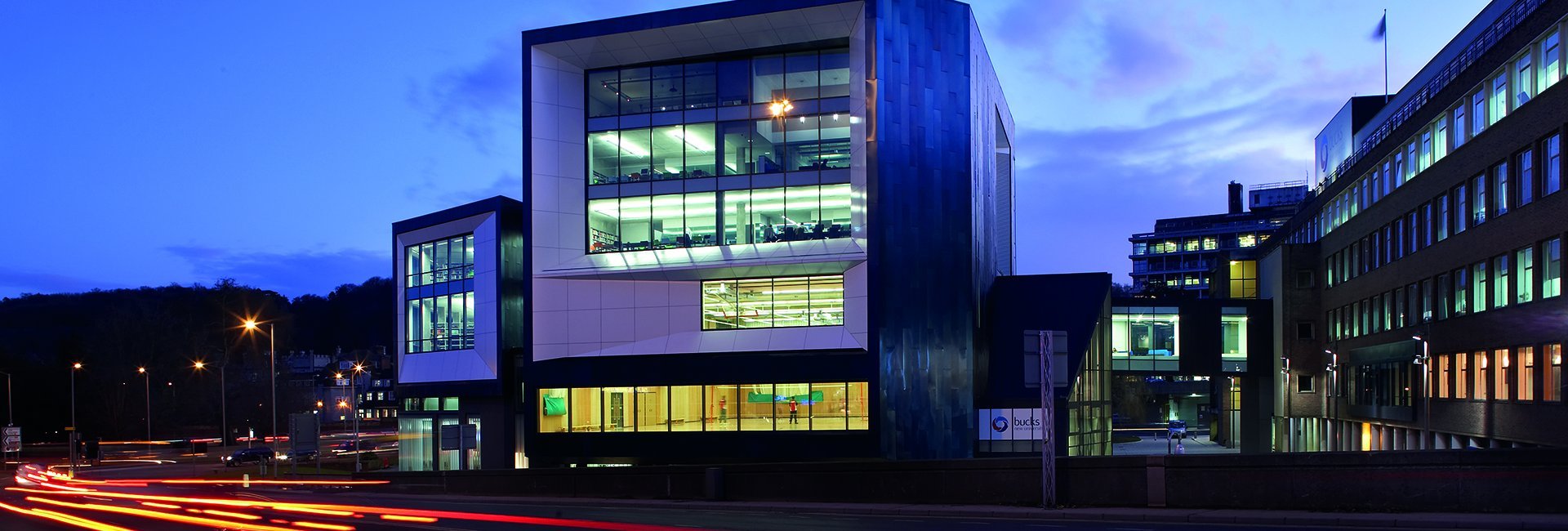
At BNU we offer state-of-the-art photography facilities where you’ll have access to industry-standard lighting studios, wet darkroom, professional scanning suite and print bureau at our High Wycombe campus. As well as this you’ll benefit from your own mac suites, which host the full Adobe Creative Cloud, and professional printing area.
On quiet days you’ll find yourself spending time in the courses very own break out and teaching area, a light and open space to help you focus and let creativity flow.
You’ll also have access to a range of cameras and equipment (analogue and digital) available for loan to support their practice, including:
Nikon and Canon lenses
5x4 Linhoff, Horseman and Cambo cameras
medium format Bronica, Fuji, Mamiya film cameras
medium format Pentax and Hasselblad digital cameras
Godox, Neewer, Mecablitz and Canon camera top flash
What will I study?
This photography course offers a contemporary curriculum that is engaged with social, technological, environmental, ethical and cultural perspectives, enabling you to become a ‘thinking practitioner’ or a socially responsible entrepreneur.
We will help you develop a conceptual and contextual understanding of photography, so you can find new ways to express yourself, and take your practice to a more dynamic level. You’ll also undertake research to develop a theoretical and critical underpinning of the subject, learning new ways of thinking and working, and pushing traditional boundaries of the medium.
From editorial and advertising photography to working in 3D environments to produce Computer-Generated images (CGI), exploring wet printing and alternative print-making techniques or experimenting with moving image and sound, you’ll have the opportunity to explore your chosen area of photography that interests you.
As well as having the space to explore different types of photography, we’ll make sure you understand the business side of working as a professional photographer.
You’ll learn how to best promote your photography and how to set yourself up as a freelancer, dealing with important aspects such as your own branding, marketing, to tax and finance. You’ll learn about the professional bodies that exist to protect photographers’ work and rights, such as the Association of Photographers. We’ll also look at how to develop your presence and present your work on different platforms, from the physical exhibition space to online websites, and how to evolve your practice to cater for different audiences.
Year 1 Modules
Core Modules
Final Major Project
Contextual Report
Professional Practice
This course is mostly practice-based so you will have ample opportunity to develop your subject through a hands-on, experimental approach. This will involve using the extensive photography studios and equipment on offer. You could also have the opportunity to benefit from industry specialists, seminars and project critiques.
To achieve the full BA (Hons) in Photography, you’ll need to complete the modules listed, as well as a major project and a dissertation.
The major project and dissertation will allow you to investigate a topic important to you within interior and spatial design. You will cover the whole research process, undertaking empirical investigation and analysis. You will be allocated a dissertation supervisor, who will offer support and advice.
The Professional Practice module gives you the opportunity to undertake work-based learning or answer live industry briefs, gaining the practical and transferable skills you need for your career in the creative industries.
This is the equal consideration deadline. You can still apply after this date, but your application may not receive guaranteed consideration.

Buckinghamshire New University has participated in the Teaching Excellence Framework. These ratings were awarded in 2023, for four years.
See why these ratings were awarded
What does this TEF outcome mean?
The following entry points are available for this course:
Visit bnu.ac.uk/international to find out more about applying to BNU as an international student!
Completed related level 5 HND
| Test | Grade | Additional details |
|---|---|---|
| IELTS (Academic) | 6 | We require an IELTS score of 6.0 (with no element lower that 5.5) or a recognised equivalent. |
BNU English Language Requirementshttps://www.bnu.ac.uk/study/general-entry-requirements
We aim to cultivate an environment where individuality, diversity, and academic excellence thrive.
Our decision-making process is not just about grades; we assess the entire application, including personal statements, relevant experience and where appropriate portfolios. Within our Contextual Offer Scheme, we strive to embrace students whose educational and social backgrounds may have influenced their academic journey.
This underpins how we champion an inclusive community that transforms lives.
This section shows the range of grades that students who received offers were previously accepted on to this course with (learn more).
It is designed to support your research but does not guarantee whether you will or won't get a place.
Admissions teams consider various factors, including interviews, subject requirements, and entrance tests. Check all course entry requirements for eligibility.
We are unable to show previous accepted grades for this course. This could be because the course is new, it's a postgraduate course, there isn't enough historical data, or the provider has opted out of sharing their entry grades data for this course - learn more.
| Location | Fee | Year |
|---|
Tuition fee status depends on a number of criteria and varies according to where in the UK you will study. For further guidance on the criteria for home or overseas tuition fees, please refer to the UKCISA website.
Buckinghamshire New University tuition fees cover the cost of instruction, assessment, and core academic materials. However, additional costs may be incurred for course-related items or requirements, such as, but not limited to:
Additional costs will vary by course. It is your responsibility as a student to budget for any additional expenses associated with your studies.
For further details on what is included in your tuition fees, please check bnu.ac.uk/fees-and-funding
There are several ways you can fund your studies, including sponsorship and student loans. You may be able to use ELCAS credits for some of our courses. We also have scholarships and bursaries to help support our students.
Email:admissions@bnu.ac.uk
Phone:01494 605060
Email:advice@bnu.ac.uk
Phone:01494 605060
Queen Alexandra Road
High Wycombe
HP11 2JZ
At Buckinghamshire New University