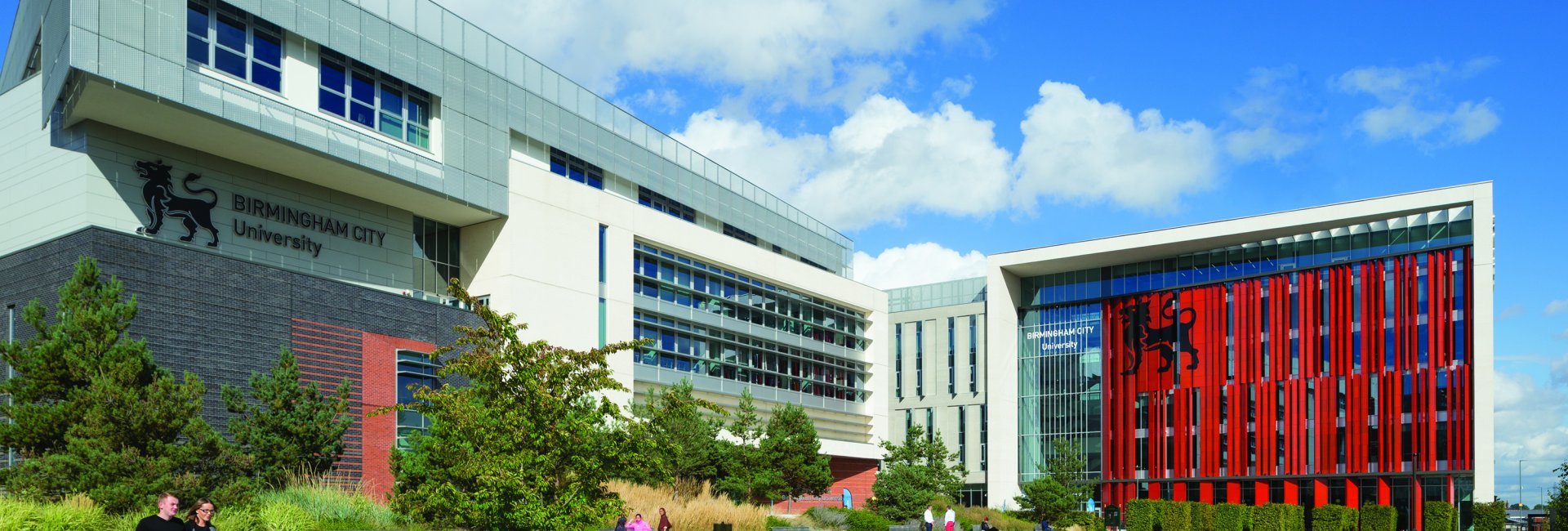
Birmingham City University
Curzon Building
4 Cardigan Street
Birmingham
B4 7BD
Visit our website Visit our course page
Course contact details
Course Enquiries Team
Email:courseenquiries@bcu.ac.uk
Phone:0121 331 6295

Transform the lives of people with disabilities and neurological motor disorders to help them as independent as possible with our BA (Hons) in Conductive Education.
Delivered by the National Institute of Conductive Education (NICE), this unique course is the only one in the UK to qualify you as a professional conductor to work with children and/or adults with physical disabilities.
The course is structured across six semesters. Each semester lasts 15 weeks, therefore you are expected to study for a minimum of 30 weeks per year.
Over the three years you will learn about topics such as neurological motor disorders, the professional skills needed to teach and develop skills including movement, confidence, understanding and communication, conductive practice and the work of professionals in the field.
You will be taught at the Conductive College, located in Moseley, which is a dedicated training space specifically for professionals, families and carers in the field of Conductive Education. Courses, leading to a qualification, will be accredited by Birmingham City University.
The conductive college is a key tool for the development of Conductive Education in the future and an essential part of the work of the NICE - the unique charity that believes every person with a movement disorder has the right to specialised services which meet their needs.
You will also start to learn about carrying out research and begin to investigate theoretical concepts in the light of practical experience and knowledge.
By the end of the course, you will have covered a range of academic subjects, all of which will enhance your ability to work as a professional conductor in a range of different countries or cultures.
This is the equal consideration deadline. You can still apply after this date, but your application may not receive guaranteed consideration.

Birmingham City University has participated in the Teaching Excellence Framework. These ratings were awarded in 2023, for four years.
See why these ratings were awarded
What does this TEF outcome mean?
The following entry points are available for this course:
Welsh Baccalaureate: 96 UCAS tariff points. Considered with two A Levels or equivalent level 3 qualifications
OCR Cambridge Technical qualifications: 96 UCAS tariff points
NCFE CACHE Level 3 qualifications: 96 UCAS tariff points
WJEC Level 3 qualifications: 96 UCAS tariff points. Considered with two A Levels or equivalent level 3 qualification(s)
UAL Level 3 Extended Diploma: Merit overall
| Test | Grade | Additional details |
|---|---|---|
| IELTS (Academic) | 6 | overall with no less than 5.5 in each band. |
This section shows the range of grades students (with UK A-Levels or Pearson BTEC Level 3 National Extended Diplomas) who received offers were previously accepted with (learn more). It is designed to support your research but does not guarantee whether you will or won't get a place. Admissions teams consider various factors, including interviews, subject requirements, and entrance tests. Check all course entry requirements for eligibility.
We are unable to show previous accepted grades for this course. This could be because the course is new, it's a postgraduate course, there isn't enough historical data, or the provider has opted out of sharing their entry grades data for this course - learn more.
| Location | Fee | Year |
|---|---|---|
| England | £9535 | Year 1 |
| Northern Ireland | £9535 | Year 1 |
| Scotland | £9535 | Year 1 |
| Wales | £9535 | Year 1 |
| EU | £18570 | Year 1 |
| International | £18570 | Year 1 |
Tuition fee status depends on a number of criteria and varies according to where in the UK you will study. For further guidance on the criteria for home or overseas tuition fees, please refer to the UKCISA website.
*The Government is proposing to apply an inflationary increase to regulated tuition fees for 2026/27 and the University is planning on increasing fees to that maximum level once confirmed.
Curzon Building
4 Cardigan Street
Birmingham
B4 7BD
Visit our website Visit our course page
Email:courseenquiries@bcu.ac.uk
Phone:0121 331 6295
At Birmingham City University