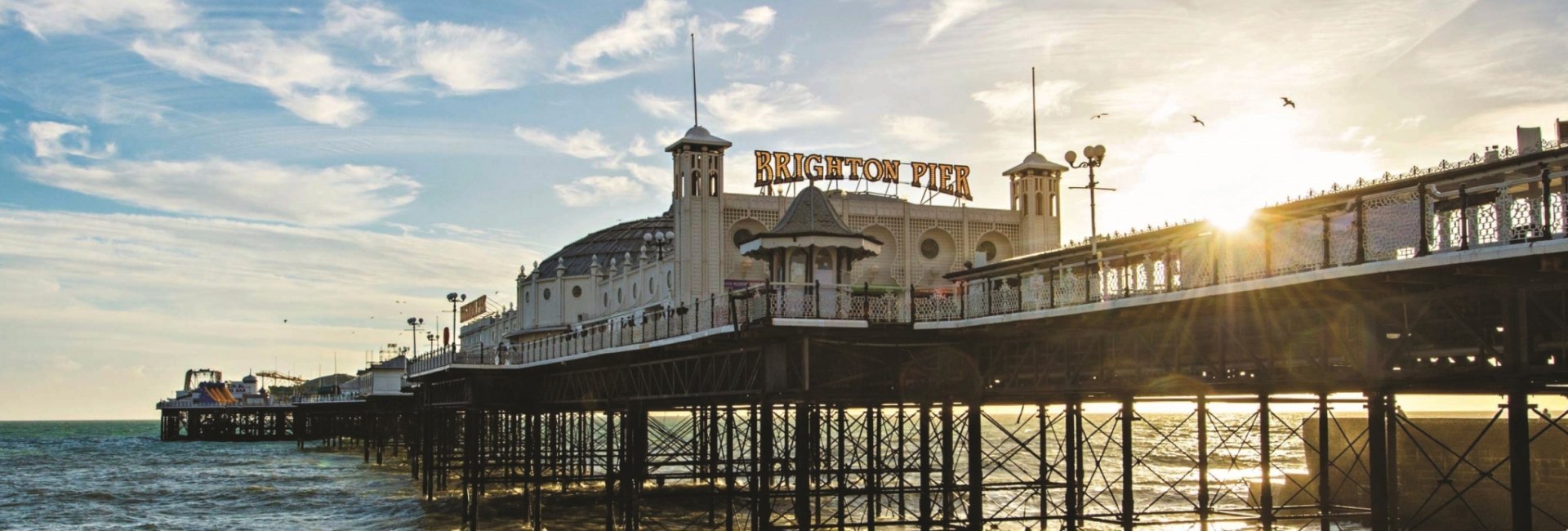
University of Brighton - open day - City campus
6 Jun 2026, 08:00
Brighton

Our Interior Design BA(Hons) combines creative vision with practical innovation to prepare you for careers that transform how people experience spaces – from homes and workplaces to retail and cultural environments.
At Brighton you’ll be part of a community that helps you grow, no matter what your background. Our integrated foundation year course offers an extra year to prepare you for study at degree level.
You’ll join a collaborative studio community, get involved in workshops and use digital tools like 3D modelling to build a portfolio of work that stands out to employers. You will take part in live briefs and industry placements and benefit from our industry links to connect with professionals and help prepare you for your career. Our inclusive approach to learning will help you go further; we’ll make sure you play to your strengths and learn in ways that suit you best.
You’ll graduate with the knowledge and skills for roles in interior design for residential, commercial and hospitality sectors, as well as exhibition and set design, or for postgraduate study.
Top reasons to choose this course
Foundation year that offers a route into interior design if you don’t have the required qualifications, are changing career or returning to study.
Brighton’s vibrant creative community – study in a city known for its design culture, with opportunities to connect with local studios and attend exhibitions and events.
Industry engagement and live briefs – work on real-world projects and collaborate with professional designers to gain practical experience.
Boost your CV with work experience opportunities, including an optional placement year, internships and industry-led projects.
Collaborative studio environment – share ideas and projects with peers across design disciplines in a supportive, creative space.
Learn specialist technical skills – master CAD software, 3D modelling, digital rendering and physical model-making alongside advanced design theory.
Hands-on experience from day one – work on live client briefs, real-world projects and collaborative studio assignments that mirror professional practice
Learn in specialist facilities – access dedicated design studios, fabrication workshops and digital labs equipped for model-making, CAD and visualisation.
Showcase your work – exhibit at Brighton’s Summer Show and connect with industry professionals.
Contribute to research and innovation – engage with staff working on projects in sustainable design, adaptive reuse and emerging technologies.
Why Brighton is a great place to study Interior Design
Less than an hour from central London, our Moulsecoomb campus puts you at the heart of a city celebrated for creativity, design and cultural innovation. Brighton is home to thriving design studios, architectural practices and a vibrant arts scene, all within easy reach of your lectures and workshops.
You’ll study in a diverse, welcoming community with excellent transport links that make site visits, exhibitions and networking events part of everyday learning. The city’s rich architectural heritage and contemporary design culture provide endless inspiration for your projects.
Foundation Year
Term 1 will concentrate on analogue skills, introducing you to observational and hand-drawing skills as well as physical/3D modelling techniques, enabling you to understand different scales.
In term 2, you’ll build on the skills you’ve learned and combine them with digital practice. You’ll be introduced to digital drawing, modelling and fabrication, and representation and communication techniques. Projects will develop your knowledge of the design process and technical ability.
Term 3 focuses on a final project within your chosen discipline and course. You’ll produce a portfolio where you’ll document your development and your final design project. The project will be specific to your discipline and draw together all the skills learnt over the year, preparing you for your degree. It will include physical hand drawings, photography, models, digital work and discipline-specific outputs.
Year 1
In your first year, you’ll explore a human-centred approach to design through projects that range from intimate spaces to residential scale, working with real sites, contexts and users. You’ll develop essential skills in visual communication, spatial planning and material exploration, while learning how interiors shape everyday experiences.
Technical workshops and studio practice introduce you to drawing, model-making and digital tools, giving you the confidence to translate ideas into tangible design solutions.
Core modules
Interior Design 1: Situating the Interior
Architecture Criticism 1
Interior Design 2: Inhabiting the Interior
Technology: Principles
Year 2
In your second year, you’ll focus on the narrative and commercial aspects of interior design. You will work on retail, hospitality, exhibition and workplace design briefs, experimenting with branding, identity and adaptive reuse and learning how to use light, material and form to communicate ideas.
Core modules
Interior Design 3: Narrating the Interior
Technology: Strategies
Interior Design 4: Commercialising the Interior
Architecture Criticism 2
Optional Placement Year
After year two, you can choose a salaried professional placement, gaining hands-on experience with interior design studios, creative agencies or commercial environments. This year allows you to apply your academic knowledge to real-world projects such as spatial design, branding and sustainable interiors.
You’ll develop practical skills in design communication, project management and client collaboration, while building valuable industry contacts. The placement enhances your employability and confidence, giving you a competitive edge for careers in interior design and related fields.
Final year
Your final year includes a major project, where you define your own brief and develop a fully resolved design with technical drawings, models and visualisations. You will exhibit your final project at the Summer Show – an exciting opportunity to present your vision to industry professionals and the public.
Core modules
Major Design Project 1: Interior Definition
Architecture Criticism 3
Major Design Project 2: Interior Development
Major Design Project 3: Interior Resolution
This is the equal consideration deadline. You can still apply after this date, but your application may not receive guaranteed consideration.

University of Brighton has participated in the Teaching Excellence Framework. These ratings were awarded in 2023, for four years.
See why these ratings were awarded
What does this TEF outcome mean?
The following entry points are available for this course:
| Test | Grade | Additional details |
|---|---|---|
| IELTS (Academic) | 6 | 6.0 overall with a minimum of 5.5. in each element, or equivalent English Language qualification. |
Review our English Language requirements https://www.brighton.ac.uk/international/applying-here/how-to-apply/english-language-requirements/index.aspx
At Brighton we recognise that not everyone's background provides the same advantages, and we know that grades are not the only indicator of potential.
If you meet our contextual admissions criteria we will make you an offer which is at least 16 UCAS points lower than our standard offer. You may also be eligible for additional financial and practical support from us through the Brighton Boost cost of living support package.
This section shows the range of grades students (with UK A-Levels or Pearson BTEC Level 3 National Extended Diplomas) who received offers were previously accepted with (learn more). It is designed to support your research but does not guarantee whether you will or won't get a place. Admissions teams consider various factors, including interviews, subject requirements, and entrance tests. Check all course entry requirements for eligibility.
We are unable to show previous accepted grades for this course. This could be because the course is new, it's a postgraduate course, there isn't enough historical data, or the provider has opted out of sharing their entry grades data for this course - learn more.
| Location | Fee | Year |
|---|---|---|
| England | £9535 | Year 1 |
| Northern Ireland | £9535 | Year 1 |
| Scotland | £9535 | Year 1 |
| Wales | £9535 | Year 1 |
| Channel Islands | £9535 | Year 1 |
| Republic of Ireland | £9535 | Year 1 |
| EU | £17250 | Year 1 |
| International | £17250 | Year 1 |
Tuition fee status depends on a number of criteria and varies according to where in the UK you will study. For further guidance on the criteria for home or overseas tuition fees, please refer to the UKCISA website.
The fees listed in the table above are for full-time UK undergraduate students in academic year 2025-26. You will pay further fees in each year of your course. Fees may increase each year. UK undergraduate and certain postgraduate fees are regulated by the UK government. The annual fee increase will not exceed the UK government's maximum regulated tuition fee limit set for the relevant academic year. Many of our courses include the option of a salaried placement year. Tuition fees for a placement year are charged at a lower rate of £1850. The international tuition fees listed above are for full-time courses during the academic year 2025-26. Further tuition fees are payable in each year of study. Non-regulated tuition fees, which usually apply to international students and UK postgraduate students* are subject to an annual increase of a maximum of 5% or the Consumer Prices Index (CPI), whichever is higher.
*Some designated postgraduate courses are regulated by the UK government – the annual fee increase for eligible UK / Home students on these designated courses will not exceed the UK government’s regulated tuition fee limit set for the relevant academic year.
Mithras House
Lewes Road
Brighton
BN2 4AT
Visit our website Visit our course page
Phone:01273 644644