Campus Open Day - Creative Writing
24 Mar 2026, 16:00
Chichester
Study at a specialist college with the assurance of a university qualification. Develop your passions and reach your potential in a small, welcoming environment within a community of like-minded people.
Why choose West Dean?
An international reputation for excellence in conservation and arts education
94% of students studying at the College* felt the programme had enhanced their skills and abilities (*2019 student survey)
A rich arts environment and a focus on craft skills with vocational application
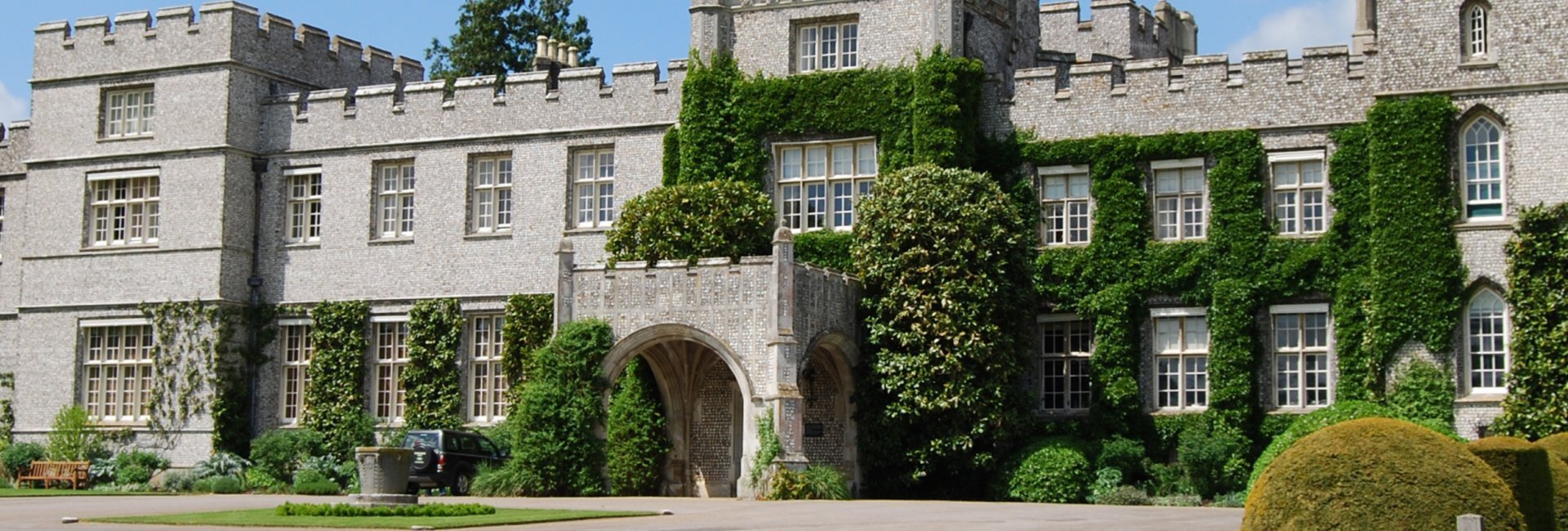
Be inspired by the unique historic character and beautiful South Downs setting
Located close to Chichester and the South Coast, with easy access to London
The Course
The Graduate Diploma offers you the opportunity to develop the skills and competences to work towards becoming a professional horologist or horological conservator, or to undertake further professional development in horology. You will learn professional standards of conservation practice as you develop practical, theoretical and professional conservation skills. The course provides a context for the analysis, assessment and treatment of historic objects.
You can expect
To develop excellent practical skills establishing and developing hand and machine tool skills
To learn the principles and techniques of historical horological manufacture and repair
To work on historic objects
Learning environment
Low student : tutor ratio
Workshop access 8.30am-9pm, 7 days a week
Interdisciplinary environment
Teaches students to understand and apply Icon's Professional Standards in Conservation
Visits from specialists from the heritage and private sectors
Visits to museums and active links with heritage bodies
Exceptional facilities
You will work in our specialist clocks workshop equipped with a professional standard range of hand and machine tools for the production and treatment of clocks. Facilities include:
Individual work benches for each student
Access to the full range of metalworking and woodworking facilities in the adjacent departments
Digital photography facilities for the production of photographic records and documentation
Area for cleaning and testing completed work
IT suite with specialist databases
On-site Art and Conservation Library with thousands of specialist books and journals
Teaching
On the Graduate Diploma you typically have around 24 contact hours per week.
Independent learning
When not attending lectures, seminars and workshop or other timetabled sessions you will be expected to continue learning independently through self-study for approximately 13-14 hours per week. Typically, this will involve:
Reading journal articles and books
Working on individual and group projects
Undertaking research in the library
Preparing coursework assignments and presentations
Overall workload
Graduate Diploma: 60% of your time is spent in scheduled teaching and learning activity
Scheduled teaching and learning: 720 hours
Independent learning: 480 hours
Unit G1A Introducing Professional Practice, Unit G1B Introducing Conservation Science, Unit G1C Contextual and Professional Studies 1, Unit G2A Developing Professional Practice, Unit G2B Conservation Science: Development and Applications, Unit G2C Contextual and Professional Studies 2, Unit G3A Research Through Practice. Modules correct at October 2019, they may be subject to change.
The following entry points are available for this course:
The Graduate Diploma is accessible to students from both humanities and science backgrounds. You need to have a degree or qualification at equivalent level to a second year of undergraduate study, e.g. HND, FdA, DipHE. Alternatively, accreditation of prior experiential learning (APEL) will be considered for those who have been out of formal education for some years and are over 21, who do not meet the general (minimum) entrance requirements, but who can demonstrate their capacity for degree-level work in other ways.
Find out more about qualification requirements for this course.
Find out more about the English language requirements at West Dean College of Arts and Conservation. https://www.westdean.ac.uk/international-students#english-language
This section shows the range of grades students (with UK A-Levels or Pearson BTEC Level 3 National Extended Diplomas) who received offers were previously accepted with (learn more). It is designed to support your research but does not guarantee whether you will or won't get a place. Admissions teams consider various factors, including interviews, subject requirements, and entrance tests. Check all course entry requirements for eligibility.
We are unable to show previous accepted grades for this course. This could be because the course is new, it's a postgraduate course, there isn't enough historical data, or the provider has opted out of sharing their entry grades data for this course - learn more.
| Location | Fee | Year |
|---|---|---|
| Republic of Ireland | £15850 | Whole course |
| England | £15850 | Whole course |
| Northern Ireland | £15850 | Whole course |
| Scotland | £15850 | Whole course |
| Wales | £15850 | Whole course |
| Channel Islands | £15850 | Whole course |
| EU | £17800 | Whole course |
| International | £17800 | Whole course |
Tuition fee status depends on a number of criteria and varies according to where in the UK you will study. For further guidance on the criteria for home or overseas tuition fees, please refer to the UKCISA website.
Lunch, accommodation and other living expenses are additional.
To find out more visit: https://www.westdean.ac.uk/degrees-and-diplomas/admissions#living-costs
Funding opportunities are available to students applying to study at West Dean and we encourage students to explore funding options. In 2019 up to 60% of students received bursary/scholarship support. For more information visit: https://www.westdean.ac.uk/degrees-and-diplomas/funding
West Dean
Chichester
PO18 0QZ
Visit our website Visit our course page
Send your enquiry to West Dean College
Email:study@westdean.ac.uk
Phone:01243 818300
At West Dean College