Skip navigation
You are viewing our beta course page.

Human Geography and Sport & Physical Education (with Foundation Year)

Course details
  • BA (Hons)
  • 4 Years
  • Full-time including foundation year
  • 09/2026
  • Undergraduate
Course location
Hope Park

Course summary

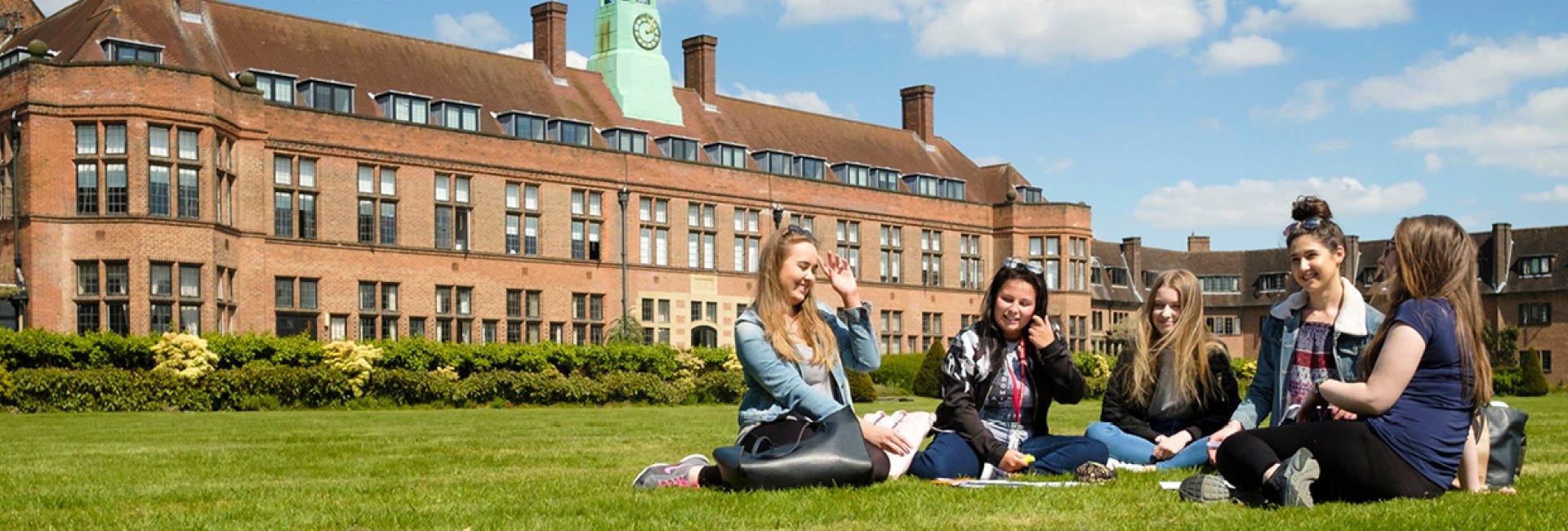
This is a four year degree taught on our Hope Park campus. The Foundation Year aims to develop your skills so that after a year, you will be equipped with the necessary skills needed for studying the full BA Hons degree programme.

Please note that Combined Honours degrees at Liverpool Hope University are split 50/50. This means both subjects will be studied equally.

Human Geography

Human Geography involves the study of the interrelationships between people, place, and environment, and how these vary spatially and temporally across and between locations shaping the lives and activities of people, and their interactions with places and nature. It covers many different perspectives and brings them together to create a distinctive way of understanding the world. Human Geography is more allied with the social sciences and humanities, sharing their philosophical approaches and methods.

Our degree investigates human-environment relationships offering you the chance to develop an integrated, enriched understanding of what is taking place on our planet particularly through, for example, the lens of tourism, exploring urban environments, small island settings or applied aspects of natural hazard management. In addition to specialising in human geographical dimensions, you will look at a wide range of different geographical topics and learn a broad range of skills. The overarching aim of our Human Geography degree is to provide students with opportunities to contribute to an environmentally sustainable and socially conscious
future.

Liverpool is a particularly great place to study Human Geography, being an excellent case study of economic, environmental and social regeneration, and having surroundings that include rural and coastal settings

Sport & Physical Education

Studying Sport and Physical Education at Liverpool Hope University gives you a skills-based theoretical, practical and applied experience which is underpinned by a foundation in subject knowledge and research skills. These include applied and theoretical approaches to sport psychology, performance and technique, sport analysis, sport management, sociology and history, and coaching science and development.

Within all disciplines you will approach the effect of sport, physical education and activity on individuals and society as a whole, emphasising the ethical issues relating to competition, participation and also the issues relating to health and wellbeing. You will be taught by a team of lecturers who are all experts in their field and widely published academics. You also have full access to the multimillion pound, state-of-the-art Health Science Building and Sports Complex, incorporating a running track, dedicated research space and new teaching laboratories.

Modules

Please visit our website for information regarding the curriculum content.

Assessment method

Students are assessed via a number of methods. Please go to the course link provided for further information.

Qualified teacher status (QTS)

To work as a teacher at a state school in England or Wales, you will need to achieve qualified teacher status (QTS). This is offered on this course for the following level:

  • Course does not award QTS

How to apply

Apply by
14 January

This is the deadline for applications to be completed and sent for this course. If the university or college still has places available you can apply after this date, but your application is not guaranteed to be considered.

Application codes

Course code:
HG54
Institution code:
L46
Campus name:
Hope Park
Campus Code:
-

Points of entry

The following entry points are available for this course:

  • Foundation
  • Year 1

International applicants

International applicants should refer to the International Section of our website:

http://www.hope.ac.uk/international

Open days

Entry requirements

Qualification requirements

UCAS Tariff - 72 points

A level - DDD

Pearson BTEC Level 3 National Extended Diploma (first teaching from September 2016) - MMP

Access to HE Diploma

Qualifications must equate to 72 UCAS points.

Scottish Higher

Qualifications must equate to 72 UCAS points.

WJEC Level 3 Advanced Skills Baccalaureate Wales

This qualification can only be accepted in conjunction with other relevant qualifications.

Leaving Certificate - Higher Level (Ireland) (first awarded in 2017)

Qualifications must equate to 72 UCAS points.

T Level - P

Applicants must achieve a minimum of 72 UCAS points for entry on to this course. UCAS Tariff points can be made up from a range of qualifications.

There may be some flexibility for mature students offering non-tariff qualifications and students meeting particular widening participation criteria.

Please contact our Student Enrolment team directly for further information.

t: 0151 291 3899
e: admission@hope.ac.uk

English language requirements

TestGradeAdditional details
IELTS (Academic)6For international students, an overall score of 6.0 is required, with 6.0 in both reading and writing and no individual score lower than 5.5.

Historical entry grades data BETA

This section shows the range of grades students (with UK A-Levels or Pearson BTEC Level 3 National Extended Diplomas) who received offers were previously accepted with (learn more). It is designed to support your research but does not guarantee whether you will or won't get a place. Admissions teams consider various factors, including interviews, subject requirements, and entrance tests. Check all course entry requirements for eligibility.

Not enough data available

We are unable to show previous accepted grades for this course. This could be because the course is new, it's a postgraduate course, there isn't enough historical data, or the provider has opted out of sharing their entry grades data for this course - learn more.

Student Outcomes

Operated by the Office for Students

65 Employment after 15 months (Most common jobs)

80 Go onto work and study

The number of student respondents and response rates can be important in interpreting the data – it is important to note your experience may be different from theirs. This data will be based on the subject area rather than the specific course. Read more about this data on the Discover Uni website.

Fees and funding

Tuition fees

LocationFeeYear
England£9790Year 1
Northern Ireland£9790Year 1
Scotland£9790Year 1
Wales£9790Year 1
Channel Islands£9790Year 1
International£15225Year 1

Tuition fee status depends on a number of criteria and varies according to where in the UK you will study. For further guidance on the criteria for home or overseas tuition fees, please refer to the UKCISA website.

Additional fee information

For the Foundation Year element of your degree, fees for 2026/27 will be £9,535.
For the remaining 3 years of your degree, you will be charged the full Undergraduate fee each year.

Please note, some of our courses may have additional costs. Please visit the course webpage for further information.

Like this page