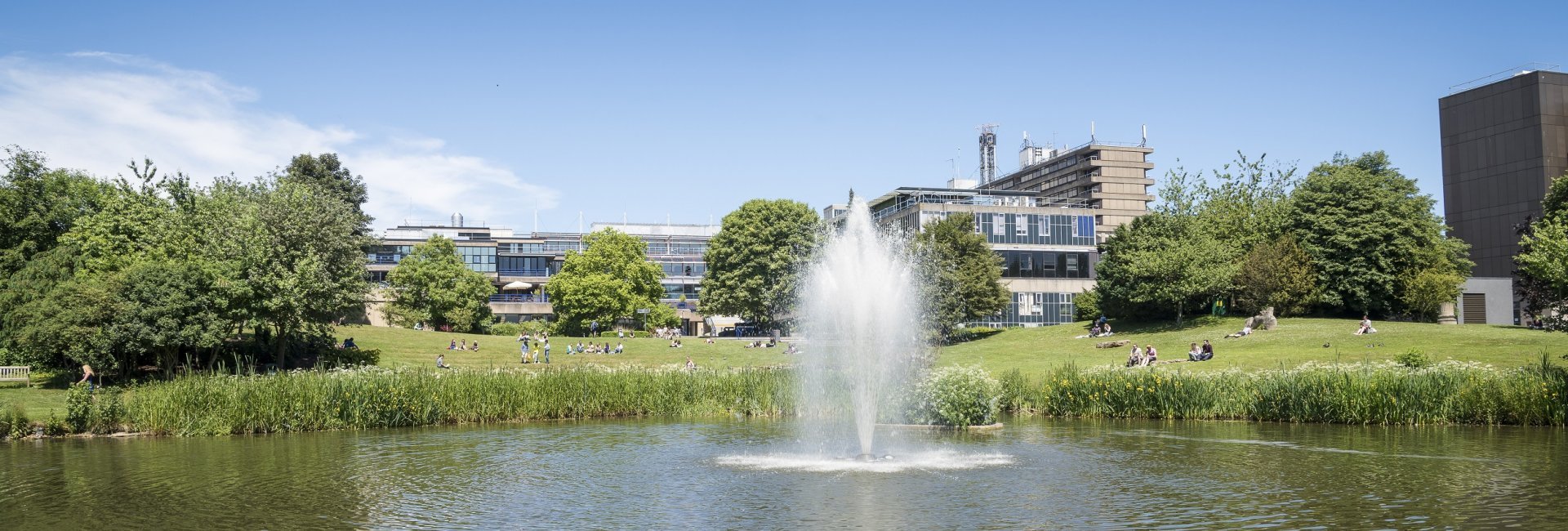
University of Bath - Postgraduate Virtual Open Day
3 Jun 2026, 10:00
Bath

Gain a deep insight into the concepts of international education and globalisation, with a focus on how they intersect and interact.
Education is increasingly influenced by globalisation. We live in an increasingly connected world, with a mobile and interlinked population. As a result, education needs to evolve to meet the needs of an interconnected society.
Education in a global context
Throughout this course, you’ll focus on education in a global context, looking beyond borders and regions. You’ll explore emerging trends and tensions in international education to develop your understanding of how globalisation influences education policy and practice.
You’ll examine the relationship between globalisation and international education, and how this is shaped by culture and issues of inequality, sustainability and social justice.
Your studies will culminate in a final project. During this you’ll be supported by your supervisor to design and conduct a small-scale empirical or literature-based research project in the field of international education. The empirical project may be undertaken with an external institution or organisation (where available) to address a relevant challenge they face.
Throughout the course, you will receive academic skills development and pastoral support.
By the end of your studies, you’ll be better prepared to apply your understanding of global and cultural perspectives in education, and related fields, within a variety of international and intercultural contexts.
This course attracts people from a variety of backgrounds and interests, including those with professional experience in formal or informal education, charities, and non-governmental organisations.
What you’ll learn
You will leave this course with:
a well-rounded knowledge of international education and globalisation, and the intersection between the two concepts. This includes issues and challenges, research-informed policy and practice, and latest developments
well-developed research skills, including experience of undertaking your own research, preparing you well for doctoral study
wider transferable skills, such as critical analysis, intercultural communication, leadership, teamwork and problem-solving
the knowledge to make a significant contribution to policy and practice in international education
Apply your skills with a consultancy project
The consultancy project is an alternative to a dissertation. It offers you the opportunity to use the knowledge and research skills you’ll develop during your studies to work on an issue or strategic priority with an external organisation.
Projects are research-based and typically developed in collaboration with an organisation, such as a school, university, governmental department or education provider. This collaborative aspect means that you’ll be looking a current challenge, which will allow you to demonstrate your academic learning in a real-world context and enhance your CV.
Consultancy projects may involve activities such as:
critical evaluation of existing policies or practices
research-informed proposals for improvement or reform
internationalisation-related projects
analysis to support institutional strategy, development, or marketing
community engagement or outreach initiatives
critical analysis of organisational or sector-level data
Once you have designed and completed an appropriate piece of research, you’ll present your findings and recommendations as a presentation and written academic report.
Consultancy project places are limited each year. You will be supported to identify and develop a feasible project in collaboration with an organisation, either through one of our external partners or via your own professional network. If a suitable project cannot be secured, you will complete a dissertation instead.
You should have a Bachelor’s honours degree or international equivalent, typically a high 2:2 or above. We may make an offer based on a lower grade if you can provide evidence of your suitability for the degree (for example, professional experience in education).
To apply for this course you may have an undergraduate degree in any subject.
If your first language is not English but within the last 2 years you completed your degree in the UK you may be exempt from our English language requirements.
View English language requirement https://www.bath.ac.uk/courses/postgraduate-2026/taught-postgraduate-courses/ma-international-education-and-globalisation-full-time/#entry-requirements
No fee information has been provided for this course
Tuition fee status depends on a number of criteria and varies according to where in the UK you will study. For further guidance on the criteria for home or overseas tuition fees, please refer to the UKCISA website.
Once you have started your studies, you should budget for an increase each year for every further year of study. Those who started from 2025/26 onwards should budget for up to 8% fee increase each year. Those that started before 2025/26 should budget for up to 5% increase each year. The amount will be set out on our fee pages by June for the following academic year.
If you defer your entry, you will pay the fees for the year that you start your course and these may be higher than the annual increase for your original academic year.
For information on tuition fees visit our web pages: https://www.bath.ac.uk/topics/tuition-fees/
Claverton Down
Bath
BA2 7AY
Visit our website Visit our course page
Email:pgtadmissions@bath.ac.uk
Phone:+44 1225 38 5115
At University of Bath