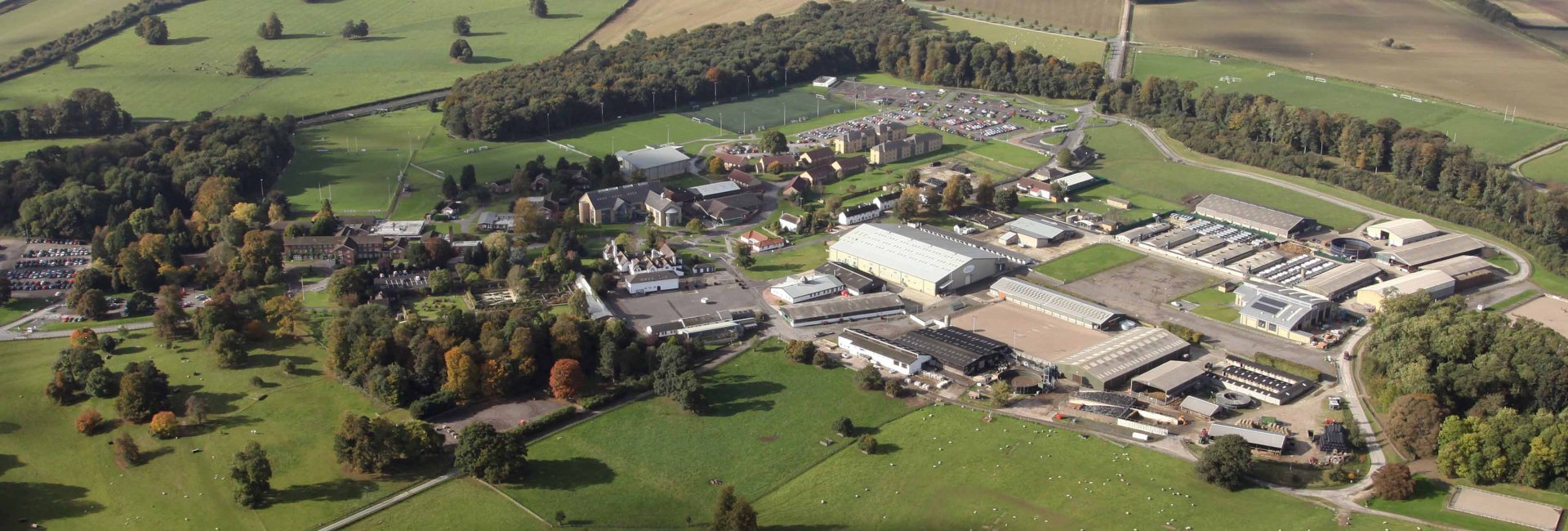
University Centre Bishop Burton - open day event
7 Mar 2026, 10:00
Beverley

Embark on an exciting journey into the world of animal behaviour and wildlife conservation at University Centre Bishop Burton! This BSc programme offers a unique blend of theoretical knowledge and hands-on experience, designed to inspire and equip the next generation of conservation leaders. Dive deep into the fascinating realm of animal behaviour and adaptation, and discover how behavioural knowledge is essential for effective species conservation.
On this programme, you will develop fieldwork skills through immersive ecological study on our beautiful rural campus and surrounding area. You will also learn practical animal husbandry at our on-site animal management centre, strengthening your understanding of animal behaviour and welfare needs in captivity. Our hands-on and collaborative learning approach ensures you're not just studying animal behaviour and conservation, but actively practicing the skills needed to be successful in this sector.
Key features of the programme include:
Practical skills development in wildlife management and captive animal care
International field trip opportunities to study diverse ecosystems
Research opportunities using state-of-the-art animal management and lab facilities
Join our passionate community of aspiring conservationists and turn your love for animals into a meaningful career. At Bishop Burton, you'll gain the knowledge, skills, and experience needed to make a real difference in conservation, with career routes in captive animal management, wildlife rescue and rehabilitation, ecological consultancy, international conservation biology, and many more.
Are you ready to transform your passion into purpose? Apply now and take the first step towards achieving a successful and impactful career in animal behaviour and wildlife conservation!
Contact time
The full-time route incorporates approximately 9-13 hours of contact time per week, encompassing lectures, seminars, practicals and tutorials. Additional to this time will be final project support sessions in your final year that you can book with your supervisor. You are also expected to carry out a significant amount of independent study in addition to contact time (approximately 25-30 hours a week). Independent study includes reading around the subject, preparing for tutorials and seminars, and preparing for and completing module assessments. This independent study forms an essential part of your learning journey.
You can expect to receive your timetable during induction week.
Careers
A degree in Animal Behaviour and Wildlife Conservation opens diverse career pathways across multiple sectors. Graduates can pursue roles as wildlife conservation officers, ecological consultants, zoo keepers, wildlife rehabilitation specialists, conservation education officers , research assistants, animal behaviour specialists, environmental policy advisors, protected area managers, conservation project coordinators, and many more. These careers span government agencies, private consultancies, zoos, research institutions, educational organisations, and conservation NGOs, offering graduates flexibility to work locally or internationally in a variety of roles.
Year 1:
APS and GIS
Animal Behaviour
Introduction of Physiology and Genetics
Industry Skills
Principles of Ecology Conservation
Introduction to Captive Management
Year 2:
Wildlife Rehabilitation and reintroductions
Behaviour of Key Species
Field Studies with Data Analysis
Independent Project
Business Project Management
Welfare Ethics and Legislation
Year 3:
Educational Outreach
International Conservation Biology
Welfare Assessments
Captive Breeding Management
Final Project
Assessment includes written assignments, seminars, poster presentations, training practical, practical reports and demonstrations. There are no formal examinations. Opportunities for feedback on assessments are available prior to the final submission to support student development and achievement. Staff aim to return assessed work within a 20 working day timeframe (not including holidays) in order that students can most benefit from the feedback.
The following entry points are available for this course:
For year 3 entry, the University of Hull’s Recognition of Prior Learning (RPL) process will need to be completed. You will be contacted by a member of our team.
Life and/or experience of non-traditional students will be taken into account when considering applications. The successful completion of an entry task may be required when considering applications without the required formal entry qualifications.
Advanced entry may be possible due to prior experience or certificated learning; applicants will need to complete the recognition of prior learning approval process.
This section shows the range of grades students (with UK A-Levels or Pearson BTEC Level 3 National Extended Diplomas) who received offers were previously accepted with (learn more). It is designed to support your research but does not guarantee whether you will or won't get a place. Admissions teams consider various factors, including interviews, subject requirements, and entrance tests. Check all course entry requirements for eligibility.
We are unable to show previous accepted grades for this course. This could be because the course is new, it's a postgraduate course, there isn't enough historical data, or the provider has opted out of sharing their entry grades data for this course - learn more.
| Location | Fee | Year |
|---|---|---|
| England | £9250 | Year 1 |
| Northern Ireland | £9250 | Year 1 |
| Scotland | £9250 | Year 1 |
| Wales | £9250 | Year 1 |
Tuition fee status depends on a number of criteria and varies according to where in the UK you will study. For further guidance on the criteria for home or overseas tuition fees, please refer to the UKCISA website.
No additional fees or cost information has been supplied for this course, please contact the provider directly.
Bishop Burton
Beverley
HU17 8QG
Visit our website Visit our course page
Email:admissions@bishopburton.ac.uk
Phone:01964 553000
Fax: 01964 553101