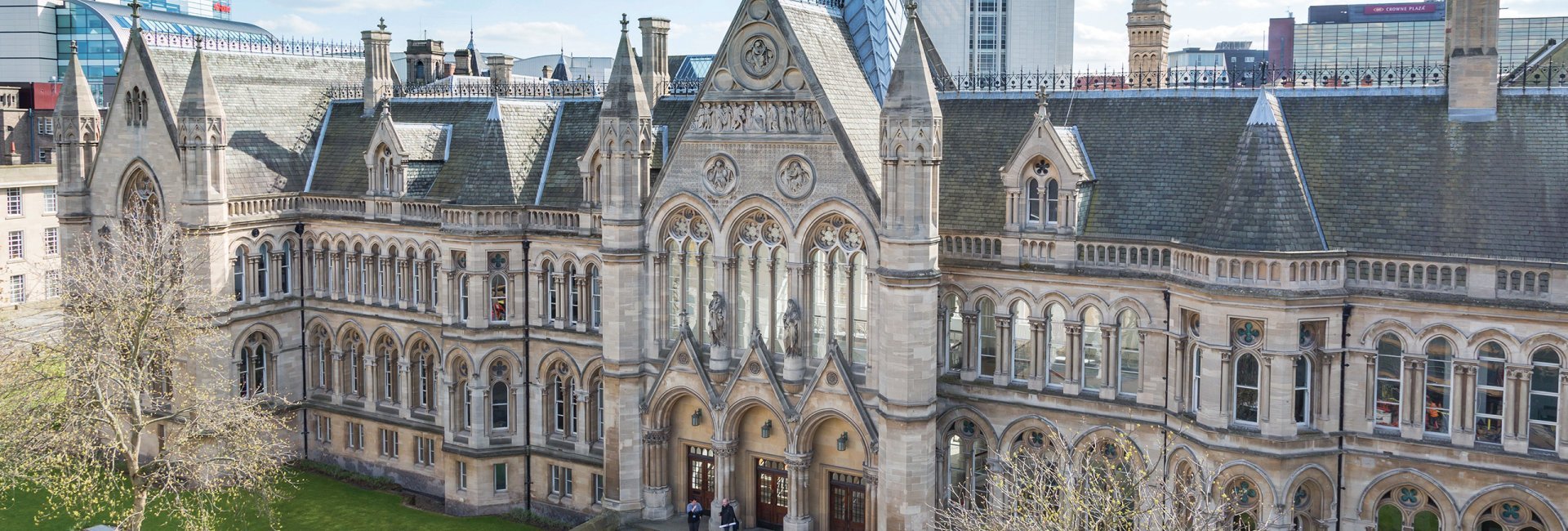
Nottingham Trent University - 25 April Open Day
25 Apr 2026, 08:00
Nottingham

Our BA (Hons) Fashion Design course has an established reputation, with exceptional national and international links within the fashion Industry, as well as a recognised global presence.
NTU fashion graduates are renowned within the industry for their creative, innovative and directional design skills, as well as a strong underlying awareness of commerciality, sustainability and technologies.
Key features
Gain hands-on industry experience: You’ll have the opportunity to complete a work experience placement of up to a year in length. Dependent on the duration of your placement, you could gain an additional Diploma or Certificate in Professional Practice.
Take part in global opportunities: Go on optional international study trips to events like Paris Fashion Week. You can also apply for a European or international exchange to partner institutions, including the Fashion Institute of Technology in New York and Hong Kong Polytechnic University.
Learn from visiting experts: Benefit from guest lecturers such as Giles Deacon, Christopher Raeburn, and internationally renowned Japanese pattern cutting expert Shingo Sato.
Work on live briefs with leading brands: Get involved with competitions and live projects with companies like Paul Smith, Sunspel, AllSaints, Universal Works, Priya Ahluwalia, Burberry, and Phoebe English.
Employability
Our graduates go into a range of fashion-related roles across the world such as designers, product developers and buyers. Recent graduate destinations include:
ASOS
Abercrombie & Fitch
Burberry
Coach
George
H&M
Mulberry
Next
River Island
Roksanda
Tom Ford
Victoria Beckham
Vivienne Westwood
Yohji Yamamoto.
Our students have also had success at: The Young Ideas 50 Years in Fashion Illustration Competition, the Young Creators to the World contest at Lima Fashion Week in Peru and the Hong Kong Young Fashion Designers’ Contest (YDC).
Your space to create at NTU
Our Fashion Design studios are lively, highly creative environments based in the Bonington building, a dedicated art and design hub.
[Year One]
[Year Two]
[Year three]
[Final year]
Assessment is predominantly through coursework. You will receive feedback throughout each module and will be awarded a grade. Depending on the module, you may be assessed through 2D visual research and design development work; 3D development work and final product; portfolio work; evaluations; reports; essays; and a dissertation.
People excel in different ways, and we want everybody to have the best possible chance of success. On this course you will be assessed on a range of individual and group presentations, and your final year project.
Year 1 coursework (100%)
Year 2 coursework (90%), practical exams (10%)
Year 3 course work (100%)
Your work in Year Two accounts for 20% of your final degree mark, and your work in your final year accounts for the other 80%
This is the equal consideration deadline. You can still apply after this date, but your application may not receive guaranteed consideration.

Nottingham Trent University has participated in the Teaching Excellence Framework. These ratings were awarded in 2023, for four years.
See why these ratings were awarded
What does this TEF outcome mean?
The following entry points are available for this course:
A lower offer may be made based on a range of factors, including your background (such as where you live and the school or college you attended), your experiences and individual circumstances (you may have been in care, for example). This is called a contextual offer and we get data from UCAS to make these decisions. NTU offers a student experience like no other, and this approach helps us to find students who have the potential to succeed here, but may have faced barriers that can make it more difficult to access university.
We also consider equivalent qualifications and combinations. Please contact Nottingham Trent University Admissions team for further information.
NTU makes contextual offers for this course to give everyone a fair chance to access their chosen degree.
Contextual offers are lower than our standard entry criteria or may be an unconditional offer for courses that require a portfolio. We also take individual circumstances into account when we receive results and may accept grades lower than our published criteria.
We use a range of data from UCAS to make our offers and more information on our approach is available at the link below.
This section shows the range of grades students (with UK A-Levels or Pearson BTEC Level 3 National Extended Diplomas) who received offers were previously accepted with (learn more). It is designed to support your research but does not guarantee whether you will or won't get a place. Admissions teams consider various factors, including interviews, subject requirements, and entrance tests. Check all course entry requirements for eligibility.
We are unable to show previous accepted grades for this course. This could be because the course is new, it's a postgraduate course, there isn't enough historical data, or the provider has opted out of sharing their entry grades data for this course - learn more.
| Location | Fee | Year |
|---|---|---|
| England | £9790 | Year 1 |
| Northern Ireland | £9790 | Year 1 |
| Scotland | £9790 | Year 1 |
| Wales | £9790 | Year 1 |
| EU | £18700 | Year 1 |
| International | £18700 | Year 1 |
Tuition fee status depends on a number of criteria and varies according to where in the UK you will study. For further guidance on the criteria for home or overseas tuition fees, please refer to the UKCISA website.
The tuition fees above are subject to parliamentary procedure. They haven't been confirmed yet, but we expect them to be finalised by May 2026. The level of tuition fees for the second and subsequent years of your undergraduate course may increase in line with inflation and as specified by the UK government.
50 Shakespeare Street
Nottingham
NG1 4FQ
Visit our website Visit our course page
Phone:+44(0)115 848 4200
Phone:+44 (0) 115 848 4200
At Nottingham Trent University