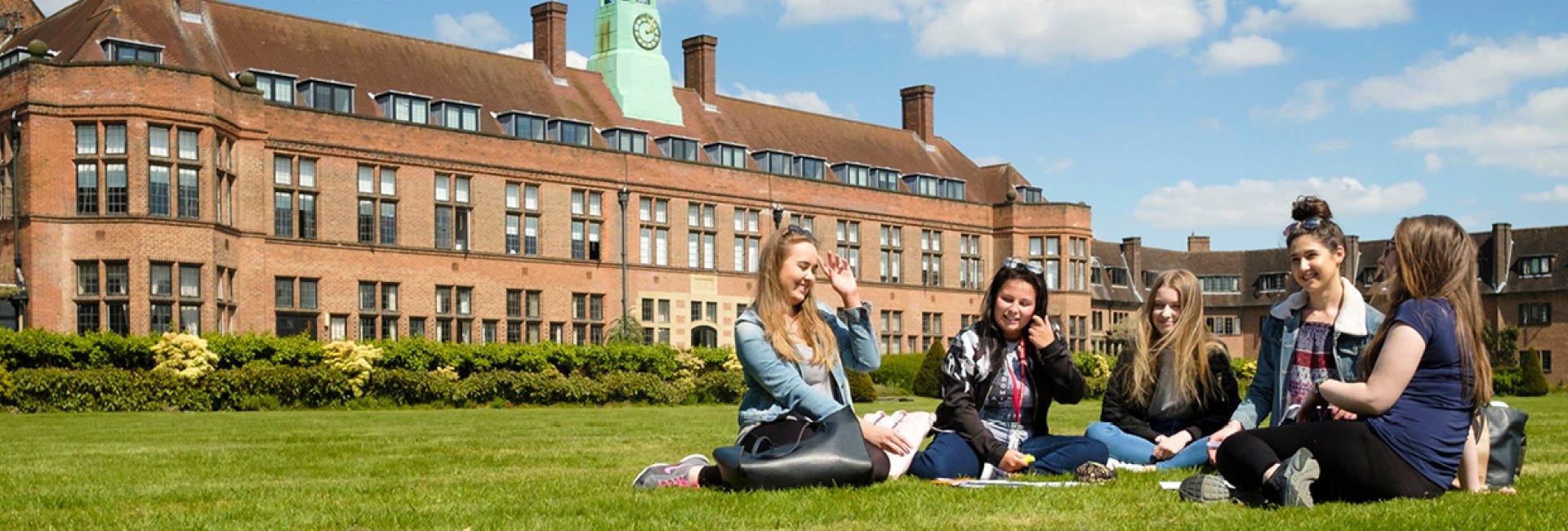
Open Day- Saturday 27th June 2026
27 Jun 2026, 08:00
Liverpool

Digital Creativity
This course will educate students towards creating work that bridges the gap between traditional creative practices and their modern technologically facilitated counterparts from gaming, to graphic design to music and dance. It responds to the continuing appropriation of emerging digital technologies by artists with the aim of discovering new approaches for creative expression, often referred to under the umbrella term ‘Creative Convergence’. The course responds to the teaching and research interests of staff within the subjects of Music, Performance and Visual Arts, as well as colleagues in the areas related to Computer Science. You will learn how to use a variety of technologies and realise assessed projects; these may include motion capture, haptic feedback, interaction design, data sonification & visualisation, animation & sound design, and coding/scripting in relevant languages strictly for creative output. The practical seminars will act as laboratories to experiment with these technologies and enhance your skillsets, working towards a signature practice that primes them for the digital creative sector. The lectures provide a theoretical basis for you to critically position your work, further developed through student-led discussions in tutorials. The lecture content also informs the seminars, ensuring you are able to perceive the practical application of these ideas. In your first year of study, you will be introduced to the key practitioners and practices who demonstrate the ways digital technologies enrich the creative potential of traditional art forms.
Digital Marketing
Digital Marketing is one of the most challenging, fast-moving and exciting disciplines in the world of business today. Our Digital Marketing degree has a theoretical focus that is combined with practical examples of how companies apply the theory on a day-to-day basis, meaning that what you learn is not only academically sound but also rooted in the realities of today’s dynamic and increasingly digital marketplace. During your degree, you will be provided with the key skills and knowledge that will enable you to understand the digital marketing context, marketing research and the discipline’s central role to business
success, while allowing you to reflect on the moral and ethical implications of marketing behaviour in an increasingly digital world.
The ever-advancing fields of Social and Digital Marketing and the importance of areas such as Artificial Intelligence (AI), content marketing, SEO and social media optimisation run through the curriculum as central themes and allow you to reflect on the many challenges and opportunities that the related technological and cultural changes provide. We believe your ability to gain meaningful employment after you graduate is really important, so there is a strong focus on helping you to develop your employability skills. It has been designed so that you learn from research-active staff while at the same time being mentored and given masterclasses by industry leaders.
Digital Marketing focuses on a wide range of organisations, from SMEs to global multinational organisations and across all sectors. Studying such a comprehensive view of the marketing world prepares you for a career in organisations of any type and size.
Please visit our website for information regarding the curriculum content.
Students are assessed via a number of methods. Please go to the course link provided for further information
This is the equal consideration deadline. You can still apply after this date, but your application may not receive guaranteed consideration.

Liverpool Hope University has participated in the Teaching Excellence Framework. These ratings were awarded in 2023, for four years.
See why these ratings were awarded
What does this TEF outcome mean?
The following entry points are available for this course:
International applicants should refer to the International section of our website: http://www.hope.ac.uk/international
Applicants must achieve a minimum of 72 UCAS points for entry on to this course. UCAS Tariff points can be made up from a range of qualifications.
There may be some flexibility for mature students offering non-tariff qualifications and students meeting particular widening participation criteria.
Please contact our Student Enrolment team directly for further information.
t: 0151 291 3899
e: admission@hope.ac.uk
This section shows the range of grades students (with UK A-Levels or Pearson BTEC Level 3 National Extended Diplomas) who received offers were previously accepted with (learn more). It is designed to support your research but does not guarantee whether you will or won't get a place. Admissions teams consider various factors, including interviews, subject requirements, and entrance tests. Check all course entry requirements for eligibility.
We are unable to show previous accepted grades for this course. This could be because the course is new, it's a postgraduate course, there isn't enough historical data, or the provider has opted out of sharing their entry grades data for this course - learn more.
Subject Spotlights give you the chance to try a higher education course before you apply. Delivered by the lecturers themselves you will gain insight into what it's like to study the course and give your personal statement a boost.

| Location | Fee | Year |
|---|---|---|
| England | £9790 | Year 1 |
| Northern Ireland | £9790 | Year 1 |
| Scotland | £9790 | Year 1 |
| Wales | £9790 | Year 1 |
| Channel Islands | £9790 | Year 1 |
| International | £15225 | Year 1 |
Tuition fee status depends on a number of criteria and varies according to where in the UK you will study. For further guidance on the criteria for home or overseas tuition fees, please refer to the UKCISA website.
For the Foundation Year element of your degree, fees for 2026/27 will be £9,535.
For the remaining 3 years of your degree, you will be charged the full Undergraduate fee each year.
Please note, some of our courses may have additional costs. Please visit the course webpage for further information.
Hope Park
Liverpool
L16 9JD
Visit our website Visit our course page
Email:courses@hope.ac.uk
Phone:0151 291 3111
Email:schoolcpa@hope.ac.uk
Phone:0151 291 3516
Email:businessschool@hope.ac.uk
Phone:0151 291 3087
At Liverpool Hope University