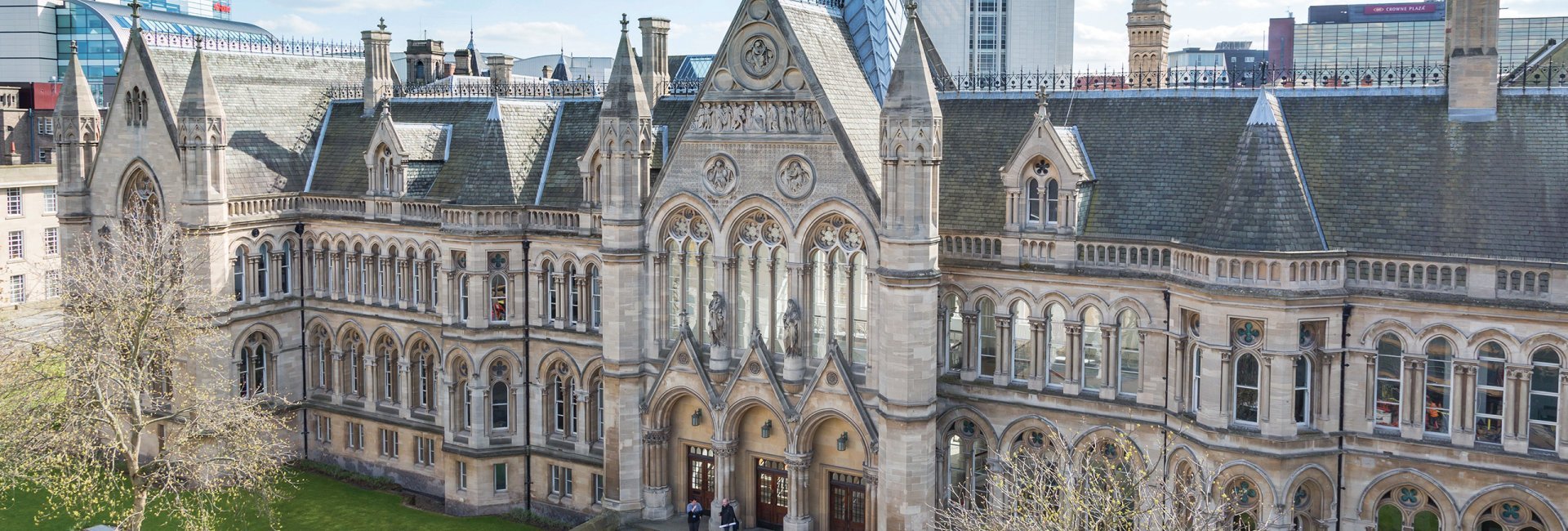
Nottingham Trent University - 7 March Open Day
7 Mar 2026, 09:00
Nottingham
Enter a world of crime, offenders, victims and the criminal justice system. This degree truly combines theory and knowledge with the world of practice as you explore the complex issues of law enforcement and police procedure, alongside ethics and crime analysis.
You'll explore the 'crime experience' from the perspective of the victims and perpetrators; what motivates people to commit crime and how society responds to it; and how crimes are solved through modern policing investigative techniques.
You'll be guided through your journey with us by our teaching team who have a crucial mix of experienced criminologists, and career law-enforcement professionals, who between them have decades of experience on the beat and working to shape the criminal justice system.
Why choose this course at NTU:
Combine theory with the real world, with key insights into criminology and the cause and efect of crime, alongside how modern policing really works.
Customise your course with a range of optional modules in your final year, enabling you to tailor the course to your own areas of interest.
Meet guest speakers, from authors and analysts, to the convicts-turned-criminologists and activists.
Get frontline experience with the option to work with Notts Police, either as a Special Constable or in their police control room.
This course provides unique insights into crime and policing by combining the 'academic' with real world policing practice. You will have the opportunity to learn about the role of digital media investigators (DMIs), and the investigation and impact of digital crime. You'll explore how technology is both utilised by criminals, and is a key weapon for fighting crime for crime fighting agencies.
Within practical modules, you will also learn more about crime scene investigators (CSIs), and visit the Crime Scene House at our Clifton Campus to learn more about crime scene analysis and how to forensically recover evidence.
All of our modules will contribute to their overall experience that means you will be well-prepared to enter an exciting and fulfilling career, whether that be shaping the future of policy and the criminal justice sector, patrolling the streets, or working with offenders and victims of crime.
In Year One you'll study: The Criminal Justice Process; Problem Solving and Decision Making; Conversations in Criminology; Police Powers; and the Criminal Justice System and Crime Investigations.
In Year Two you'll study: Public Protection; Crime Reduction and Community Safety; Explaining Crime; and Crime Investigations. You'll also be able to choose between two optional modules: Evidence-Based Police Intelligence and Community Policing; or Applied Criminology.
After Year Two you could have the optional to undertake a year-long placement as part of a sandwich year. This is something you can discuss with us once you're enrolled on the course.
In your Final Year, you'll study: Future Directions in Criminology; and complete your Dissertation/Research Project. You can also choose three optional modules from different sets. Set 1 includes Media and Crime OR Digital Policing and Counter Terrorism. Set 2 includes Drugs, Crime and Justice OR Young People, Crime and Justice. Set 3 includes Serious and Organised Crime OR Cybercrime.
Year One — coursework and written;
Year Two — coursework, written and practical;
Year Three — coursework, written and practical.
The following entry points are available for this course:
A lower offer may be made based on a range of factors, including your background (such as where you live and the school or college you attended), your experiences and individual circumstances (you may have been in care, for example). This is called a contextual offer and we get data from UCAS to make these decisions. NTU offers a student experience like no other, and this approach helps us to find students who have the potential to succeed here, but may have faced barriers that can make it more difficult to access university.
We also consider equivalent qualifications and combinations. Please contact Nottingham Trent University Admissions team for further information.
NTU makes contextual offers for this course to give everyone a fair chance to access their chosen degree.
Contextual offers are lower than our standard entry criteria or may be an unconditional offer for courses that require a portfolio. We also take individual circumstances into account when we receive results and may accept grades lower than our published criteria.
We use a range of data from UCAS to make our offers and more information on our approach is available at the link below.
This section shows the range of grades students (with UK A-Levels or Pearson BTEC Level 3 National Extended Diplomas) who received offers were previously accepted with (learn more). It is designed to support your research but does not guarantee whether you will or won't get a place. Admissions teams consider various factors, including interviews, subject requirements, and entrance tests. Check all course entry requirements for eligibility.
We are unable to show previous accepted grades for this course. This could be because the course is new, it's a postgraduate course, there isn't enough historical data, or the provider has opted out of sharing their entry grades data for this course - learn more.
| Location | Fee | Year |
|---|---|---|
| England | £9790 | Year 1 |
| Northern Ireland | £9790 | Year 1 |
| Scotland | £9790 | Year 1 |
| Wales | £9790 | Year 1 |
| EU | £17950 | Year 1 |
| International | £17950 | Year 1 |
Tuition fee status depends on a number of criteria and varies according to where in the UK you will study. For further guidance on the criteria for home or overseas tuition fees, please refer to the UKCISA website.
The tuition fees above are subject to parliamentary procedure. They haven't been confirmed yet, but we expect them to be finalised by May 2026. The level of tuition fees for the second and subsequent years of your undergraduate course may increase in line with inflation and as specified by the UK government.
50 Shakespeare Street
Nottingham
NG1 4FQ
Visit our website Visit our course page
Phone:+44(0)115 848 4200