Physics combines analytical reasoning and problem solving, using the language of mathematics to understand the universe. Our Physics programmes are perfect for those with a deep desire to understand how everything works, from the subatomic quantum world to the vastness of the cosmos and our BSc Physics with Particle Physics and Cosmology degree grapples with the most fundamental of physical questions about the building blocks of matter and the origin of the cosmos.
Throughout your studies you will delve into fundamental physical concepts and mathematical techniques to learn about the quantum world and its relation to the cosmos, with specialist topics including Astronomy and Astrophysics, Gravitation and Cosmology, Quantum Information, Nuclear and advanced Particle Physics.
We are proud of our research at the frontiers of physics and strive to inspire the next generation of physicists, with an exciting environment for learning and research. Our curriculum is shaped by world-leading experts across a wide spectrum of research areas, ranging from semiconductors, nanophysics and lasers, to the physics of antimatter, quantum fields and the early universe. Our extensive network of research collaborations, including at large-scale facilities such as CERN, gives exciting project and research opportunities.
The Physics department at Swansea is a highly regarded department, with internationally renowned academics.
Throughout your studies you will be equipped with the scientific understanding, quantitative skills, and critical thinking needed to address global challenges including energy, climate, health, and innovation. You will learn how fundamental areas of physics, such as thermodynamics, statistical physics, electromagnetism, and quantum mechanics, underpin many current and emerging technologies that are critical to sustainable development goals.
You will develop a range of skills necessary to plan and execute investigations and analyse data, with further opportunities to undertake experimental work in the practical or observational aspects of physics. You will also have opportunities to undertake research projects at the cutting edge of theoretical or experimental physics, as well as astrophysics.
On completion of the course, you will be equipped with the skills, knowledge and experience to confidently enter the workforce across a wide range of sectors including government research, aerospace, defence, energy, engineering, education and the private sector. Physics graduate roles include:
You may also go on to pursue postgraduate studies and research with a wide variety of specialisations.
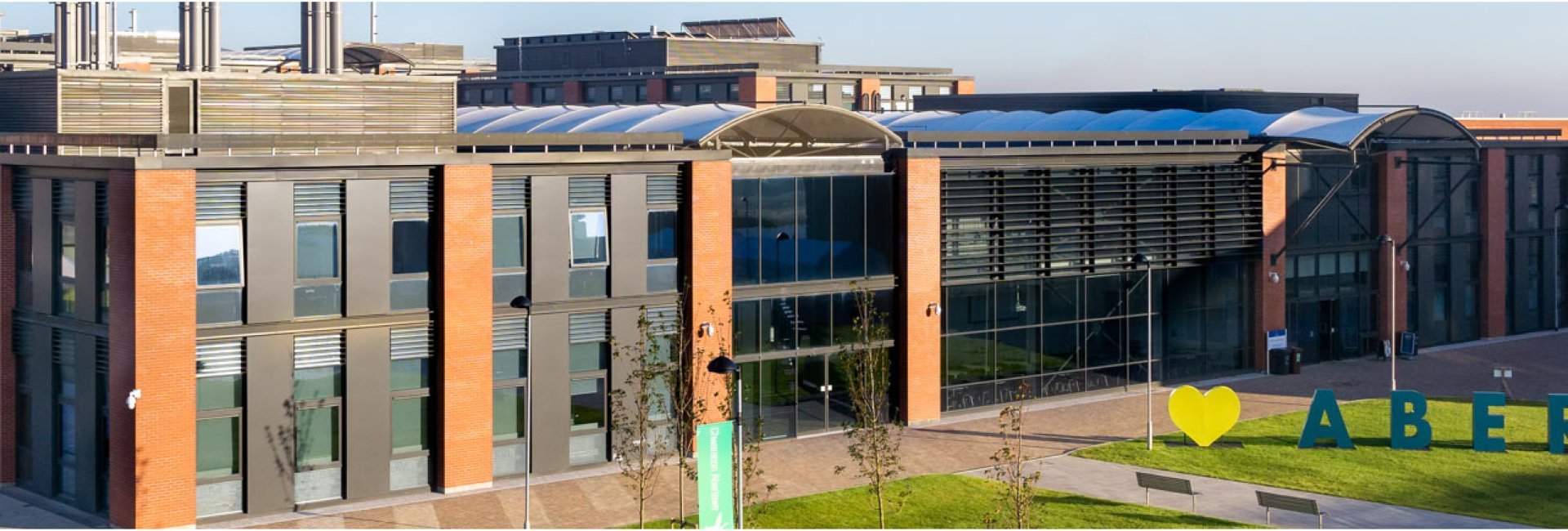
From September 2027, the Physics Department will be based at the Bay Campus, where all Physics programmes will be taught, benefitting from our advanced research laboratories and state-of-the-art facilities.