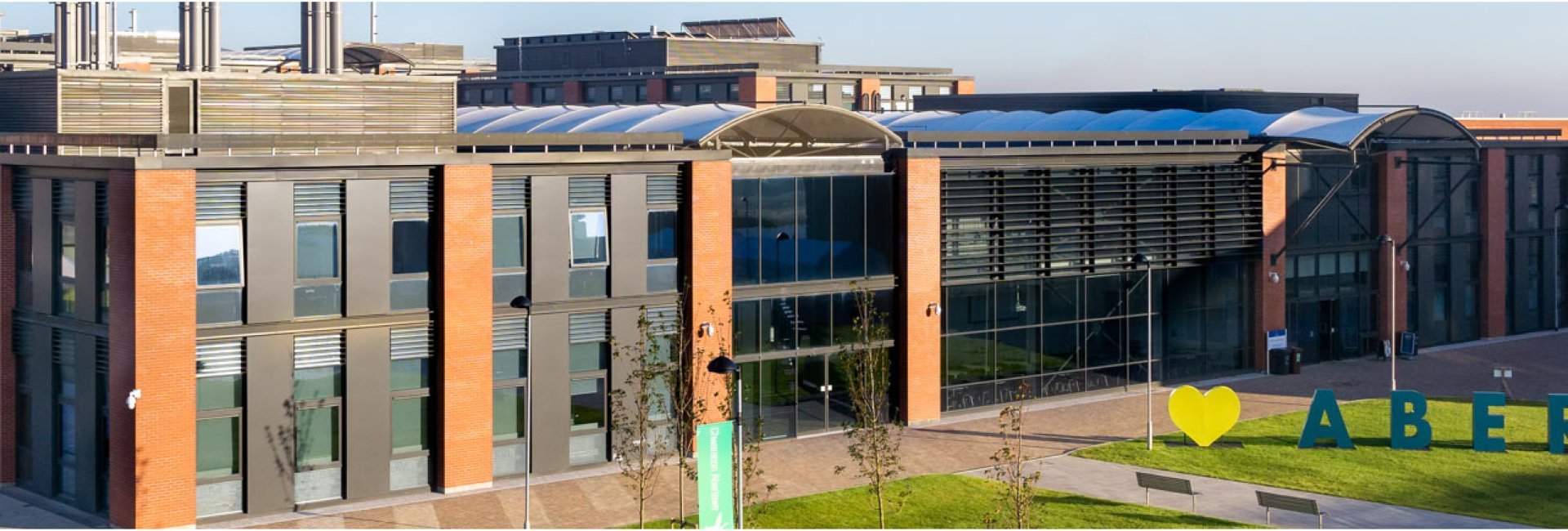
Undergraduate On-Campus Open Day at Swansea University - Singleton Park Campus and Bay Campus - 28 March 2026
28 Mar 2026, 08:30
Swansea

Physics combines analytical reasoning and problem solving, using the language of mathematics to understand the universe. Our Physics programmes are perfect for those with a deep desire to understand how everything works, from the subatomic quantum world to the vastness of the cosmos and our BSc Physics with Particle Physics and Cosmology degree grapples with the most fundamental of physical questions about the building blocks of matter and the origin of the cosmos.
Throughout your studies you will delve into fundamental physical concepts and mathematical techniques to learn about the quantum world and its relation to the cosmos, with specialist topics including Astronomy and Astrophysics, Gravitation and Cosmology, Quantum Information, Nuclear and advanced Particle Physics.
We are proud of our research at the frontiers of physics and strive to inspire the next generation of physicists, with an exciting environment for learning and research. Our curriculum is shaped by world-leading experts across a wide spectrum of research areas, ranging from semiconductors, nanophysics and lasers, to the physics of antimatter, quantum fields and the early universe. Our extensive network of research collaborations, including at large-scale facilities such as CERN, give exciting project and research opportunities.
Why Physics with Particle Physics and Cosmology at Swansea?
The Physics department at Swansea is a highly regarded department, with internationally renowned academics.
Physics at Swansea University is ranked:
6th in the UK for Student Satisfaction (Complete University Guide 2026)
UK Top 20 for Student Experience (Times Good University Guide 2026)
Top 201-250 in the world (QS World University Rankings 2025)
Your Physics with Particle Physics and Cosmology Experience
Throughout your studies you will be equipped with the scientific understanding, quantitative skills, and critical thinking needed to address global challenges including energy, climate, health, and innovation. You will learn how fundamental areas of physics, such as thermodynamics, statistical physics, electromagnetism, and quantum mechanics, underpin many current and emerging technologies that are critical to sustainable development goals.
You will develop a range of skills necessary to plan and execute investigations and analyse data, with further opportunities to undertake experimental work in the practical or observational aspects of physics. You will also have opportunities to undertake research projects at the cutting edge of theoretical or experimental physics, as well as astrophysics.
Physics with Particle Physics and Cosmology Employment Opportunities
On completion of the course, you will be equipped with the skills, knowledge and experience to confidently enter the workforce across a wide range of sectors including government research, aerospace, defence, energy, engineering, education and the private sector. Physics graduate roles include:
Research Physicist
Data Scientist
AI and Software Engineer
Demand Forecaster
Patent Examiner
Quantitative Finance Analyst
You may also go on to pursue postgraduate studies and research with a wide variety of specialisations.
In Year 1, you will typically study areas including: Classical Mechanics; Astronomy and Cosmology; Mathematics for Physicists; Physics of Fields and Matter; Quantum World; and Practical Physics which can be studied in English or Welsh.
In Year 2, you will typically study areas including: Electromagnetism; Practical Physics; Mathematics for Physicists; Thermal and statistical physics; Quantum Mechanics; Particle experiments and astrophysics and Professional Development and Career Planning
In Year 3, you will typically study areas including: Nuclear and Particle Physics; Condensed Matter Physics; Gravity and Cosmology; Advanced Particle Physics; Atomic Physics; Science Communication with Placement; and a Particle Physics and Cosmology project.
We are proud to provide an outstanding educational experience, using the most effective learning and teaching approaches, carefully tailored to suit the specific needs of your course. Our programme consists of in-person, on-campus teaching, enabling full engagement with your lecturers and fellow students.
We believe in fostering a learning environment where students actively engage with physics concepts through experimentation, data analysis, and problem-solving. We offer informal weekly Maths drop-in support sessions to assist with developing and enhancing problem solving skills. These are mentored by postgraduate students.
We use inquiry-based learning, labs and practical work and diverse assessment types throughout the programme. The labs and practical work promote active engagement, hands-on learning, diverse skills development and real-world experience. The research project modules gives you the opportunity to participate in real-life research, working on real-world problems/questions. Lectures take place in larger group sessions, in a lecture theatre setting. The course content is explored in further detail in workshops, allowing for further collaborative working with your peers.
Lecture recordings allow for more flexibility to revisit material, to revise for assessments and to enhance learning outside of the classroom. Some modules have extra resources in Canvas, our virtual learning environment, such as videos, slides and quizzes enabling further flexible study.
This course may offer some modules taught through the medium of Welsh or bilingually for students who consider themselves to be fluent Welsh speakers. For more details on the provision available see the Welsh Provision expander below.
This course may offer some modules taught through the medium of Welsh or bilingually for students who consider themselves to be fluent Welsh speakers. For more details on the provision available see the Welsh Provision expander below.
Professionally accredited courses provide industry-wide recognition of the quality of your qualification.
The following entry points are available for this course:
If you are an International Student, please visit our International pages for more information about entry requirements: http://www.swansea.ac.uk/international/students/requirements/
Discover what it's like to study Physics with Particle Physics & Cosmology at Swansea University: insights on the course, making friends, personal statement tips, uni prep, and recommended books, podcasts, and videos.

English Language Requirements at Swansea University https://www.swansea.ac.uk/admissions/english-language-requirements/
UK applicants who meet course requirements are guaranteed a conditional offer. We assess applications on individual merit. We consider making reduced offers, eg. to Care Leavers or students with extenuating circumstances. We encourage you to disclose any relevant circumstances.
The Advanced Skills Baccalaureate Wales is considered as equivalent to one full A-Level and students can take x2 A-levels alongside this. EPQ students predicted Grade B or above will receive a one-grade offer reduction.
This section shows the range of grades students (with UK A-Levels or Pearson BTEC Level 3 National Extended Diplomas) who received offers were previously accepted with (learn more). It is designed to support your research but does not guarantee whether you will or won't get a place. Admissions teams consider various factors, including interviews, subject requirements, and entrance tests. Check all course entry requirements for eligibility.
We are unable to show previous accepted grades for this course. This could be because the course is new, it's a postgraduate course, there isn't enough historical data, or the provider has opted out of sharing their entry grades data for this course - learn more.
No fee information has been provided for this course
Tuition fee status depends on a number of criteria and varies according to where in the UK you will study. For further guidance on the criteria for home or overseas tuition fees, please refer to the UKCISA website.
For the latest fee information, please check the individual course page on our website. Our full range of programmes are listed here: https://www.swansea.ac.uk/undergraduate/courses/
Further information on tuition fees can be found here: https://www.swansea.ac.uk/undergraduate/fees-and-funding/tuition-fees/
Singleton Park
Swansea
SA2 8PP
Visit our website Visit our course page
Ask us a question - undergraduate enquiries.
Email:study@swansea.ac.uk
Phone:01792 295111
Email:study@swansea.ac.uk
Phone:01792 295111
Fax: 01792 295110
At Swansea University