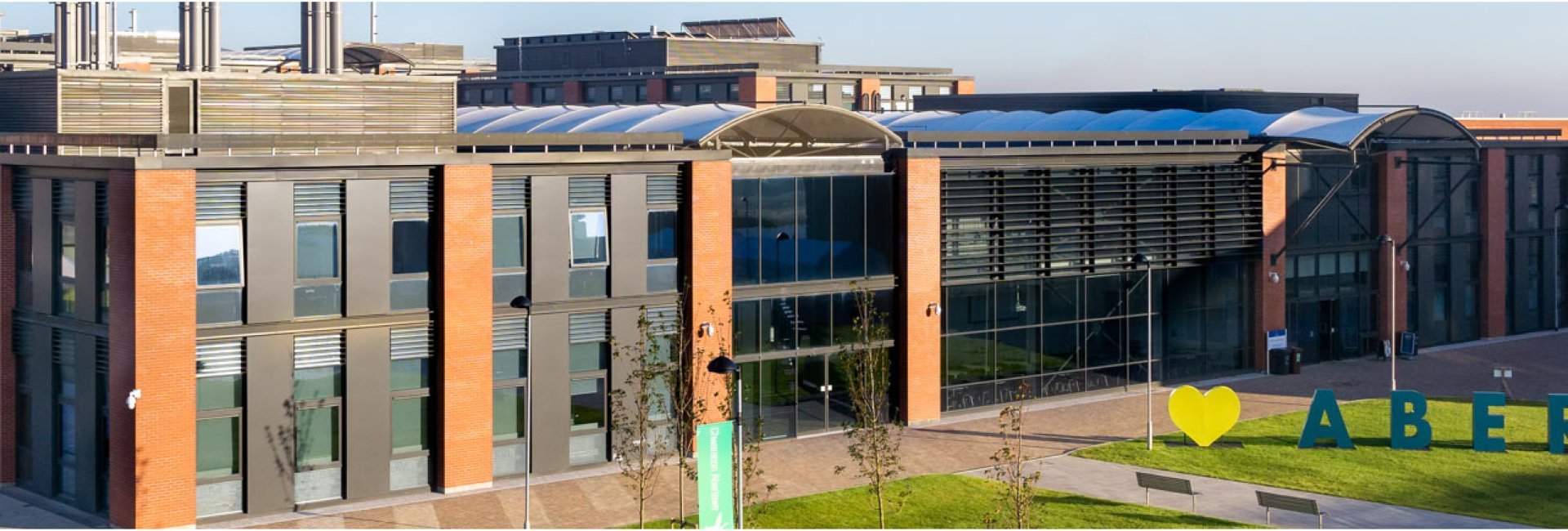
Undergraduate On-Campus Open Day at Swansea University - Singleton Park Campus and Bay Campus - 28 March 2026
28 Mar 2026, 08:30
Swansea

Discover the science behind drugs and medicines, their effects on living systems, and the role they play in treating disease with Medical Pharmacology at Swansea University.
Throughout the course, you will study topics including toxicology, physiology, biochemistry, genetics, immunology, and drug development. You will also develop excellent analytical and project management skills as you design experiments and plan work programmes in preparation for your future career.
You will be encouraged to challenge accepted wisdom in all fields of medical and life sciences, appreciate current limitations, and future advances, of our current understanding of health and disease.
You will gain a holistic understanding of the multidisciplinary nature of pharmacology and the collaboration required to succeed in a field that increasingly combines innovation in research, patient care and commercial enterprise.
With a blend of compulsory and optional modules, aligning these with your interests, career goals, or future study.
The optional Foundation Year for this programme can give you an exciting introduction to higher education, setting you up with the skills, confidence, and knowledge that you’ll need to be successful in your undergraduate degree. It’s ideal if you need a little more support after further education or are returning to education after a gap. Following successful completion of the Foundation Year, you will progress onto Year 1 of your BSc.
This programme is also available as a 4-year MSci, which is an advanced undergraduate degree, adding a further research-focused year to your degree. Our MSci leads to a master’s level qualification, in addition to your undergraduate degree, giving you expert scientific training and a springboard towards a range of specialist careers.
In Year 1, you will typically study areas including: Genetics, Genomics & Evolution, Cell Biology, Introduction to Toxicology: The Dose Makes the Poison, and Human Physiology. In Year 2, you will typically study areas including: Metabolic Regulation: Enzymes & Signal Transduction, Communicating Medical Sciences, Introduction to Pharmacology: Dynamics and Kinetics, Pharmacogenomics: Genes on Drugs, Biostatistics, Human Immunology and others. In Year 3, you will typically study areas including: Being a Medical Scientist, Advances in Pharmacology, Human Biology and the Environment, Drug Development and Regulation, Nanotoxicology, The Sweet Sickness: Advances in Diabetes and Related Disorders, Machine Learning in Healthcare, Cancer Pharmacology, The Neuroscience of Learning, Memory and Cognition and others.
Assessments will include Laboratory practicals, written exams, oral presentations, written assignments, and clinical skills assessments. The range of assessment methods is chosen to develop and demonstrate a range of skills transferable to the modern healthcare environment including reflection, oral and written communication, confidence and competence.
The following entry points are available for this course:
If you are an International Student, please visit our International pages for more information about entry requirements: http://www.swansea.ac.uk/international/students/requirements/
Discover what it's like to study Medical Pharmacology at Swansea University: insights on the course, making friends, personal statement tips, uni prep, and recommended books, podcasts, and videos.

For applicants whose first language is not English we require a minimum overall IELTS score of 6.0 (or equivalent) and no less than 5.5 in each component.
English Language Requirements at Swansea University https://www.swansea.ac.uk/admissions/english-language-requirements/
UK applicants who meet course requirements are guaranteed a conditional offer. We assess applications on individual merit. We consider making reduced offers, eg. to Care Leavers or students with extenuating circumstances. We encourage you to disclose any relevant circumstances.
The Advanced Skills Baccalaureate Wales is considered as equivalent to one full A-Level and students can take x2 A-levels alongside this. EPQ students predicted Grade B or above will receive a one-grade offer reduction.
This section shows the range of grades students (with UK A-Levels or Pearson BTEC Level 3 National Extended Diplomas) who received offers were previously accepted with (learn more). It is designed to support your research but does not guarantee whether you will or won't get a place. Admissions teams consider various factors, including interviews, subject requirements, and entrance tests. Check all course entry requirements for eligibility.
We are unable to show previous accepted grades for this course. This could be because the course is new, it's a postgraduate course, there isn't enough historical data, or the provider has opted out of sharing their entry grades data for this course - learn more.
No fee information has been provided for this course
Tuition fee status depends on a number of criteria and varies according to where in the UK you will study. For further guidance on the criteria for home or overseas tuition fees, please refer to the UKCISA website.
For the latest fee information, please check the individual course page on our website. Our full range of programmes are listed here: https://www.swansea.ac.uk/undergraduate/courses/
Further information on tuition fees can be found here: https://www.swansea.ac.uk/undergraduate/fees-and-funding/tuition-fees/
Singleton Park
Swansea
SA2 8PP
Visit our website Visit our course page
Ask us a question - undergraduate enquiries.
Email:study@swansea.ac.uk
Phone:01792 295111
At Swansea University