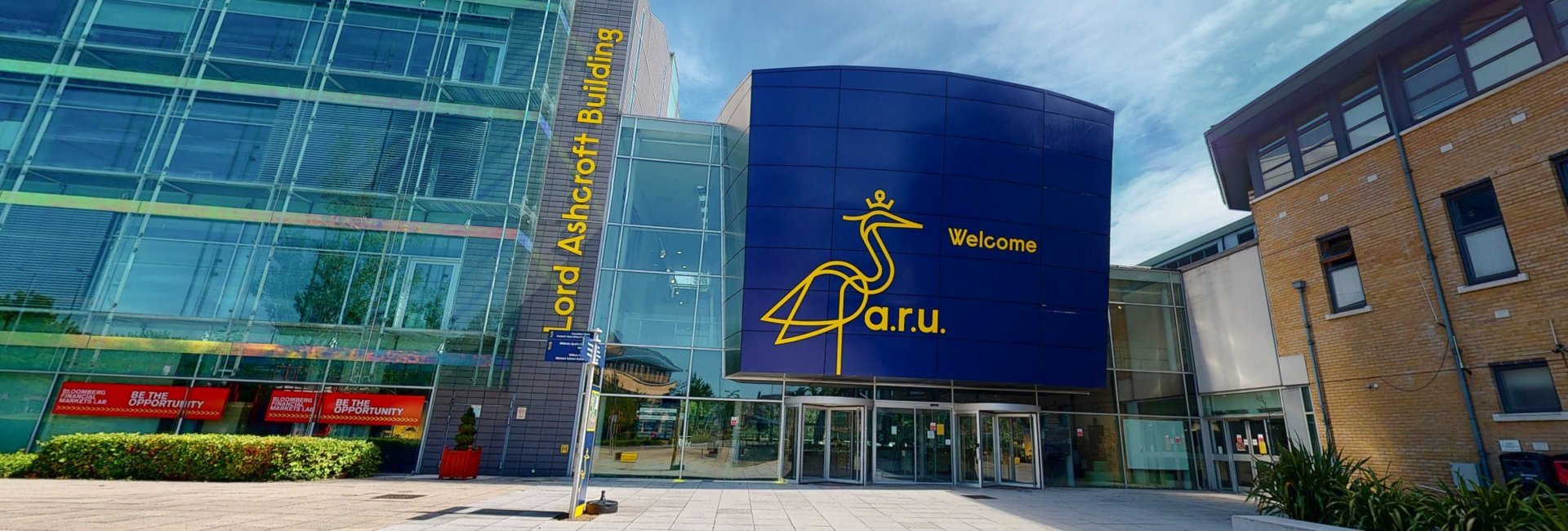
Anglia Ruskin University - Undergraduate Open Day - Writtle
6 Jun 2026, 09:00
Writtle, Chelmsford

Gain real-world experience and learn how to support children's mental health and wellbeing on our Working with Children, Families and Communities degree in Chelmsford.
During your studies you’ll unpick issues of social justice, inclusion, diversity, and equality and understand how to support a diverse range of people. You’ll develop your ability to critically reflect on experiences, as well as a broad and balanced societal view supported by theoretical knowledge and research evidence.
The Government’s aspiration is for different services to work together in a more integrated way to support children, young people and their families. Numerous services, from education to social care, can play a part in doing this – and our course will give you the skills and knowledge you need to pursue a career in these areas.
Year 1
Critical Skills for Higher Education
Perspectives on the Child 1: Childhood as a Construct - Physical and Social Development of Children
Contemporary Issues in Social Work
Safeguarding in Context
Year 2
Studying Research in an Interprofessional Context
Perspectives on the Child 2: The Family School and Community
Reflective Practice in an Interprofessional Context
Ruskin Module
Working with Communities: Identifying and Responding to Needs
Year 3
Special Focus Project
Perspectives on the Child 3: Inclusion
Sustainable Social Work
Working with Communities: Community Engagement
Assessments happen in a number of ways and include patchwork text, essays, written reflection and presentations. There are also opportunities for informal (formative assessment) to give you the necessary support and opportunities to be an active learner and to make contributions to our learning community in lectures, seminars or online groups. Your tutors will monitor individual, group and cohort learning in order to personalise teaching approaches so that you learn in the way that is most suited to you.
This is the equal consideration deadline. You can still apply after this date, but your application may not receive guaranteed consideration.

Anglia Ruskin University has participated in the Teaching Excellence Framework. These ratings were awarded in 2023, for four years.
See why these ratings were awarded
What does this TEF outcome mean?
The following entry points are available for this course:
Find out more about qualification requirements for this course.
ARU operates a policy of making contextualised offers for this course which may be a reduced conditional offer or an unconditional offer, using data from UCAS to make our assessment. We consider that this approach promotes the equality of educational opportunity for applicants from low participation groups in HE. ARU welcomes students from diverse backgrounds and helping them achieve their full potential. The offer of a place through the contextual offer process is at the discretion of ARU.
This section shows the range of grades students (with UK A-Levels or Pearson BTEC Level 3 National Extended Diplomas) who received offers were previously accepted with (learn more). It is designed to support your research but does not guarantee whether you will or won't get a place. Admissions teams consider various factors, including interviews, subject requirements, and entrance tests. Check all course entry requirements for eligibility.
We are unable to show previous accepted grades for this course. This could be because the course is new, it's a postgraduate course, there isn't enough historical data, or the provider has opted out of sharing their entry grades data for this course - learn more.
| Location | Fee | Year |
|---|---|---|
| England | £9790 | Year 1 |
| Northern Ireland | £9790 | Year 1 |
| Scotland | £9790 | Year 1 |
| Wales | £9790 | Year 1 |
| Channel Islands | £9790 | Year 1 |
| Republic of Ireland | £9790 | Year 1 |
Tuition fee status depends on a number of criteria and varies according to where in the UK you will study. For further guidance on the criteria for home or overseas tuition fees, please refer to the UKCISA website.
https://www.aru.ac.uk/student-life/preparing-for-study/help-with-finances/undergraduate
https://www.aru.ac.uk/study/tuition-fees
East Road
Cambridge
CB1 1PT
Visit our website Visit our course page
Email:answers@aru.ac.uk
Phone:01245 686868
At Anglia Ruskin University