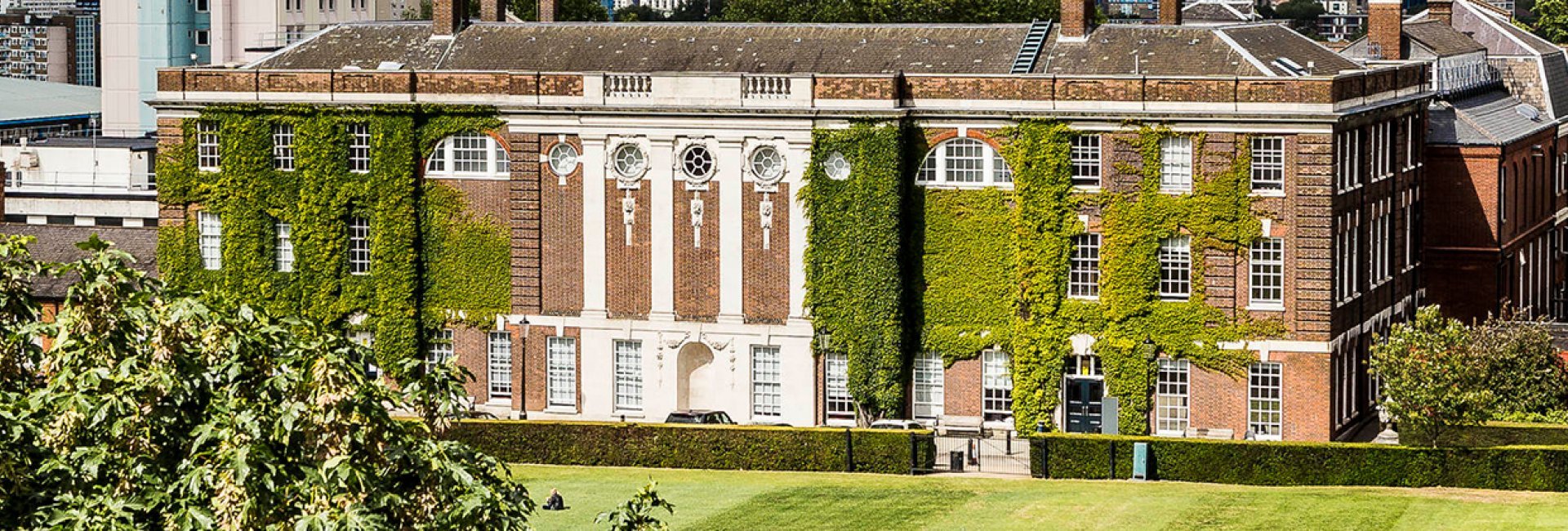
Goldsmiths, University of London - Virtual Campus Tour
25 Nov 2025, 12:00
London

This programme is for curious and engaged students who wish to pursue a career in digital, video or audio journalism. Rarely has journalism been more urgent and in need of a generation equipped to report on our rapidly changing world in dynamic, creative ways. You'll be guided by our diverse team of award-winning media professionals and respected academics, who will guide to you to craft stories across platforms, help you find meaningful stories and discover your voice.
Why study BA Journalism at Goldsmiths
Study in one of the top Media, Communications and Cultural Studies Schools globally. We are ranked second in the UK for 'world-leading or internationally excellent' research (REF, 2021) and 16th in the world (third in the UK) in the 2024 QS World Rankings by Subject.
Learn a range of cutting-edge skills that will equip you to work across different journalistic platforms from print and digital to broadcast.
Develop data journalism skills and learn how to use them to create compelling infographics.
Work in professional broadcast studios, both TV and radio/podcasting, to produce news bulletins and long-form programming. You’ll learn a range of exciting skills on camera and behind the scenes, including filming, interviewing, scripting, presenting and editing.
Whether you’re passionate about politics, the climate emergency, social justice, culture, sport, fashion, music and beyond, we will teach you how to find stories around every corner you turn and draw them out of the people you meet.
At the end of your studies, you’ll produce a multimedia feature on a subject you care about, where you will bring together all the skills learnt.
Publish your work on a live local news website (EastLondonLines) while you study. You will report on issues and events happening in the heart of some of London’s most diverse and dynamic boroughs.
Alongside practical training, you will study theory as part of our commitment to critical approaches to the media.
At a time when journalism has become increasingly uncritical, we believe in the figure of the journalist as a public intellectual. You’ll learn how to situate journalism within a wider cultural, political and global context, how to ask the right questions and think critically about how the world functions and the role of journalism within it.
We take a global, decolonial approach to journalism so you can contribute to fostering transnational dialogue and develop ways to counter inequality.
We prepare you for a career in the media industry and beyond. Our graduates have gone on to work for major media organisations including: The Independent, The Economist, Sky News, BBC Arabic, Channel 4, Conde Nast and The Financial Times. You’ll also develop transferable skills to expand your career options.
Our teaching takes place on our purpose-built site, where we teach in small groups with a focus on high-quality lectures and practical workshops.
Located in the heart of London, you’ll benefit from our close links with the thriving media industry both in the city and worldwide. You’ll be able to enjoy access to exciting opportunities, build a portfolio of work, opt to do an internship and get careers advice while studying.
Year 1 (credit level 4)
All modules in your first year are compulsory:
Introduction to Power, Politics and Public Affairs
Introduction to Multimedia Journalism
News and Culture
Key Debates in Media Studies
Introduction to Coding and Digital Methods for Journalism
Broadcast journalism 1: Audio and Video
Year 2 (credit level 5)
You will take the following compulsory modules:
Multimedia Journalism
Data Journalism and Visualisation
Journalism and Society
Media Law and Ethics
Feature Writing
Broadcast Journalism 2: The Magazine Show
Year 3 (credit level 6)
You take one compulsory module:
Final Multimedia Project and Portfolio
Optional modules
You'll then take optional modules to the value of 60 credits (2-4) from an approved list provided by the School of Media, Communication and Cultural Studies each year.
These include practical and theory modules from across the School.
Recent examples of optional modules include:
Photo-journalism
Podcasting
Arts and Fashion Journalism
Work Placement
Dissertation
Contemporary Feminist Media Cultures
Digital Audiovisual Media: New Aesthetics and Practices
Structure of Contemporary Political Communications
Race, Empire and Nation
Embodiment and Experience
Social Media in Everyday Life: A global perspective
Mediating Violence: Feminist, Queer, Decolonial Perspectives
Music as Communication and Creative Practice
Virtual and immersive media experience
Race and Technology
Please note that due to staff research commitments not all of these modules may be available every year.
You’ll be assessed by a variety of methods, depending on your module choices. These include coursework assignments such as extended essays, reports, presentations, practice-based projects or essays/logs, group projects and reflective essays, as well as seen and unseen written examinations.
This is the equal consideration deadline. You can still apply after this date, but your application may not receive guaranteed consideration.

Goldsmiths, University of London has participated in the Teaching Excellence Framework. These ratings were awarded in 2023, for four years.
See why these ratings were awarded
What does this TEF outcome mean?
The following entry points are available for this course:
120 credits at Level 4 and a 2:1 average in a comparable programme, and meet the standard qualification requirements for Year 1 of the programme.
Pass with 45 Level 3 credits including 24 Distinctions and a number of merits/passes in subject specific modules.
With three Higher Level subjects at 555
Each application will be considered on its individual merits. Where the T Level subject area does not directly match the degree programme being applied for, the personal statement and reference will be particularly important in demonstrating interest, enthusiasm and suitability for the subject.
As the course demands significant amounts of writing, it's important that you are able to cope with the rigours of the course. You may be asked for examples of written work and called to interview.
You should have Grade C/Grade 4 (or equivalent) or above in GCSE Mathematics.
| Test | Grade | Additional details |
|---|---|---|
| IELTS (Academic) | 6 | With a 6.0 in writing and no element lower than 5.5 |
English Language Requirementshttps://www.gold.ac.uk/apply/english-language-requirements/
We pay careful attention to your personal statement which is your opportunity to demonstrate your interest in your desired subject. Portfolio programmes offer you the opportunity to demonstrate your potential in your desired subject. Referees are also welcome to include any relevant contextual comments around your academic achievements. We consider all these things when making a decision as well as your qualifications and grades. If you are unsure about applying, we would be happy to advise you.
This section shows the range of grades that students who received offers were previously accepted on to this course with (learn more).
It is designed to support your research but does not guarantee whether you will or won't get a place.
Admissions teams consider various factors, including interviews, subject requirements, and entrance tests. Check all course entry requirements for eligibility.
We are unable to show previous accepted grades for this course. This could be because the course is new, it's a postgraduate course, there isn't enough historical data, or the provider has opted out of sharing their entry grades data for this course - learn more.
| Location | Fee | Year |
|---|
Tuition fee status depends on a number of criteria and varies according to where in the UK you will study. For further guidance on the criteria for home or overseas tuition fees, please refer to the UKCISA website.
To find out the latest information or more about fees and funding, please check our undergraduate fees guidance or contact the Fees Office https://www.gold.ac.uk/ug/fees-funding/
Email:course-info@gold.ac.uk
Phone:020 7078 5300
New Cross
Lewisham
SE14 6NW
At Goldsmiths, University of London