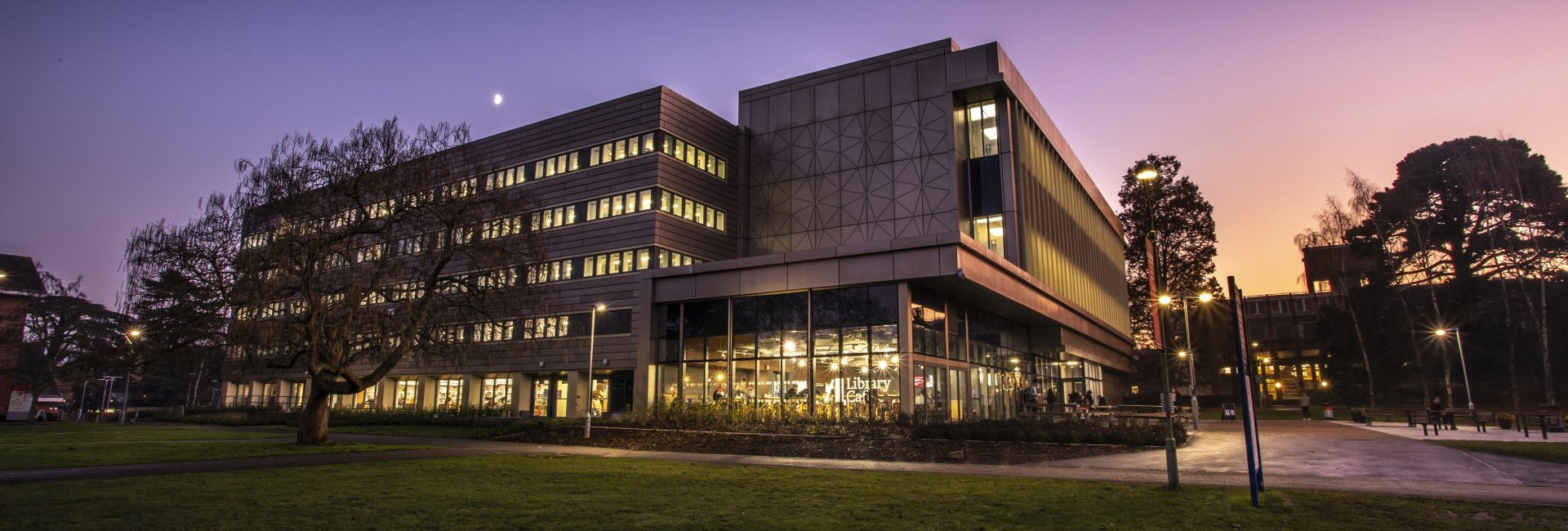
University of Reading - Undergraduate Open Day
19 Jun 2026, 08:00
Reading

Study BSc Chemistry with a Year in Industry or Research and gain first-hand experience of the chemical or pharmaceutical industry.
During the first two years you will learn the core chemistry topics which all chemists need to know. Topics include trends in the periodic table, carbonyl group chemistry and chemical kinetics.
You will be taught by world-leading experts through a combination of lectures, lab classes, workshops and tutorials.
The work placement in your third year gives you the opportunity to gain industrial experience as well as the chance to apply your knowledge and skills to real-life situations. Recent host companies have included GSK, Unilever and Procter & Gamble.
In your final year you will study more advanced topics influenced by the cutting-edge chemistry taking place around you. The Department 's staff specialise in a number of areas including analytical chemistry, synthesis, polymers and advanced materials, surface science and computational drug design, providing a wide range of options for your final year research project.
If you are interested in teaching as a career, we offer a school-based project in your final year. You will spend one day a week for two terms working alongside both teachers and pupils on an individual project. This project gives you the necessary experience for teacher training applications and helps develop your professional skills for careers which involve working with people.
This course is accredited by the Royal Society of Chemistry (RSC).
Placement
We have a dedicated placements officer who can advise on career options, CVs and letters of application, as well as help you to find a placement. We have previously sent students to companies such as Coty (Rimmel), Dow Corning and GSK. Students have also been placed at foreign research institutions such as the University of Zaragoza, Aarhus University, the University of South Australia and NASA.
For more information, please visit our course page: https://www.reading.ac.uk/ready-to-study/study/subject-area/chemistry-ug/bsc-chemistry-with-a-year-in-industry-research
Modules may include:
This is the equal consideration deadline. You can still apply after this date, but your application may not receive guaranteed consideration.

University of Reading has participated in the Teaching Excellence Framework. These ratings were awarded in 2023, for four years.
See why these ratings were awarded
What does this TEF outcome mean?
The following entry points are available for this course:
Contextual offers for this programme are typically two grades beneath our standard entry requirement, e.g. BCC including A level Chemistry at grade B.
| Test | Grade | Additional details |
|---|---|---|
| IELTS (Academic) | 6.5 | We require a minimum score of 6.5 overall with at least 5.5 in each element of the test (Listening, Speaking, Reading and Writing). |
| TOEFL (iBT) | 88 | We require a minimum score of 88 overall with no less than 17 in Listening and Writing, 18 in Reading and 20 in Speaking. |
| Cambridge English Advanced | B | We require a grade B or a score of 176 overall with no element less than 162. |
| Cambridge English Proficiency | C | We require a grade C or a score of 176 overall with no element less than 162. |
| PTE Academic | 69 | We require a minimum score of 69 overall with at least 59 in each element of the test (Listening, Speaking, Reading and Writing). |
| Institution's Own Test | Test of English for Educational Purposes (TEEP). We require a minimum score of 6.5 overall with at least 5.5 in each element of the test (Listening, Speaking, Reading and Writing). | |
| Trinity ISE | Merit | We require a Merit in each element from ISE II. If you take ISE III or ISE IV, we require a Pass in each element. |
Full list of acceptable English Language Tests http://www.reading.ac.uk/ad-EnglishTests.aspx
We issue offers to best fit the different circumstances and experiences of our applicants. We take a tailored and holistic approach, considering extenuating circumstances on a case-by-case basis. We recognise that some students are more likely than others to face barriers to fulfilling their academic potential at school, through no fault of their own. More information on our supportive offer making approaches can be found at: https://www.reading.ac.uk/ready-to-study/study/what-offer-will-i-get
This section shows the range of grades students (with UK A-Levels or Pearson BTEC Level 3 National Extended Diplomas) who received offers were previously accepted with (learn more). It is designed to support your research but does not guarantee whether you will or won't get a place. Admissions teams consider various factors, including interviews, subject requirements, and entrance tests. Check all course entry requirements for eligibility.
We are unable to show previous accepted grades for this course. This could be because the course is new, it's a postgraduate course, there isn't enough historical data, or the provider has opted out of sharing their entry grades data for this course - learn more.
| Location | Fee | Year |
|---|---|---|
| England | £9790 | Year 1 |
| Northern Ireland | £9790 | Year 1 |
| Scotland | £9790 | Year 1 |
| Wales | £9790 | Year 1 |
| Channel Islands | £9790 | Year 1 |
| Republic of Ireland | £9790 | Year 1 |
| EU | £30650 | Year 1 |
| International | £30650 | Year 1 |
Tuition fee status depends on a number of criteria and varies according to where in the UK you will study. For further guidance on the criteria for home or overseas tuition fees, please refer to the UKCISA website.
For Home students: The University will charge undergraduate home tuition fees at the upper limit set by the UK Government for the relevant academic year. The University will increase tuition fees for Home Undergraduate Students at the start of each academic year, in line with this and the new fee will be communicated to you.
For EU and International students: The University will increase Tuition Fees for International Undergraduate and Integrated Foundation Year Programme Students at the start of each academic year (September). The new fee for each academic year of your Programme will be communicated to you
Whiteknights Campus
Reading
RG6 6UR
Visit our website Visit our course page
Email:ugadmissions@reading.ac.uk
Phone:0118 378 8372
At University of Reading