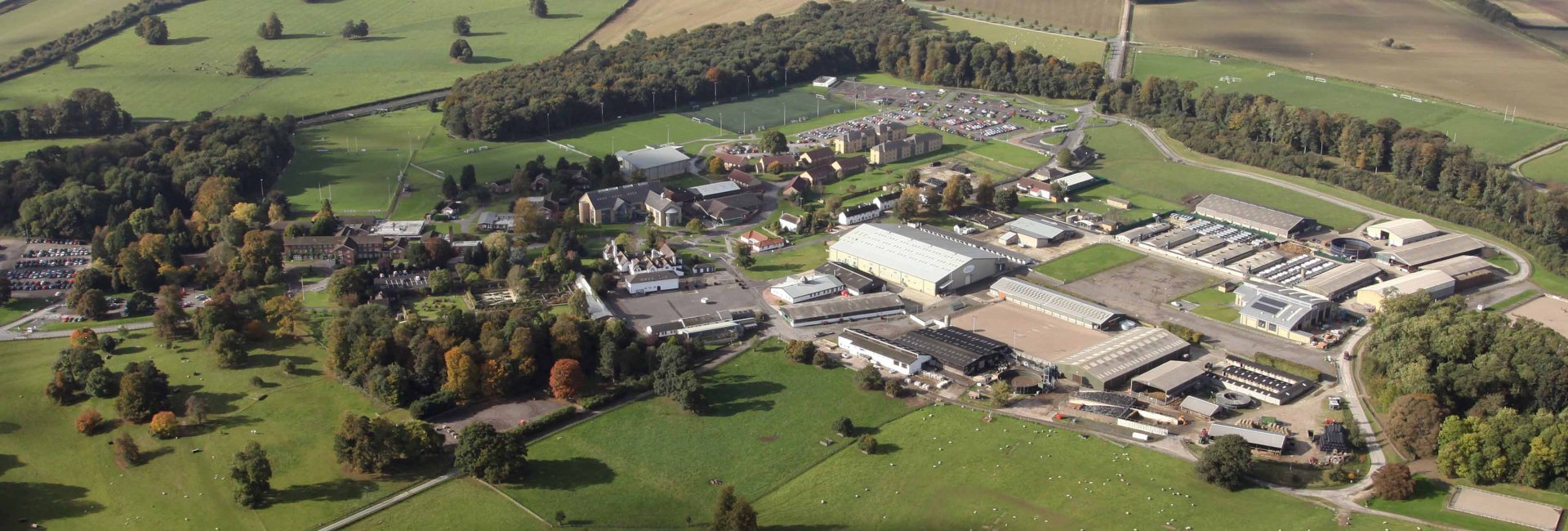
University Centre Bishop Burton - open day event
7 Mar 2026, 10:00
Beverley

Do you dream of working with animals, ensuring their health and welfare while opening doors to an exciting career? This programme equips you with comprehensive expertise but also awards you the industry-recognised HTQ Vet Technician (Livestock) qualification, setting you apart in this competitive field. The programme allows you to explore the fascinating world of companion animals, livestock, and wildlife.
From our state-of-the-art laboratories to farm facilities and animal units, you will apply your knowledge in real-world settings to build confidence and competence. Work experience gives you invaluable industry exposure and the opportunity to develop practical, job-ready skills in professional environments.
What will I Study?
Year 1:
Academic Professional Skills
Comparative Anatomy and Physiology
Applied Animal Health and Nutrition
Applied Animal Behaviour
Animal Handling and Welfare
Professional Skills in the Industry
Year 2:
Livestock Health Management
Data Skills for Animal Scientists
Ethics, Welfare and Legislation
Wildlife Health and Rehabilitation Methods
Leadership Skills in Industry
Advances in Veterinary Diagnostic Technologies and Laboratory Science
Learning and Teaching Approach
This programme is delivered with a variety of learning and teaching approaches to include all students’ learning styles and preferences.
For all modules, theory lectures are delivered that aim to deliver the core content and provide the underpinning knowledge.
To complement the theory lectures, you will have group seminars/practical sessions that are used to reinforce concepts delivered theoretically. The teaching methods focus on facilitating a student-centred approach to enhance your independent learning that takes place outside of the classroom.
What is the contact time?
Approximately 12 - 16 hours a week to include lectures, seminars, work experience, practical's and tutorials. Students are also expected to carry out a significant amount of private study (approx. 25-30 hours a week) Independent study includes reading around the subject, preparing for tutorials and seminars, preparing for, and completing, module assessments; forming an essential part of a student’s learning journey. The part-time route incorporates approximately 9-12 hours of contact time per week, and independent study of (approximately 12-15 hours a week).
What kind of job could I get when I graduate?
You may pursue roles such as/in the following industries: Welfare/animal health inspector (e.g. DEFRA, RSPCA), laboratory animal technician, welfare scientist, environmental enrichment co-ordinator, agriculture consultant, laboratory scientist, animal rescue and rehabilitation, reproduction technologist, management positions, animal welfare societies.
This course may be available at alternative locations, please check if other course options are available.
Course optionsThis section shows the range of grades students (with UK A-Levels or Pearson BTEC Level 3 National Extended Diplomas) who received offers were previously accepted with (learn more). It is designed to support your research but does not guarantee whether you will or won't get a place. Admissions teams consider various factors, including interviews, subject requirements, and entrance tests. Check all course entry requirements for eligibility.
We are unable to show previous accepted grades for this course. This could be because the course is new, it's a postgraduate course, there isn't enough historical data, or the provider has opted out of sharing their entry grades data for this course - learn more.
Choose a specific option to see funding information.
Course optionsBishop Burton
Beverley
HU17 8QG
Email:admissions@bishopburton.ac.uk
Phone:01964 553000
Fax: 01964 553101