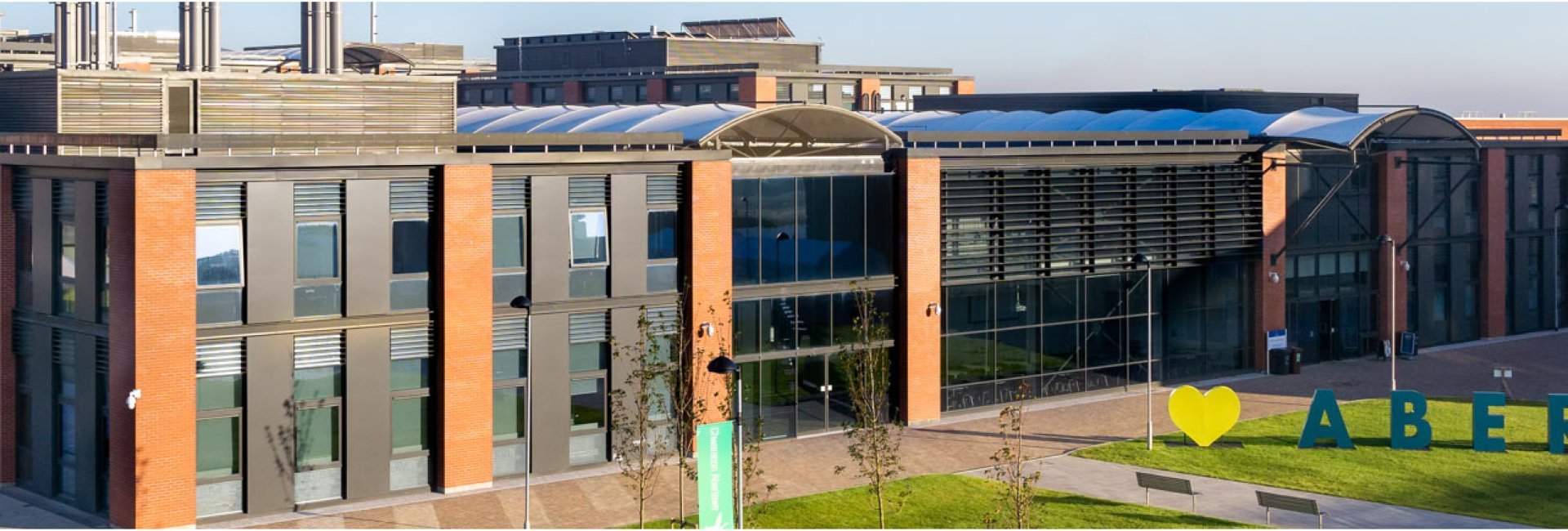
Undergraduate On-Campus Open Day at Swansea University - Singleton Park Campus and Bay Campus - 13 June 2026
13 Jun 2026, 07:30
Swansea

Engage with the most pressing questions and challenges of politics in a globalising world and learn about its many connections with the past with Swansea’s BA in History and Politics.
The Department of History, Heritage and Classic’s expertise covers a wide range of periods and subjects, from Ancient Mediterranean Empires to Europe’s medieval Crusades in the Middle East to the rise and fall of modern dictatorships. Our Lecturers in Politics, Philosophy and International relations will guide your study of contemporary politics and the forces that shape and drive it in the UK and world-wide.
At every stage of the course, you’ll take core modules that will give you a strong foundation of knowledge and skills. Alongside these, you can choose from optional modules that connect to different themes, letting you shape your own pathway based on what interests you most. This mix of structure and flexibility creates an inclusive learning environment where you can follow your passions and tailor your ambitions.
We offer an inclusive, student-focused learning environment and community. Modules are delivered and assessed in a variety of different ways and you will be encouraged to take responsibility for your own learning, to work independently as well as with others, to act professionally, and to master new skills.
The three-year structure of the degree is designed to facilitate progression and development across the levels of study. The optional modules give you the chance to shape your skillset, deepen your knowledge and practice communicating research results to a range of audiences.
Throughout your course you will have a Personal Tutor to support you in meeting your goals. The student-led History Society, which organises social events and cultural activities, is one of the many societies you’ll have access to as a student here at Swansea.
This programme includes opportunities to undertake a Semester or Year Abroad, spent in locations such as Australia, New Zealand, South Korea, Austria, France, Poland, Germany, Belgium, Netherlands, USA, Canada, or Hong Kong, enhancing your learning and offering invaluable life experience.
In Year 1, you will typically study areas including: Interpreting Politics: The Faces and Uses of Power; Freedom Justice and Equality: Key Debates in Political Philosophy; From Facts to Fake News: Being a Historian in the Twenty-First Century; Making Modern Europe, 1789 to the Present; Global Challenges and the Historian; Disinformation, Ideology, and Bias: Researching and examining political data; The Colour Line: Race and Racism in World Politics; Critical Reasoning.
In Year 2, you will typically study areas including: The State and Political Institutions; The Practice of History; The History of Political Thought; America in a Nutshell: A History of Pennsylvania from William Penn to Donald Trump, 1631-2016; The Making of Transatlantic America; The Heirs of Rome: The Making of Christendom, Byzantium, and Islam in the Early Middle Ages, 400-800; Philosophy of the Enlightenment; Anarchy and Order: Theories in International Relations; Global Justice and Human Rights in the Age of Globalisation; America in Crisis: From the Tet Offensive to Trump.
In Year 3: Modules will be dependent on which partnership University you choose to study at.
In Year 4, you will typically study areas including: Researching Politics 1; History Dissertation; The Russian Civil War; The Lights that Failed: the League of Nations and International Peace 1919 -1939; The Hungry World: Food, Famine and the End of Empire, 1880-1945; The Placing of History: Digitally Mapping the Historic Past; Philosophy, Mental Health and Illness; Parliamentary Studies; Capitalism and Justice; Genocide; Dissertation; Monarchy: Ancient and Medieval; The Russian Civil War; The Placing of History: Digitally Mapping the Historic Past; The Story of the USA on Film and Television, 1865-2008; The Lights that Failed: the League of Nations and International Peace 1919 -1939; The Hungry World: Food, Famine and the End of Empire, 1880-1945.
We offer a variety of assessment methods within our programmes. In addition to traditional examinations and essays, examples of alternative assessment include:
Throughout your undergraduate BA History degree, you will develop excellent research and analytical skills and learn to present your ideas effectively both verbally and in writing. For full breakdown of course structure and assessment please visit our course page https://www.swansea.ac.uk/undergraduate/courses/culture-communication/history/ba-history-politics/
or get in touch with us at study@swansea.ac.uk
The following entry points are available for this course:
If you are an international applicant please visit our international pages for more information and details on how to apply:
http://www.swansea.ac.uk/international/
Discover what it's like to study History and Politics with a Year Abroad at Swansea University: insights on the course, making friends, personal statement tips, uni prep, and recommended books, podcasts, and videos.

Access to Humanities Course
International students will also require a score of 4 at Higher Level English Language or Literature, or 5 at Standard Level English Language or Literature.
Swansea University accepts the Advanced Skills Baccalaureate Wales as fully equivalent to x1 A-Level.
Swansea University will accept the Welsh Baccalaureate - Advanced Skills Challenge Certificate as fully equivalent to one A-Level.
We recognise the EPQ as an excellent indicator of success.
If you are predicted a grade B or above in the EPQ, you will receive an offer with a one
grade reduction, to include your EPQ with a grade B.
GCSEs: English/Welsh Language Grade C
English Language Requirements at Swansea Universityhttps://www.swansea.ac.uk/admissions/english-language-requirements/
UK applicants who meet course requirements are guaranteed a conditional offer. We assess applications on individual merit. We consider making reduced offers, eg. to Care Leavers or students with extenuating circumstances. We encourage you to disclose any relevant circumstances.
The Advanced Skills Baccalaureate Wales is considered as equivalent to one full A-Level and students can take x2 A-levels alongside this. EPQ students predicted Grade B or above will receive a one-grade offer reduction.
This section shows the range of grades that students who received offers were previously accepted on to this course with (learn more).
It is designed to support your research but does not guarantee whether you will or won't get a place.
Admissions teams consider various factors, including interviews, subject requirements, and entrance tests. Check all course entry requirements for eligibility.
We are unable to show previous accepted grades for this course. This could be because the course is new, it's a postgraduate course, there isn't enough historical data, or the provider has opted out of sharing their entry grades data for this course - learn more.
No fee information has been provided for this course
Tuition fee status depends on a number of criteria and varies according to where in the UK you will study. For further guidance on the criteria for home or overseas tuition fees, please refer to the UKCISA website.
For the latest fee information, please check the individual course page on our website. Our full range of programmes are listed here: https://www.swansea.ac.uk/undergraduate/courses/
Further information on tuition fees can be found here: https://www.swansea.ac.uk/undergraduate/fees-and-funding/tuition-fees/
You may be eligible for funding to help support your study.
To find out about scholarships, bursaries and other funding opportunities that are available please visit the University's scholarships and bursaries page https://www.swansea.ac.uk/undergraduate/scholarships/
Academi Hywel Teifi at Swansea University and the Coleg Cymraeg Cenedlaethol offer a number of generous scholarships and bursaries for students who wish to study through the medium of Welsh or bilingually. For further information about the opportunities available to you, visit the Academi Hywel Teifi Scholarships and Bursaries page https://www.swansea.ac.uk/academi-hywel-teifi/learn/scholarships/
Ask us a question - undergraduate enquiries.
Email:study@swansea.ac.uk
Phone:01792 295111
Email:study@swansea.ac.uk
Phone:01792 295111
Fax: 01792 295110
Singleton Park
Swansea
SA2 8PP
At Swansea University