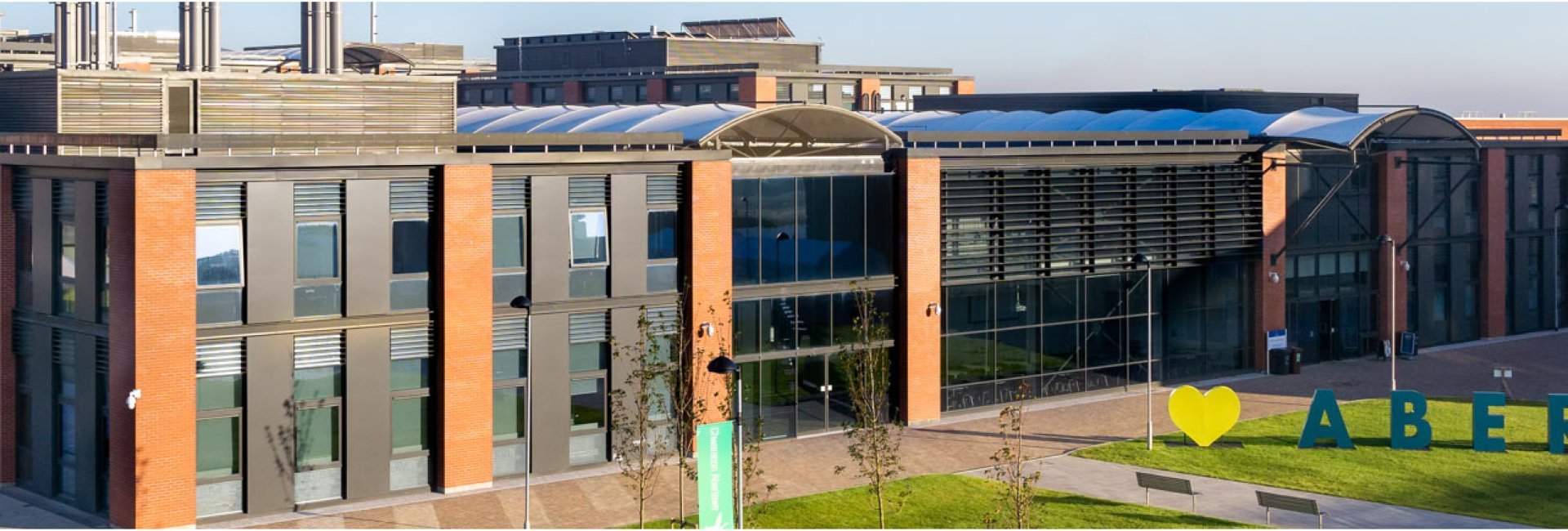
Undergraduate On-Campus Open Day at Swansea University - Singleton Park Campus and Bay Campus - 28 March 2026
28 Mar 2026, 08:30
Swansea

Our Economics and Finance degree provides a strong foundation in modern economic theory and the analytical, quantitative, and financial tools needed to understand how markets function, how financial institutions operate, and how economic forces shape decision-making in firms and governments. The programme is designed for students who want to combine a deep understanding of economic principles with specialised training in financial analysis, risk management, and corporate finance.
On this course, you will develop proficient analytical capabilities through the study of microeconomics, macroeconomics, and statistical and econometric methods, giving you the tools to understand how economies behave, how policy affects outcomes, and how markets respond to shocks and incentives. This is supported by the finance modules that explore how financial markets function, how firms make investment and financing decisions, and how financial assets are valued in practice.
Designed to meet the expectations of employers in finance, consulting, policy, and research, the BSc Economics and Finance supports a wide range of career ambitions - whether you aspire to work as an economist, financial analyst, investment banker, risk manager, or portfolio analyst, or whether you intend to continue into postgraduate study.
In Year 1, you will typically study areas including: Principles of Microeconomics, Approaches to Economic Analysis, Accounting for Economics, Current Issues in Economics.
In Year 2, you will typically study areas including: Intermediate Microeconomics, Problems and Decision-Making in Economics, Economic Policy, Financial Markets and Institutions.
In Year 3, you undertake a Study Abroad Placement.
In year 4, you will typically study areas including: Advanced Microeconomics, Advanced Macroeconomics.
We offer a variety of assessment methods within our programmes. In addition to traditional examinations and essays, examples of alternative assessment include:
• Presentations
• Group Work
• Data Sampling
Throughout your undergraduate Economics and Finance degree, you will develop excellent research and analytical skills and learn to present your ideas effectively both verbally and in writing.
For full breakdown of course structure and assessment please visit our course page: https://www.swansea.ac.uk/undergraduate/courses/social-sciences/economics/bsc-economics-finance/ or get in touch with us at study@swansea.ac.uk
Professionally accredited courses provide industry-wide recognition of the quality of your qualification.
The following entry points are available for this course:
If you are an International Student, please visit our International pages for more information about entry requirements: http://www.swansea.ac.uk/international/students/requirements/
Discover what it's like to study Economics and Finance with a Year Abroad at Swansea University: insights on the course, making friends, personal statement tips, uni prep, and recommended books, podcasts, and videos.

All applications are considered on an individual basis, with GCSE grades, AS Level subjects and grades, work experience, references and personal statement taken into account. Variable offers are made dependent on subjects studied.
English Language Requirements at Swansea University https://www.swansea.ac.uk/admissions/english-language-requirements/
UK applicants who meet course requirements are guaranteed a conditional offer. We assess applications on individual merit. We consider making reduced offers, eg. to Care Leavers or students with extenuating circumstances. We encourage you to disclose any relevant circumstances.
The Advanced Skills Baccalaureate Wales is considered as equivalent to one full A-Level and students can take x2 A-levels alongside this. EPQ students predicted Grade B or above will receive a one-grade offer reduction.
This section shows the range of grades students (with UK A-Levels or Pearson BTEC Level 3 National Extended Diplomas) who received offers were previously accepted with (learn more). It is designed to support your research but does not guarantee whether you will or won't get a place. Admissions teams consider various factors, including interviews, subject requirements, and entrance tests. Check all course entry requirements for eligibility.
We are unable to show previous accepted grades for this course. This could be because the course is new, it's a postgraduate course, there isn't enough historical data, or the provider has opted out of sharing their entry grades data for this course - learn more.
No fee information has been provided for this course
Tuition fee status depends on a number of criteria and varies according to where in the UK you will study. For further guidance on the criteria for home or overseas tuition fees, please refer to the UKCISA website.
For the latest fee information, please check the individual course page on our website. Our full range of programmes are listed here: https://www.swansea.ac.uk/undergraduate/courses/
Further information on tuition fees can be found here: https://www.swansea.ac.uk/undergraduate/fees-and-funding/tuition-fees/
Singleton Park
Swansea
SA2 8PP
Visit our website Visit our course page
Ask us a question - undergraduate enquiries.
Email:study@swansea.ac.uk
Phone:01792 295111
Email:study@swansea.ac.uk
Phone:01792 295111
Fax: 01792 295110
At Swansea University