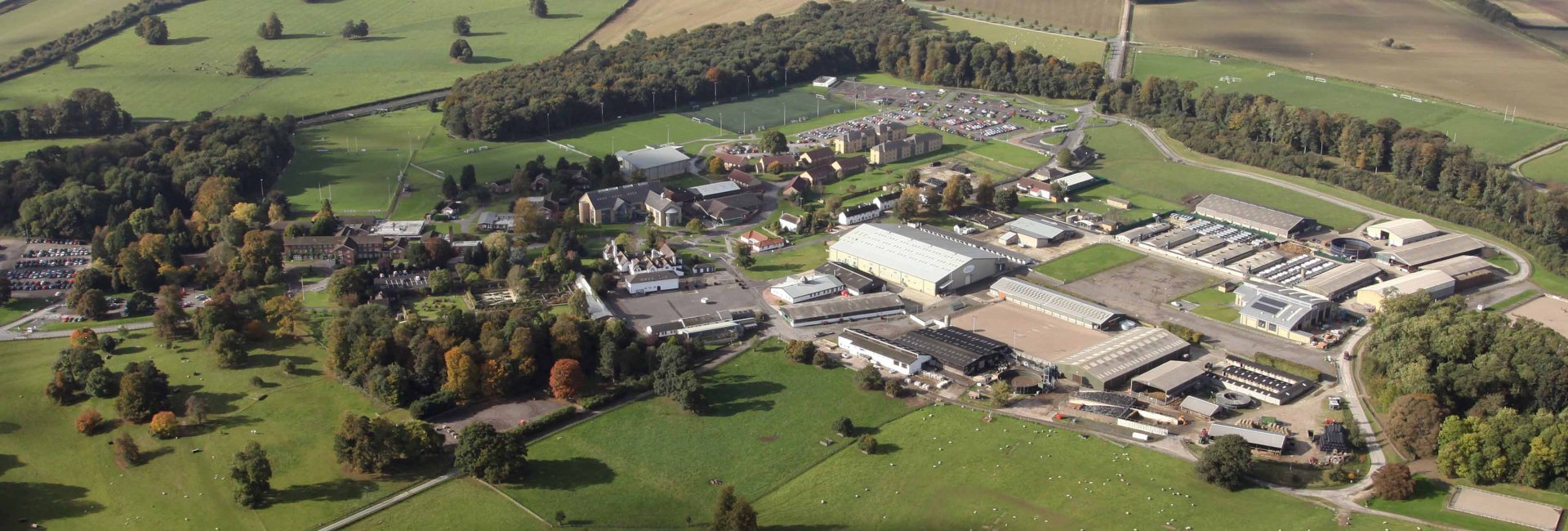
University Centre Bishop Burton - Open Day Event
28 Apr 2026, 16:30
Beverley

Are you looking to further enhance your career prospects in the wildlife, ecology and conservation sector? This programme enables you to progress from the FdSc, or another relevant Level 5 qualification, to a full BSc Honours Degree in Wildlife Ecology and Conservation Management.
You will enhance your employability further as you develop knowledge, understanding and skills to the greater depth and level of expertise employers in the sector are looking for. Areas covered include conservation planning at a landscape scale, understanding global biodiversity crises and solutions, managing interactions between people and species and habitats, and managing conservation projects. You will also have the opportunity to specialise through your final project on a relevant topic of your choice.
There is a strong emphasis on applying theoretical knowledge to practical situations using the excellent range of habitats both on the Bishop Burton estate and in the local area.
What will I study?
Modules Year 1:
International Conservation Biology
Management of People and Wildlife
Landscape Ecology and Conservation
Management and Business in Conservation
Final Project
Learning and Teaching Approach
This programme is delivered using a variety of teaching and learning approaches. This includes giving you hands-on experiential opportunities in both your academic and professional development. Sessions which deliver the core content and provide the underpinning knowledge feature a strong emphasis on active learning within lectures, seminars, workshops, field work, site visits, case studies, independent learning, formative assessment and guest speaker sessions.
All teaching is focused on facilitating a student-centred approach to enhance independent learning and your ability to make decisions, problem-solve and manage projects – all skills required in the conservation and ecology sector. The programme utilises excellent onsite resources, offsite visits and extensive industry links for applied aspects essential for your employability skills.
Contact Time
A typical week on the full-time pathway includes approximately 10 hours a week contact time, incorporating lectures, seminars, practicals and tutorials. This may vary from week to week depending on field trips and other programme-related activities.
You are also expected to carry out a significant amount of private study in addition to contact time (25-30 hours a week).
A typical week on the part-time pathway includes approximately 5 hours a week contact time, incorporating lectures, seminars, practicals and tutorials. This may vary from week to week depending on field trips and other programme-related activities.
You are also expected to carry out a significant amount of private study in addition to contact time (15-20 hours a week).
Students can expect to receive their timetables during induction week.
What else can I expect?
Additional facilities include Science Centre, IT suites, dedicated University Centre, study spaces and social areas, and modern Learning Resources Centre.
Online Virtual Learning Environment (VLE) used to enhance and facilitate teaching and independent learning on all programmes.
Our experienced Life Coaches are on hand to help you through your University journey from mentoring and coaching to health, wellbeing and resilience. Learn more about how our Life Coaches can support you: https://www.bishopburton.ac.uk/university-centre/life-skills-team-at-ucbb
Talks from a range of visiting speakers.
Opportunities to attend trips to enhance learning.
Students have access to a range of support through our study skills, and health and wellbeing teams. Further information can be found on our website: https://www.bishopburton.ac.uk/student-life/student-support
Relevant extra-curricular activity and/or work experience is encouraged of all students in order to enhance learning.
This course may be available at alternative locations, please check if other course options are available.
Course optionsThis section shows the range of grades students (with UK A-Levels or Pearson BTEC Level 3 National Extended Diplomas) who received offers were previously accepted with (learn more). It is designed to support your research but does not guarantee whether you will or won't get a place. Admissions teams consider various factors, including interviews, subject requirements, and entrance tests. Check all course entry requirements for eligibility.
We are unable to show previous accepted grades for this course. This could be because the course is new, it's a postgraduate course, there isn't enough historical data, or the provider has opted out of sharing their entry grades data for this course - learn more.
Choose a specific option to see funding information.
Course optionsBishop Burton
Beverley
HU17 8QG
Email:admissions@bishopburton.ac.uk
Phone:01964 553000
Fax: 01964 553101
Email:admissions@bishopburton.ac.uk
Phone:01964 553000
Fax: 01964 553101
At University Centre Bishop Burton