University of Liverpool
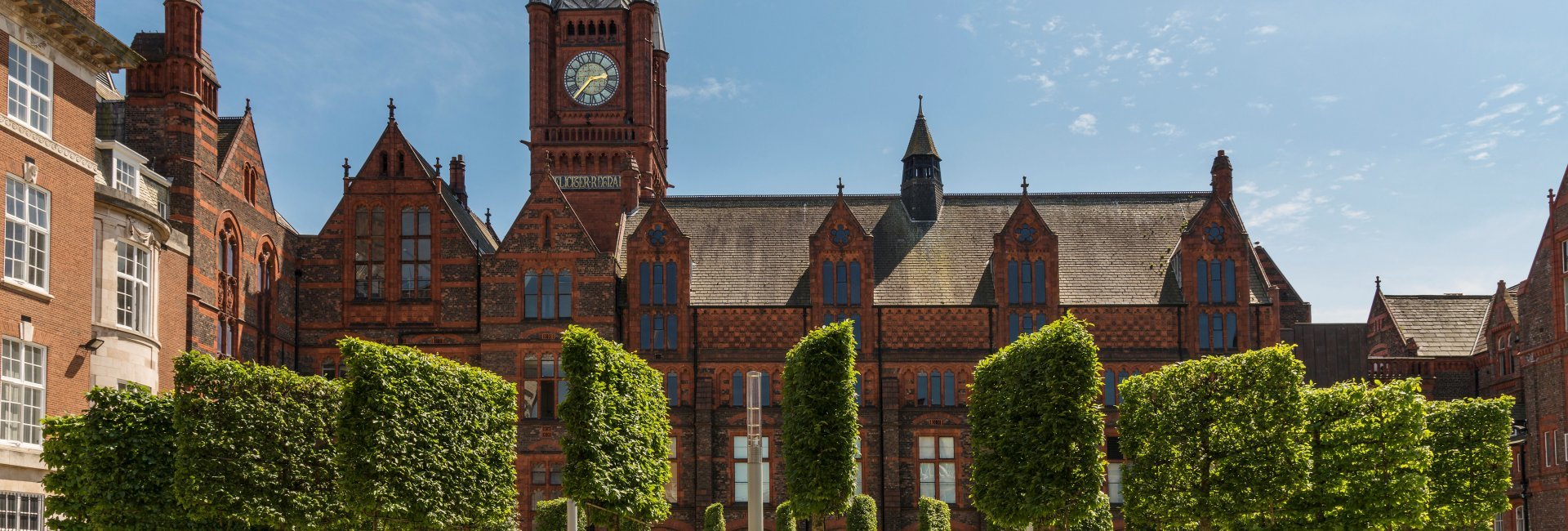
The Foundation Building
765 Brownlow Hill
Liverpool
L69 7ZX
Visit our website Visit our course page
Course contact details
External Relations
Email:ugrecruitment@liverpool.ac.uk
Phone:0151 794 5927

This programme includes a Year Abroad. The Year Abroad will allow you to study at one of our partner universities around the world, following a mixture of culture and discipline-related modules.
The MEng allows you to study your areas of interest in more depth and also gives you the time to widen your knowledge of both electrical and electronic engineering and other subjects including management.
This degree leads more directly to Chartered Engineer status and it is the choice programme for a career in engineering management. The first two years of the MEng and BEng programmes are identical and there is some flexibility to allow switching between programmes, although a higher academic performance is expected for the MEng. In the third year you study core subjects including analogue and digital communications, embedded computer architecture and total quality management. In the final year the core subjects are advanced signal processing, information theory and coding, management of design and management of product development.
This is the equal consideration deadline. You can still apply after this date, but your application may not receive guaranteed consideration.

University of Liverpool has participated in the Teaching Excellence Framework. These ratings were awarded in 2023, for four years.
See why these ratings were awarded
What does this TEF outcome mean?
The following entry points are available for this course:
.
The University of Liverpool is committed to supporting talented applicants from all backgrounds to succeed. One of the ways we support students and fair access to higher education is through making reduced offers as part of our contextual admissions strategy, the Liverpool Scholars programme, Realising Opportunities national collaboration of universities and Sutton Trust Pathways. Additional consideration may be given to applicants with disrupted education or extenuating circumstances.
This section shows the range of grades students (with UK A-Levels or Pearson BTEC Level 3 National Extended Diplomas) who received offers were previously accepted with (learn more). It is designed to support your research but does not guarantee whether you will or won't get a place. Admissions teams consider various factors, including interviews, subject requirements, and entrance tests. Check all course entry requirements for eligibility.
We are unable to show previous accepted grades for this course. This could be because the course is new, it's a postgraduate course, there isn't enough historical data, or the provider has opted out of sharing their entry grades data for this course - learn more.
Operated by the Office for Students
Employment after 15 months (Most common jobs)
Go onto work and study
The number of student respondents and response rates can be important in interpreting the data – it is important to note your experience may be different from theirs. This data will be based on the subject area rather than the specific course. Read more about this data on the Discover Uni website.
No fee information has been provided for this course
Tuition fee status depends on a number of criteria and varies according to where in the UK you will study. For further guidance on the criteria for home or overseas tuition fees, please refer to the UKCISA website.
If this is your first degree and you are a Home student applying for entry in 2026, you do not have to pay your fees upfront. Instead, you can take out a tuition fee loan which is paid straight to the University. This is available to most students, no matter what their household income.
Please note, for Home undergraduate students, 2026/27 fees have yet to be confirmed. Tuition fees are subject to increase each year, subject to the government’s regulated fee limits. For information, for UK students applying for 2025 entry the Tuition Fee was £9,535.
You will find full information about tuition fees in the “Fees and funding” section of all course pages on our website. Or see the “Paying for your studies” section of our website for more information.
Some of our programmes charge less than the full £9,535 fee:
• Psychology BSc (Hons) (2+2 programme with Foundation element), run in collaboration with Wirral Metropolitan College.
• Programmes with a year in industry or a year abroad
Some programmes which include compulsory fieldwork or additional elements such as the Pilots Licence in Aerospace Engineering may incur additional costs. Where this is the case, those costs will be outlined at on-campus events such as the University Open Days or Applicant Discovery Days.
For further information please see: https://www.liverpool.ac.uk/study/fees-and-funding/
The Foundation Building
765 Brownlow Hill
Liverpool
L69 7ZX
Visit our website Visit our course page
Email:ugrecruitment@liverpool.ac.uk
Phone:0151 794 5927