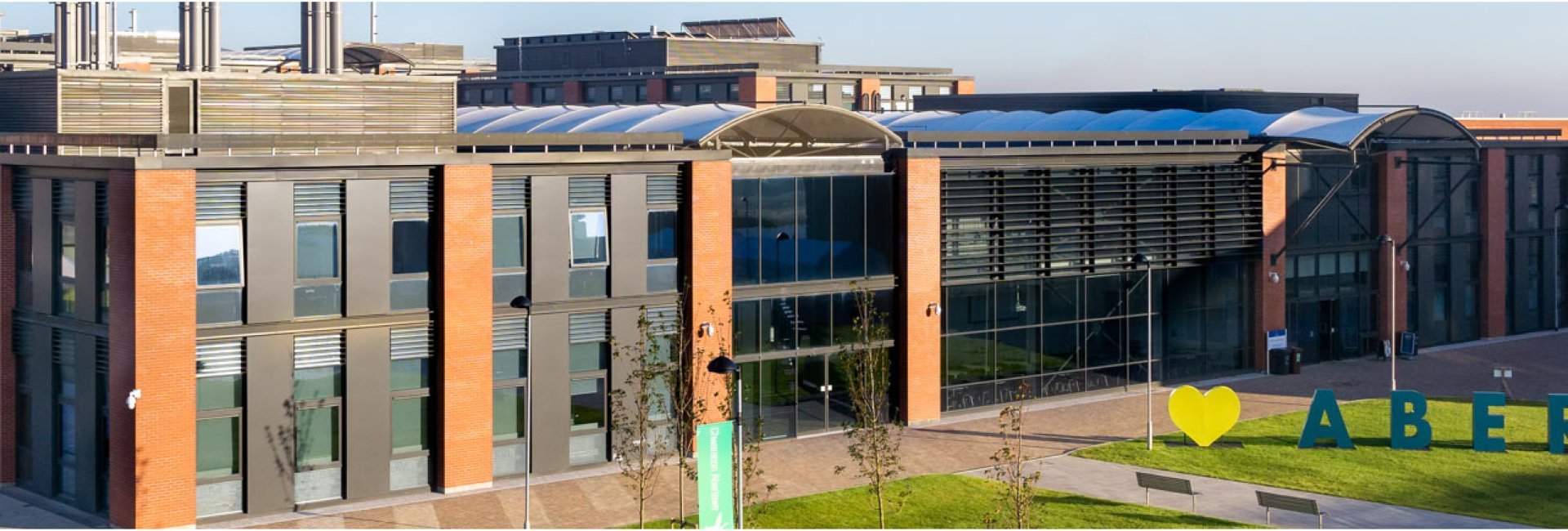
Undergraduate On-Campus Open Day at Swansea University - Singleton Park Campus and Bay Campus - 28 March 2026
28 Mar 2026, 08:30
Swansea

Studying a joint honours Foundation degree in Sociology and Psychology will give you expert scientific training in the relationship between the mind, brain, and behaviour while equipping you with the essential theoretical foundation to understand people's behaviour as social beings.
The foundation year of this four-year course will introduce you to the key concepts and knowledge you need to progress to the BSc in Psychology. Following successful completion of the Foundation Year, students will progress onto Year 1 of the BSc.
The foundation year (level 3) will be delivered by The College, Swansea University (TCSU). Years 2-4 (levels 4-6) will be delivered by the School of Psychology.
You will study the psychological and neuro-scientific processes that underpin activities such as thinking, reasoning, memory and language, learn about the effects of brain injury, and explore ways to improve health-related behaviour.
You will learn how to generate new knowledge and information using a variety of qualitative and quantitative social research tools, from large social surveys interpreted through statistics through to in-depth interviews with individuals and small groups.
Throughout the course, you will develop excellent research, communication, critical analysis and presentation skills, as well as a high degree of numeracy and ICT ability.
WHY SOCIOLOGY AND PSYCHOLOGY AT SWANSEA?
Our School of Psychology has an outstanding reputation both in the UK and internationally. In the most recent research assessment, we were proud to maintain our research culture with a strong record of translating science into real-world consequences, with 100% of our impact rated as internationally excellent (REF2021).
Sociology at Swansea University is ranked:
The course is validated by the British Psychological Society (BPS) and, providing you achieve at least a 2:2 in your degree, you will be eligible for Graduate Membership of the BPS and the Graduate Basis for Chartered Membership (GBC), the first step to becoming a Chartered Psychologist.
Being based in the School of Psychology, you will be immersed in a dynamic research and learning environment with many opportunities to build links with students from related disciplines.
You will be taught by an academic team who are research active and widely published, giving you the benefit of the most current social science debates in the UK and internationally. Many of our academics write your textbooks.
You will have the opportunity to take part in work placements to build on your skills and experience, and enhance your career prospects. These placements could include local authorities, businesses, healthcare settings, education settings and charities, depending on your interests and career goals.
YOUR SOCIOLOGY AND PSYCHOLOGY EXPERIENCE
Our flexible degree structure with a wide range of specialist modules gives you the scope to tailor your course to your particular interests, career ambitions, or plans for further study.
In your Foundation Year, you will typically study areas including: Interactive Learning Skills and Communication; Critical Thinking; Math Support; Living in the Social World; Foundations of Psychology; Statistics; and a Research Project.
In Year 1, you will typically study areas including: Sociology: The Classics; Cognition I: Basic Processes; Individual Differences and Clinical Psychology; Academic Success: Skills for learning, skills for life; Sociology: Contemporary Controversies; Social & Developmental Psychology; Biological Psychology; Foundations in Social Science Research; Academic Skills and Foundational Concepts in Statistics and Research Methods (Joint Honours); and Professional Development and Applications of Statistics and Research Methods (Joint Honours).
In year 2, you will typically study areas including: Social Problems I; Brain and Behaviour; Cognition II: Higher Level Processes; Education, Policy and Society; Contemporary Moral Controversies; Social Problems II: Media, Myths and Moral Panics; Research and Experimental Methods I; and Employability Skills.
In year 3, you will typically study areas including: From Individuals to Society; Independent Research Project for Joint Honours; Risk in Modern Society; Global Sociology; Development Across the Lifespan; Bodies in Society; Contemporary Issues in Forensic Psychology and Criminal Justice; Evolutionary Perspectives on Psychology; Understanding Neurodiversity; Psychology of Building a Better World; Cognitive Neuroscience in Clinical and Forensic Settings; Learning, Psychopathology and Gambling........
You will develop excellent research, written, and critical analysis skills, as well as a high degree of numeracy and ICT ability. Our approach to teaching, which includes lectures, personal tutorials, academic seminars, workshops, and practical research classes, encourages effective team-working and high-quality oral communication skills. You will learn how to generate new knowledge and information using a variety of qualitative and quantitative social research tools, from large social surveys interpreted through statistics through to in-depth interviews with individuals and small groups. We are proud to provide an outstanding educational experience, using the most effective learning and teaching approaches, carefully tailored to suit the specific needs of your course. Apart from a small number of online-only courses, most of our courses consist of in-person, on-campus teaching, enabling full engagement with your lecturers and fellow students. Practical skills sessions, lab work seminars, and workshops predominantly take place in person, allowing for group working and demonstrations. We also operate virtual labs and Simulated Learning Environments which will facilitate greater access to training opportunities in the future. However, our approach also includes the use of some online learning to support and enhance traditional face-to-face teaching. Online learning may take place ‘live’ using software such as Zoom, allowing you to interact with the lecturer and other students and to ask questions. Lecture recordings also allow for more flexibility to revisit material, to revise for assessments and to enhance learning outside of the classroom. Some modules have extra resources in Canvas, such as videos, slides and quizzes enabling further flexible study. This course may offer some modules taught through the medium of Welsh or bilingually for students who consider themselves to be fluent Welsh speakers. For more details on the provision available see the Welsh Provision expander below.
Professionally accredited courses provide industry-wide recognition of the quality of your qualification.
The following entry points are available for this course:
If you are an International Student, please visit our International pages for more information about entry requirements: http://www.swansea.ac.uk/international/students/requirements/
Discover what it's like to study Sociology and Psychology with a Foundation year at Swansea University: insights on the course, making friends, personal statement tips, uni prep, and recommended books, podcasts, and videos.

GCSE requirements: To include a minimum of five passes at Grade A* - C/9-4 including Welsh or English language and Mathematics.
For applicants whose first language is not English we require a minimum overall IELTS score of 6.0 (or equivalent) and no less than 5.5 in each component.
English Language Requirements at Swansea University https://www.swansea.ac.uk/admissions/english-language-requirements/
UK applicants who meet course requirements are guaranteed a conditional offer. We assess applications on individual merit. We consider making reduced offers, eg. to Care Leavers or students with extenuating circumstances. We encourage you to disclose any relevant circumstances.
The Advanced Skills Baccalaureate Wales is considered as equivalent to one full A-Level and students can take x2 A-levels alongside this. EPQ students predicted Grade B or above will receive a one-grade offer reduction.
This section shows the range of grades students (with UK A-Levels or Pearson BTEC Level 3 National Extended Diplomas) who received offers were previously accepted with (learn more). It is designed to support your research but does not guarantee whether you will or won't get a place. Admissions teams consider various factors, including interviews, subject requirements, and entrance tests. Check all course entry requirements for eligibility.
We are unable to show previous accepted grades for this course. This could be because the course is new, it's a postgraduate course, there isn't enough historical data, or the provider has opted out of sharing their entry grades data for this course - learn more.
Operated by the Office for Students
Employment after 15 months (Most common jobs)
Go onto work and study
The number of student respondents and response rates can be important in interpreting the data – it is important to note your experience may be different from theirs. This data will be based on the subject area rather than the specific course. Read more about this data on the Discover Uni website.
No fee information has been provided for this course
Tuition fee status depends on a number of criteria and varies according to where in the UK you will study. For further guidance on the criteria for home or overseas tuition fees, please refer to the UKCISA website.
For the latest fee information, please check the individual course page on our website. Our full range of programmes are listed here: https://www.swansea.ac.uk/undergraduate/courses/
Further information on tuition fees can be found here: https://www.swansea.ac.uk/undergraduate/fees-and-funding/tuition-fees/
Singleton Park
Swansea
SA2 8PP
Visit our website Visit our course page
Email:chhspostgrad@swansea.ac.uk
Phone:01792 295309