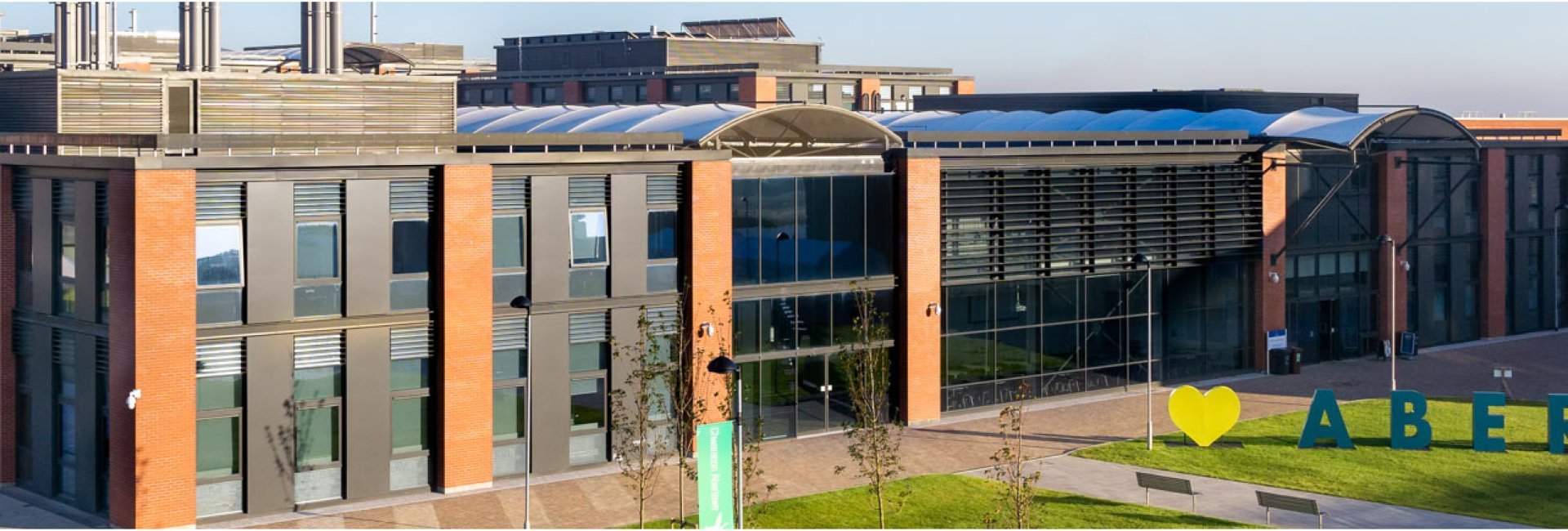
Undergraduate On-Campus Open Day at Swansea University - Singleton Park Campus and Bay Campus - 13 June 2026
13 Jun 2026, 07:30
Swansea

The world is faced with a number of worrying issues. Climate change is leading to increasing ecological instability, resulting in natural disasters and mass migration; deep-rooted economic issues are leading to protectionism and trade wars, deindustrialisation and rapid changes to the world of work; meanwhile precarity and rapid social change has driven the rise of radical populist movements across the globe.
These crises are global in nature but impact on local communities, including here in Wales, where we are faced with difficult social problems including poverty and social inequalities; homelessness, addiction, crime & incarceration; racism and intolerance; and extreme weather conditions such as flooding and forest fires.
Sociology can help us make sense of our rapidly changing world and the social problems we see around us everyday.
Studying for a Sociology degree at Swansea will equip you with the essential theoretical and practical foundations for understanding our rapidly changing world, as well as the tools to try to change it. You will learn about people's behaviour as social beings as well as the wider social, cultural, political and economic factors that structure our society.
On top of developing subject specific expertise in sociological theory, you will learn how to study social problems and people as a social scientist through practical training in research methods. You will learn how to generate new knowledge and information using a variety of qualitative and quantitative social research tools, from large social surveys interpreted through statistics to in-depth interviews with individuals and small groups, to ethnographic observations.
Throughout the course, you will develop excellent research, communication and presentation skills, together with the ability to analyse and critically evaluate evidence and construct arguments around the complex societal issues that affect us all.
Why Sociology at Swansea?
Based in the School of Social Sciences, you will be immersed in dynamic and interdisciplinary research and learning environment with many opportunities to build links with students from related disciplines.
Our flexible degree structure offers a wide range of foundational and specialist modules, giving you the scope to tailor your course to your particular interests, career ambitions, or plans for further study. We have particular teaching and research strengths and learning pathways in global and environmental sociology; the sociology of gender; and crime and deviance.
You will have the opportunity to undertake either a Year Abroad or a Year in Industry, allowing you to choose the pathway that best suits your interests and future ambitions. The Year in Industry can be spent in the UK or overseas, enabling you to gain valuable workplace experience. The University advocates for paid-only placements, which on average have a salary of over £20,000. Unpaid placements are considered on a case-by-case basis.
The optional Foundation Year for this programme can give you an exciting introduction to higher education, setting you up with the skills, confidence, and knowledge that you will need to be successful in your undergraduate degree. It’s ideal if you need a little more support after further education, or are returning to education after a gap. Following successful completion of the Foundation Year, you will progress onto Year 1 of your BSc.
In your Foundation Year, you will typically study areas including: Critical Thinking; Interactive Learning Skills and Communication; Living in the Social World; Understanding Society; Research Project; and Welfare Across the Globe.
In Year 1, you will typically study areas including: Foundations in Social Sciences Research and Academic Skills; Individuals and Society; Sociology: The Classics; Understanding Inequality: Capitalism, Money and Power; Sociology: Contemporary Controversies; and Introduction to Sociology.
In Year 2, you will typically study areas including: Interrogating Quantitative Social Science Methods; Social Problems; Interrogating Qualitative Social Science Methods; Investigating Gender; Devolution, Policy Making and Social Change; Poverty and Social Justice; Education, Policy and Society; Contemporary Moral Controversies; Social Problems: Media, Myths and Moral Panics; and Culture as Deviance.
In Year 3, you will typically study areas including: Gender, Crime and Criminal Justice; Philosophy, Mental Health and Illness; Capitalism and Justice; Dissertation; Black Mirror Sociology: Technology and Society; Risk in Modern Society; Understanding the sex industry: Theory, policy and practice; Social and Environmental Harms; Global Sociology; Social Movements, Social Policy and Social Change; Illegal Economies; and Race and Nation.
We are proud to provide an outstanding educational experience, using the most effective learning and teaching approaches, carefully tailored to suit the specific needs of your course. Apart from a small number of online-only courses, most of our courses consist of in-person, on-campus teaching, enabling full engagement with your lecturers and fellow students. Practical skills sessions, lab work seminars, and workshops predominantly take place in person, allowing for group working and demonstrations. We also operate virtual labs and Simulated Learning Environments which will facilitate greater access to training opportunities in the future. However, our approach also includes the use of some online learning to support and enhance traditional face-to-face teaching. Online learning may take place ‘live’ using software such as Zoom, allowing you to interact with the lecturer and other students and to ask questions. Lecture recordings also allow for more flexibility to revisit material, to revise for assessments and to enhance learning outside of the classroom. Some modules have extra resources in Canvas, such as videos, slides and quizzes enabling further flexible study. This course may offer some modules taught through the medium of Welsh or bilingually for students who consider themselves to be fluent Welsh speakers. For more details on the provision available see the Welsh Provision expander below.
The following entry points are available for this course:
If you are an International Student, please visit our International pages for more information about entry requirements: http://www.swansea.ac.uk/international/students/requirements/
Discover what it's like to study Sociology with a Foundation Year at Swansea University: insights on the course, making friends, personal statement tips, uni prep, and recommended books, podcasts, and videos.

Swansea University accepts the Advanced Skills Baccalaureate Wales as fully equivalent to x1 A-Level.
Swansea University recognises the Welsh Baccalaureate - Advanced Skills Challenge Certificate as equivalent to one full A-Level.
English Language Requirements at Swansea Universityhttps://www.swansea.ac.uk/admissions/english-language-requirements/
UK applicants who meet course requirements are guaranteed a conditional offer. We assess applications on individual merit. We consider making reduced offers, eg. to Care Leavers or students with extenuating circumstances. We encourage you to disclose any relevant circumstances.
The Advanced Skills Baccalaureate Wales is considered as equivalent to one full A-Level and students can take x2 A-levels alongside this. EPQ students predicted Grade B or above will receive a one-grade offer reduction.
This section shows the range of grades that students who received offers were previously accepted on to this course with (learn more).
It is designed to support your research but does not guarantee whether you will or won't get a place.
Admissions teams consider various factors, including interviews, subject requirements, and entrance tests. Check all course entry requirements for eligibility.
We are unable to show previous accepted grades for this course. This could be because the course is new, it's a postgraduate course, there isn't enough historical data, or the provider has opted out of sharing their entry grades data for this course - learn more.
No fee information has been provided for this course
Tuition fee status depends on a number of criteria and varies according to where in the UK you will study. For further guidance on the criteria for home or overseas tuition fees, please refer to the UKCISA website.
For the latest fee information, please check the individual course page on our website. Our full range of programmes are listed here: https://www.swansea.ac.uk/undergraduate/courses/
Further information on tuition fees can be found here: https://www.swansea.ac.uk/undergraduate/fees-and-funding/tuition-fees/
You may be eligible for funding to help support your study.
To find out about scholarships, bursaries and other funding opportunities that are available please visit the University's scholarships and bursaries page https://www.swansea.ac.uk/undergraduate/scholarships/
Academi Hywel Teifi at Swansea University and the Coleg Cymraeg Cenedlaethol offer a number of generous scholarships and bursaries for students who wish to study through the medium of Welsh or bilingually. For further information about the opportunities available to you, visit the Academi Hywel Teifi Scholarships and Bursaries page https://www.swansea.ac.uk/academi-hywel-teifi/learn/scholarships/
Email:chhspostgrad@swansea.ac.uk
Phone:01792 295309
Singleton Park
Swansea
SA2 8PP
At Swansea University