
Conservation Studies (Taught)
- MA
- 1 Years
- Full-time
- September 2025
- Postgraduate
- West Dean College
- Awarded by:
- University of Sussex
Course summary
Study at a specialist college with the assurance of a university qualification. Develop your passions and reach your potential in a small, welcoming environment within a community of like-minded people.
Why choose West Dean?
An international reputation for excellence in conservation and arts education.
94% of students studying at the College* felt the programme had enhanced their skills and abilities (*2019 student survey)
A rich arts environment and a focus on craft skills with vocational application.
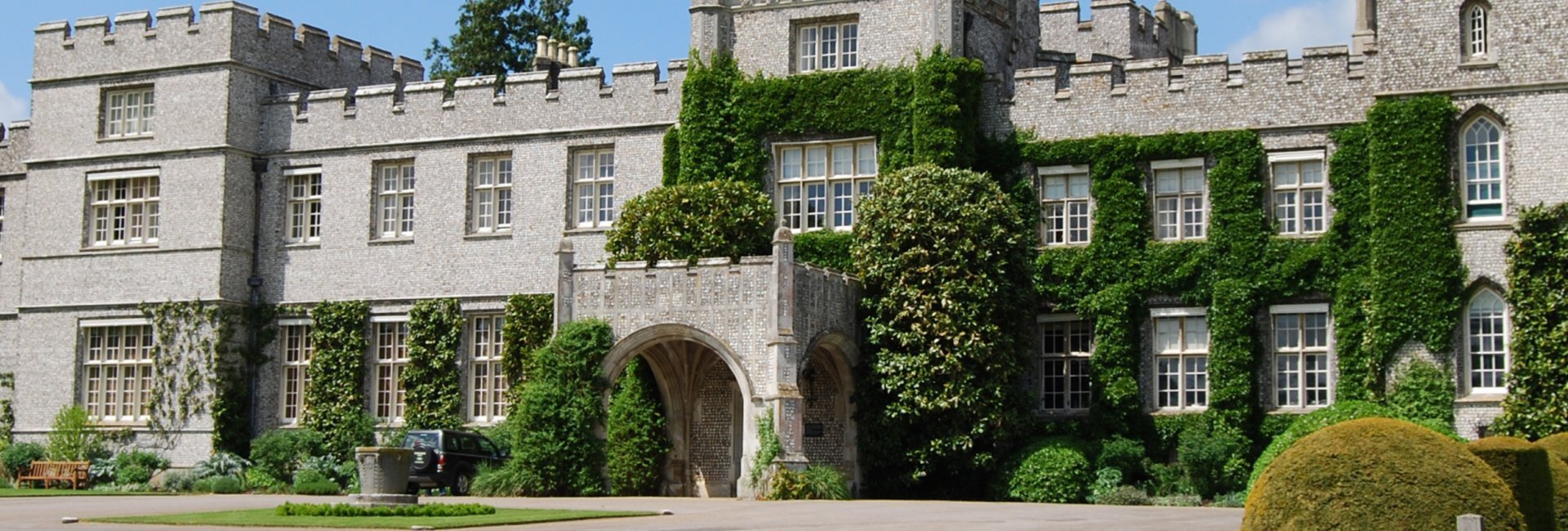
Be inspired by the unique historic character and beautiful South Downs setting.
Located close to Chichester and the South Coast, with easy access to London.
The Course
The one year full time course in MA Conservation Studies equips you with the high level specialist skills sought by the conservation sector. For students of English, History, Archaeology and varied Humanities disciplines Conservation offers an exciting career. The course focuses is on research through practice and students will draw on theoretical, scientific, and analytical study of artefacts and materials, and analyse the context and practice of conservation. Students deliver a major final research project.
This rigorous and highly respected programme draws on an extensive sector network, nationally and internationally, including industry bodies such as Icon. The Masters in Conservation Studies is the global industry standard for conservation, and our alumni work in many of the most prestigious museums, archives, libraries and private practices across the world.
Elements of interdisciplinary work are involved, but you will choose from one of the following specialisms:
Books and Library Materials
Ceramics and Related Materials
Furniture and Related Objects
Horology, Clocks and Related Objects
Metalwork
All disciplines are accessible from both humanities and science study backgrounds.
You can expect
To develop excellent practical skills
To develop research skills
To incorporate scientific analysis into conservation projects
To build contacts and gain transferable skills
Learning environment
High tutor: student ratio
Workshop access 8.30am-9pm, 7 days a week
An interdisciplinary environment
Visiting lecturers from public and private institutions
Six week work placement
The content of this programme has been developed in line with the Institute of Conservation's Professional Standards in Conservation and the UK Quality Code for Higher Education.
Exceptional Facilities
You will work in dedicated, well-equipped workshops and studios with access from 8.30am to 10pm, seven days a week, which is exceptional in higher education. In addition to the extensive facilities each specialist studio and workshop has, is the new Science Laboratory (opened late 2019), both the science equipment and laboratory has had a significant upgrade. The facilities have been developed to give students knowledge and a familiarity with their general application to perform analytical techniques commonly used in the heritage sector. Other shared facilities include:
Photography space
IT suite
Specialist databases
Specialist library
Teaching
On the MA Conservation Studies you will typically have around 19-20 contact hours per week.
Independent learning
When not attending lectures, seminars and workshops or other timetabled sessions, you will be expected to continue learning independently through self-study. Typically, this will involve reading journal articles and books, working on individual and group projects, undertaking research in the library, preparing coursework assignments and presentations and undertaking and writing up your final research project.
Overall workload
Total scheduled teaching and learning: 600 hours
Independent learning: 1200 hours
Modules
Semester 1 (18 weeks)
Study block 1 (12 weeks)
MA1A
Extending Practice (50 credits)
Unit MA1B
Conservation Science Analysis (10 credits)
Unit MA1C
Research studies and project design (10 credits)
Semester 2 (14 weeks)
Study block 3 (6 weeks)
MA2A
Professional Practice (35 credits)
Work placement element
Study block 4 (8 weeks)
MA2A
Professional Practice (cont.) (35 credits)
Unit MA1RP
Project Development (15 credits)
Semester 3 (14 weeks)
Study block 5
Unit MA2RP
Project Realisation (60 credits)
Assessment method
On the MA Conservation Studies you will typically have around 19-20 contact hours per week, typically consisting of:
5-6 hours of lectures or demonstrations
1-2 hours of seminars and peer to peer presentations
10 hours of workshop time with a supervisor
1 hour of tutorials to discuss practical projects and more formal tutorials
For semester 2, outside of the work placement, you will continue to have full workshop access and have 10 contact hours per week in the above areas.
For semester 3 you will continue to have full workshop access and have approximately 1 hour tutorial time per week.
Independent learning
When not attending lectures, seminars and workshops or other timetabled sessions, you will be expected to continue learning independently through self-study. Typically, this will involve reading journal articles and books, working on individual and group projects, undertaking research in the library, preparing coursework assignments and presentations and undertaking and writing up your final research project.
Overall workload
Total scheduled teaching and learning: 600 hours
Independent learning: 1200 hours
In semester 1, 41% of your time will be spent in scheduled learning activities or under supervision.
In semester 2, 25% of your time will be spent in supervised activities.
In semester 3, you will be expected to work independently with tutorial support.
International study trips
The College continues to monitor travel advice from the Foreign and Commonwealth Office with regards to any international travel. At this time, all international travel which includes study trips will be subject to agreement by the College.
Entry requirements
An upper 2nd class or above UK Honours degree in an appropriate subject or a non-UK equivalent. In the absence of a BA, the requirement will be demonstrable research and writing abilities commensurate with BA level.
Students typically enter at Graduate Diploma level and progress onto the MA Conservation Studies for year two. Progression from Graduate Diploma to Master's requires successful completion of level 6 with an average grade no less than 2. Applicants with experience equivalent to the Graduate year may enter directly at Master's stage.
International students will require English language CEFR (Common European Framework of Reference for Languages) level B2 or ILETS 6.5. Applicants are interviewed and required to undertake practical and observational tests.
Fees and funding
Tuition fees
No fee information has been provided for this course
Tuition fee status depends on a number of criteria and varies according to where in the UK you will study. For further guidance on the criteria for home or overseas tuition fees, please refer to the UKCISA website.
Additional fee information
Course fees are the same for UK and international students: £4,470 per term (£17,880 per year)
Included is mandatory study trip costs of £400, which typically includes tailored visits to collections/exhibitions of specific interest to the programme of study. Lunch, accommodation and other living expenses are additional. To find out more visit: https://www.westdean.ac.uk/degrees-and-diplomas/admissions#living-costs
Scholarships and bursaries are available from £500 to £10,000.
Sponsorship information
Students are eligible to apply for bursaries from the Edward James Foundation as well as scholarships given by external trusts to the West Dean College Scholarship Fund and administered by the College.
Related courses
At West Dean College