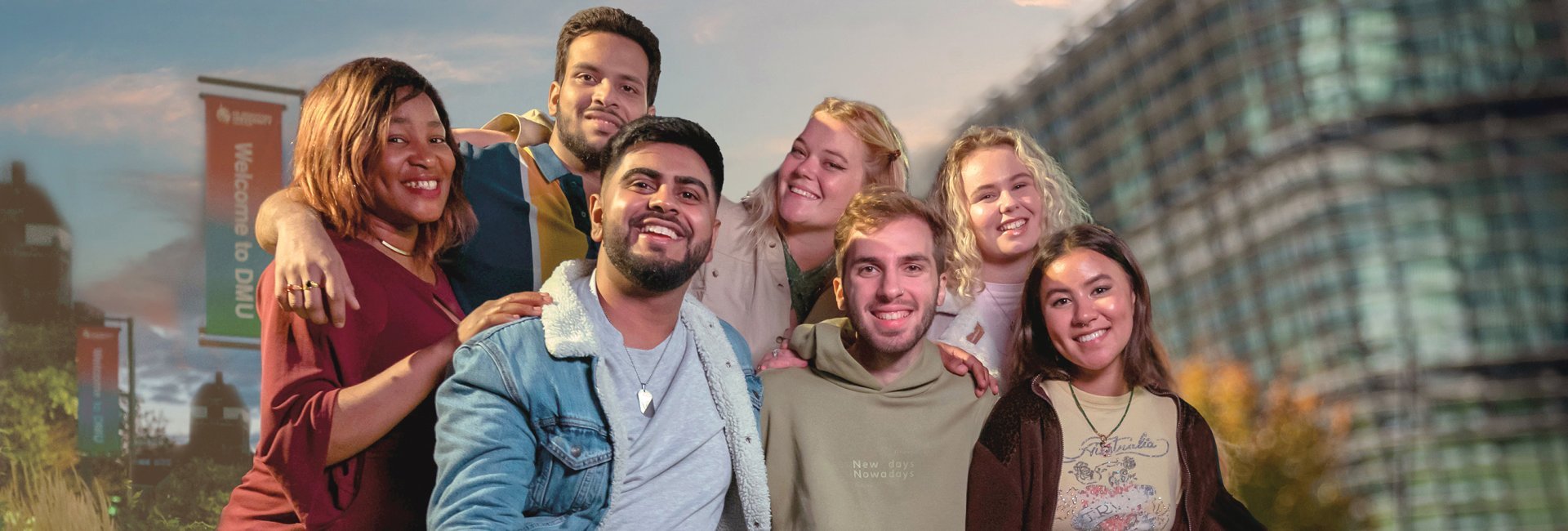
De Montfort University - Open Day - 21 March
21 Mar 2026, 09:00
Leicester

On this course you will have flexibility to explore a wide range of traditional and emerging visual arts practices to develop your individual artistic voice. You can experiment with drawing, painting, sculpture, printmaking, video, photography, digital media and installation art to produce meaningful work that responds to our complex and changing world.
Around 70 per cent of your time will be spent in the studio where you will hone your skills in making and expression, creative risk-taking, experimentation and development. Each year you will be presented with different creative challenges with a curriculum that includes art history, contemporary practice, engagement with local organisations, as well as talks from visiting artists.
The course responds to the demands of the contemporary global art world and encourages you to engage in current practice by exploring themes such as multiculturalism, identity, and art activism. Skills in employability and professional practice will prepare you for working as a fine artist or to launch a career in the wider creative industries.
Key features
We’ve been teaching art for over 120 years and today’s course continues our ethos of encouraging students to develop their creativity within a collaborative and experimental environment.
We embed employability throughout the course and cover topics that include an introduction to studio practice, art practice and presentation, curating and installing exhibitions, marketing, fundraising and project planning.
You’ll study in our award-winning Vijay Patel Building, where you’ll have access to dedicated Fine Art studio space and experiment with a range of facilities across our 25 industry standard workshops.
Join the list of students who have exhibited at the Handmade Festival, the Two Queens gallery, the Attenborough Arts Centre and a host of other prestigious venues across both the UK and internationally.
Leicester is a city buzzing with creativity, from colourful street art by GraffWerk and the annual Leicester Art Week festival, to the augmented reality art trail and DMU's own Leicester Gallery. Our partnerships in the city create exciting opportunities to showcase your work, including at Leicester's creative hub LCB Depot.
Benefit from block teaching, where most students study one subject at a time. A simple timetable will allow you to really engage with your learning, receive regular feedback and assessments, get to know your course mates and enjoy a better study-life balance.
First year
Block 1: Investigation and Exploration 1
Block 2: Investigation and Exploration 2
Block 3: Development and Consolidation 1
Block 4: Development and Consolidation 2
Second year
Block 1: Studio Practice Development 1
Block 2: Art History and Theory 1
Block 3: Studio Practice Development 2
Block 4: Professional Practice 1
Third year
Block 1: Art Practice 1
Block 2: Art History and Theory 2
Block 3: Art Practice 2
Block 4: Professional Practice 2
Block teaching designed around you
You deserve a positive teaching and learning experience, where you feel part of a supportive and nurturing community. That’s why most students will enjoy an innovative approach to learning using block teaching, where you will study one module at a time. You’ll benefit from regular assessments - rather than lots of exams at the end of the year - and a simple timetable that allows you to engage with your subject and enjoy other aspects of university life such as sports, societies, meeting friends and discovering your new city. By studying with the same peers and tutor for each block, you’ll build friendships and a sense of belonging.
Structure
Individual studio practice, group projects, workshops, group criticisms, lectures, seminars, study trips and one-to-one tutorials form the basis of this studio-based taught course. You will use a journal to collate your research and as a space for reflection on your professional, creative and intellectual development. Contextual studies and art history lectures will deepen your understanding of the theories and histories of Fine Art.
The first year is designed to develop the key skills that every artist needs as the foundation of their practice. In the second semester the emphasis of teaching changes to enable you to synthesise your learning into a self-directed creative project of your own devising. You will be supported by regular tutorials and studio crits, as well as art history tuition.
In the first semester of the second year you will be able to choose a specialist area. From semester two of the second year until the end of the course, you will work on your own individual creative interests and develop your potential as an artist. The course culminates with an exhibition of your work in DMU's Festival of Creativity – your first engagement as a professional artist.
Contact Hours
In your first year you will normally attend around 13 hours of timetabled taught sessions (lectures and tutorials) each week, and we expect you to undertake at least 21 further hours of independent study to complete project work and research.
This is the equal consideration deadline. You can still apply after this date, but your application may not receive guaranteed consideration.

De Montfort University has participated in the Teaching Excellence Framework. These ratings were awarded in 2023, for four years.
See why these ratings were awarded
What does this TEF outcome mean?
The following entry points are available for this course:
Here at DMU we welcome all applications, no matter what your background. To make sure you get fair and equal access to higher education, when looking at your application we consider more than just your grades–we take into account any challenges that you may have faced in your education. Contextual Offers will be offered to candidates who are in receipt of Free School Meals, who are Care Experienced or who are deemed to live in areas of low HE participation neighbourhoods (POLAR Quintiles 1 & 2).
This section shows the range of grades students (with UK A-Levels or Pearson BTEC Level 3 National Extended Diplomas) who received offers were previously accepted with (learn more). It is designed to support your research but does not guarantee whether you will or won't get a place. Admissions teams consider various factors, including interviews, subject requirements, and entrance tests. Check all course entry requirements for eligibility.
Students aged 17/18 who applied to this course were offered a place.
See how students with your grades have been accepted onto this course in the past.
| Location | Fee | Year |
|---|---|---|
| England | £9790 | Year 1 |
| Northern Ireland | £9790 | Year 1 |
| Scotland | £9790 | Year 1 |
| Wales | £9790 | Year 1 |
| Channel Islands | £9790 | Year 1 |
| Republic of Ireland | £9790 | Year 1 |
| EU | £16800 | Year 1 |
| International | £16800 | Year 1 |
Tuition fee status depends on a number of criteria and varies according to where in the UK you will study. For further guidance on the criteria for home or overseas tuition fees, please refer to the UKCISA website.
Please note, this fee is subject to parliamentary procedure and will also be subject to a compounded annual inflationary increase. It is expected to be confirmed in early 2026 and may change in future years of study.
The Gateway
Leicester
LE1 9BH
Visit our website Visit our course page
Email:admissions@dmu.ac.uk
Phone:0116 2078443
Email:enquiry@dmu.ac.uk
Phone:0116 250 6070