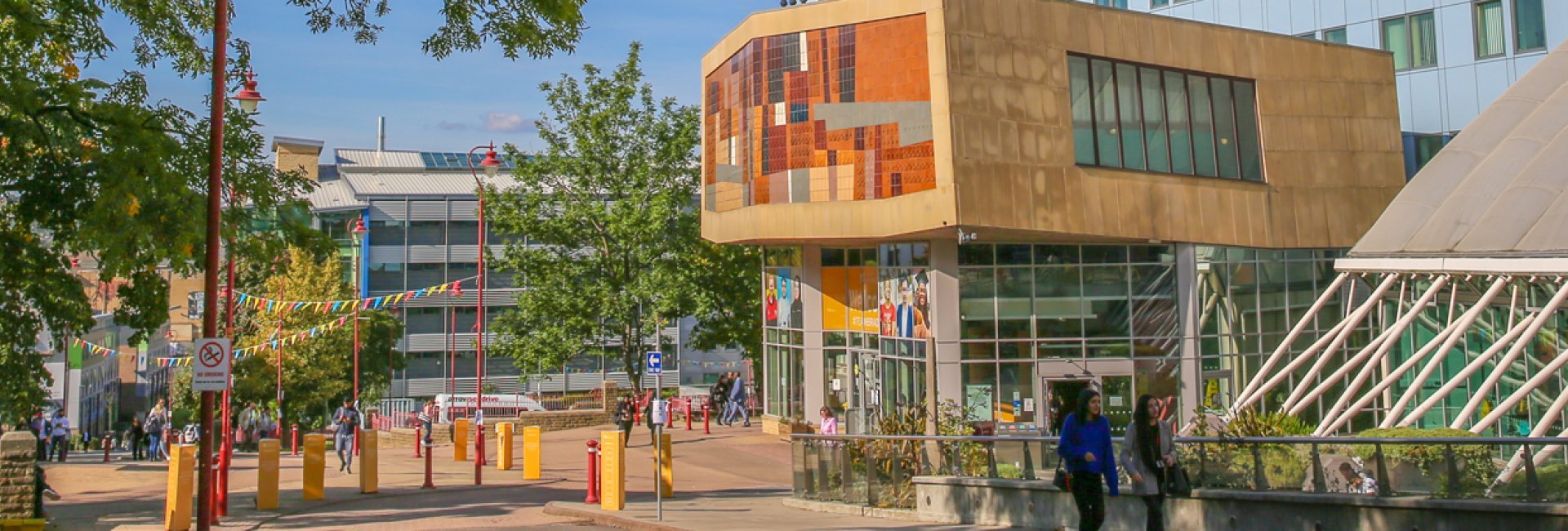
University of Bradford - Undergraduate Open Day
27 Jun 2026, 08:00
Bradford

This Forensic Science degree focuses on the processing and analysis of physical evidence from crime scenes.
The course emphasises the application of science - in particular analytical chemistry - and stresses the importance of quality assurance procedures in a forensic setting.
A characteristic of the University of Bradford's approach is the integration of practical skills training within a good theoretical framework – whether in terms of crime scene investigation, the collection, examination and interpretation of physical evidence, laboratory processing and analysis.
The course provides you with a sound knowledge of how scientific techniques can be used within forensic investigations, and allows you to explore a challenging area of applied science. You will develop into a professional with the scientific skills to work within areas such as crime scene investigation, forensic science and related laboratory areas.
Throughout your degree, you will acquire skills that will be useful in whatever profession they choose to follow. These include project and time management, critical review and analytical thinking, presentational skills, computer and other applied IT skills and the management of data. These will be taught, practised and assessed.
Bradford was the first university in the UK to offer a forensics science degree, and we continue to develop the programme to ensure that it is up-to-date with the requirements of the forensics sector.
As such, we have refocused the forensics degree to offer a solid understanding of fundamental chemistry in stages 2 and 3, with a focused final year dedicated to the application of forensic science.
Crime scene techniques are taught in our dedicated crime scene facility, with analysis of evidence supported by a forensics laboratory and the University’s Centre for Chemical and Structural Analysis.
The interdisciplinary nature of our research at Bradford means we can call upon expertise from our colleagues in archaeology who use forensics science techniques to study human remains, such as the Llullaillaco Maiden, discovered in 1999.
Professional accreditation
This course is accredited by The Chartered Society of Forensic Sciences.
Rankings
We are ranked 7th in the UK for Forensic Science in the Complete University Guide 2021.
Year 1:Inorganic Chemistry 1 (core), Organic Chemistry 1 (core), Physical Chemistry 1 (core), Practical Chemistry 1 (core), Principles of Forensic and Crime Scene Investigation (core) Year 2: Forensic Examination and Analysis of Physical Evidence (core), Inorganic Chemistry 2 (core), Organic Chemistry 2 (core), Physical Chemistry 2 (core), Practical Chemistry 2 (core) Year 3: Analysis of Controlled Substances (core), Analytical Short Courses A (core), Interpretation and Presentation of Forensic Evidence for Forensic Science (core), Professional Development: Forensic Enquiry and Critical Case Study (core), Stage 3 Research Project (core), Forensic Anthropology and Taphonomy for Forensic Scientists (option), Forensic Archaeology and Taphonomy for Forensic Scientists (option)
You will learn through a mixture of lectures, seminars, laboratory practicals, workshops, case studies and directed study. Directed study will include directed reading of selected textbooks, specified source literature and open learning materials, directed web-based materials, report writing and other assignments. There will also be an individual project/dissertation. You will be assessed by written closed-book examinations using constructed (essays, short answers) and selected response (MCQ) questions and a variety of coursework assignments, including laboratory reports, oral presentations and dissertations. There will also be involvement in laboratory, small-group workshops, case-based work and projects (individual and small group). You will be assessed by critical appraisal, case analysis and critique, case presentations, laboratory reports and dissertations. At Stage 3, essays, the journal critique and essay-based examinations provide a format to critically evaluate the key themes of the degree. Practical portfolios and worksheets allow you to demonstrate your understanding of forensic laboratory techniques.
The research dissertation develops your ability to undertake independent research and plan this research effectively. Presentations, the witness statement and the mock court exercise will develop your professional oral and written presentation skills.
This is the equal consideration deadline. You can still apply after this date, but your application may not receive guaranteed consideration.

University of Bradford has participated in the Teaching Excellence Framework. These ratings were awarded in 2023, for four years.
See why these ratings were awarded
What does this TEF outcome mean?
The following entry points are available for this course:
To include at least one science A level at grade B
Plus GCSE English, Mathematics and a Science at grade C or 4 (equivalents accepted).
112 points to include at least one science A level at grade B
Please note that where a science A-level is taken, the University will require applicants to pass the practical element (for A levels awarded from August 2017 onwards).
As UCAS tariff.
Science subject required.
As UCAS Tariff.
Science subject required.
As UCAS Tariff.
To include one Scottish Advanced Higher in a Science subject at minimum grade B.
112 UCAS tariff points to include at least 1 Higher Level Science subject at grade 6.
Plus HL 3 or SL 4 in Maths and English Language and Literature A or English B.
(Language A: Literature, Literature and Performance and Language ab initio are not accepted).
The University welcomes applications from students with a wide range of qualifications from the UK and overseas, including combinations of qualifications. To check whether your qualifications meet the entry requirements for this course, please contact the University.
English language requirements for International and EU applicants:
The standard University requirement is IELTS 6.0 with no sub-test less than 5.0 (or equivalent). However, if you require a Tier 4 (student) visa to study you will need to meet the UK Visas and Immigration (UKVI) department's requirement which is currently IELTS 6.0 with no sub-test less than 5.5. Conditional offers to international students will be made on this basis.
We are proud to be one of the most inclusive universities in the UK. All our students have potential, and we believe that as many people as possible should have the chance to benefit from higher education, no matter what their background or circumstances.
We take the time to understand the background of our applicants, understand their journey to education, and make decisions based on an applicant’s potential to thrive at university and beyond.
This section shows the range of grades that students who received offers were previously accepted on to this course with (learn more).
It is designed to support your research but does not guarantee whether you will or won't get a place.
Admissions teams consider various factors, including interviews, subject requirements, and entrance tests. Check all course entry requirements for eligibility.
We are unable to show previous accepted grades for this course. This could be because the course is new, it's a postgraduate course, there isn't enough historical data, or the provider has opted out of sharing their entry grades data for this course - learn more.
| Location | Fee | Year |
|---|
* This is a provisional fee and subject to change.
Tuition fee status depends on a number of criteria and varies according to where in the UK you will study. For further guidance on the criteria for home or overseas tuition fees, please refer to the UKCISA website.
No additional fees or cost information has been supplied for this course, please contact the provider directly.
Email:admissionslife@bradford.ac.uk
Phone:01274 236088
Richmond Road
Bradford
BD7 1DP
At University of Bradford