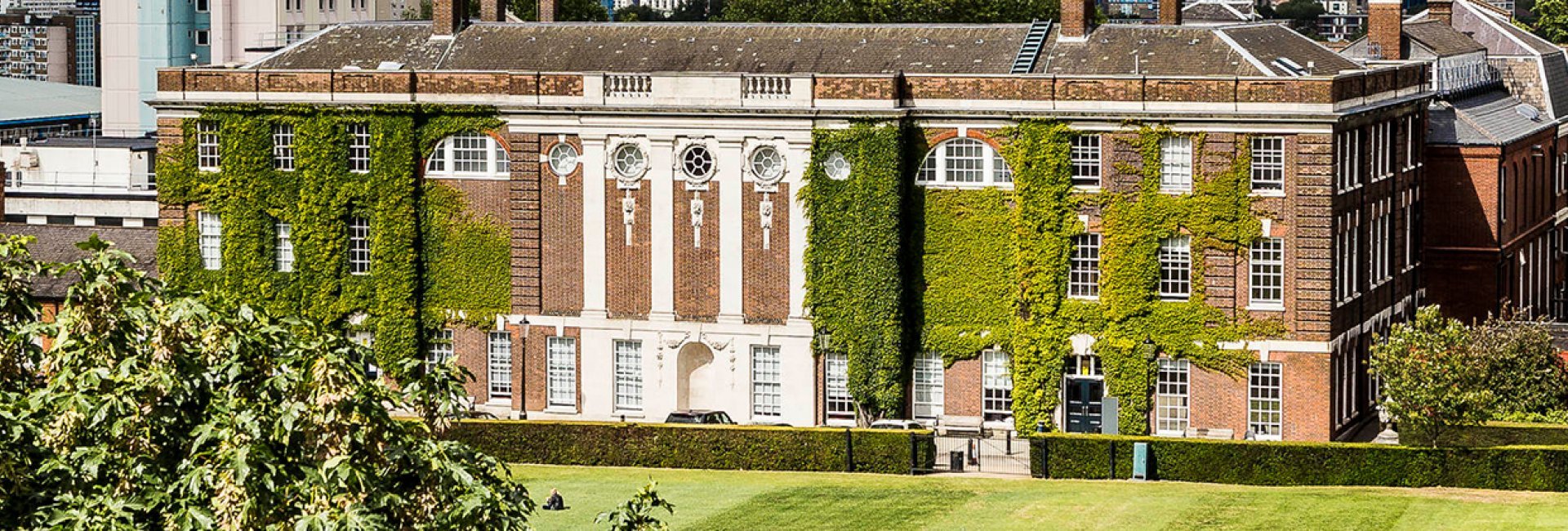
Goldsmiths, University of London - Virtual Campus Tour
25 Nov 2025, 12:00
London

Learn how to design, develop, and deploy software systems for business, while also honing skills in enterprise computing, business modelling, and digital entrepreneurship.
This degree which includes a Foundation Year in Computing is an alternative entry route for students without the formal academic profile to enter into degree level study. We will help you develop your undergraduate academic skills, whilst also teaching you foundations of programming, problem solving and maths.
Why study the Business Computing (Entrepreneurship) with Foundation Year (Integrated Degree) degree at Goldsmiths
Teaching on this programme is strongly focused on practical work in real world situations, so you'll develop excellent technical and interpersonal skills that will enhance your employability.
You don’t need to know how to code before you start. You'll begin by creating simple software programs, before gradually building expertise.
Your practical work will be underpinned by theory ranging from problem-solving strategies to professional software development models.
You’ll benefit from Goldsmiths’ unique interdisciplinary approach to teaching Computing and explore how computing interacts with the arts, humanities and social sciences.
When you successfully complete the Foundation Year, you’ll be eligible to progress onto Year 1 of the BSc degree.
This degree will provide you with hands-on experience of digital businesses, innovative technologies and entrepreneurship. You'll gain a detailed understanding of the major concepts and technologies underpinning entrepreneurship and their application to designing exciting new products, services and processes.
You'll explore how both new and established organisations can respond to the opportunities and threats associated with disruptive innovation, and how entrepreneurs can secure and manage financial resources.
You'll develop practical computing skills and an understanding of the processes involved in creating digital start-up businesses from inception to launch.
The degree includes the opportunity for you to undertake a year-long placement in industry, enabling you to gain work experience, build confidence and contacts, develop your skills and industry insight, and enhance your career prospects.
You'll engage in critical thinking by analysing entrepreneurial situations and constructing and selecting viable solutions to solve problems.
You'll gain knowledge of current theories, models, techniques and practices in all major business disciplines including accounting and finance, information technologies, management and marketing.
You'll explore technological and innovation trends and their impact on organisations, considering the economics of digital business and the characteristics of businesses that succeed in a turbulent environment.
The Foundation year (Year 0) is designed to prepare you for undergraduate study in computing. During the year you’ll learn the foundations of how to program a computer. You’ll work on practical examples of computing applications and learn to develop simple software programs which gradually increase in complexity. You’ll also develop your mathematical and problem-solving skills, as well as more general study skills.
Year 0 (Foundation Year)
Includes four integrated units of study:
Studying Computers
Foundations of Problem Solving
Foundations of Programming
Foundations of Mathematics for Computing
Year 1
In your first year, you'll take the following compulsory modules:
Identity, Agency & Environment 1
Introduction to Programming
Front End Web
Understanding Entrepreneurship
Identity, Agency & Environment 2
Computing Project 1
Business Enterprise in the Digital Era
Introduction to Statistics for Business and User Experience
Year 2
In your second year, you'll take the following compulsory modules:
Dynamic Web Applications
Consumer Behaviour
Pitching Creative Businesses
Computing Project 2
Brand Management
Entrepreneurial Behaviour
The Goldsmiths Elective
The Goldsmiths Project
Optional placement year
The degree includes an optional industrial placement year between the second and final year of study. You will be responsible for securing a placement, but we can support you through this process.
The industrial placement year is a great opportunity for you to gain work experience, build confidence and contacts, develop your skills and industry insight, and enhance your career prospects.
You'll be supported throughout your placement year by a placement tutor, who will provide you with guidance and liaison between you and your employer.
Although we encourage you to take the opportunity of a placement year, it isn't compulsory and you can complete your degree in three years.
Year 3 (or Year 4 with work placement)
You'll take the following compulsory modules:
Final Project in Business Computing
Digital Venture Creation
Social Responsibilities of Management
You will also select option modules to the value of 45 credits from a list provided by the department.
Please note that due to staff research commitments not all of these modules may be available every year.
You’ll be assessed by a variety of methods, depending on your module choices. These may include coursework, examinations, group work and projects. If you successfully progress and opt for an industrial placement year, your placement tutor will assess your work. If you complete the placement year successfully, you earn the endorsement 'with work experience' on your degree certificate.
This is the equal consideration deadline. You can still apply after this date, but your application may not receive guaranteed consideration.

Goldsmiths, University of London has participated in the Teaching Excellence Framework. These ratings were awarded in 2023, for four years.
See why these ratings were awarded
What does this TEF outcome mean?
The following entry points are available for this course:
There are no qualification requirements for this course.
There are no specific formal entrance qualifications for this programme and we will consider all relevant qualifications and related experience.
| Test | Grade | Additional details |
|---|---|---|
| IELTS (Academic) | 6 | With no element lower than 5.5 |
You will be required to submit a personal statement with your application. This is your opportunity to demonstrate your interest in the subject you’ve applied for. Your referees are also welcome to include any relevant contextual comments around your academic achievements. We’ll look at all these things when making a decision on your application.
This section shows the range of grades that students who received offers were previously accepted on to this course with (learn more).
It is designed to support your research but does not guarantee whether you will or won't get a place.
Admissions teams consider various factors, including interviews, subject requirements, and entrance tests. Check all course entry requirements for eligibility.
We are unable to show previous accepted grades for this course. This could be because the course is new, it's a postgraduate course, there isn't enough historical data, or the provider has opted out of sharing their entry grades data for this course - learn more.
| Location | Fee | Year |
|---|---|---|
| England, Scotland, Wales, Northern Ireland, Channel Islands & Republic of Ireland | TBC | |
| EU & International | TBC |
Tuition fee status depends on a number of criteria and varies according to where in the UK you will study. For further guidance on the criteria for home or overseas tuition fees, please refer to the UKCISA website.
To find out more about fees and funding, please check our undergraduate fees guidance or contact the Fees Office https://www.gold.ac.uk/ug/fees-funding/
Email:course-info@gold.ac.uk
Phone:020 7078 5300
New Cross
Lewisham
SE14 6NW
At Goldsmiths, University of London