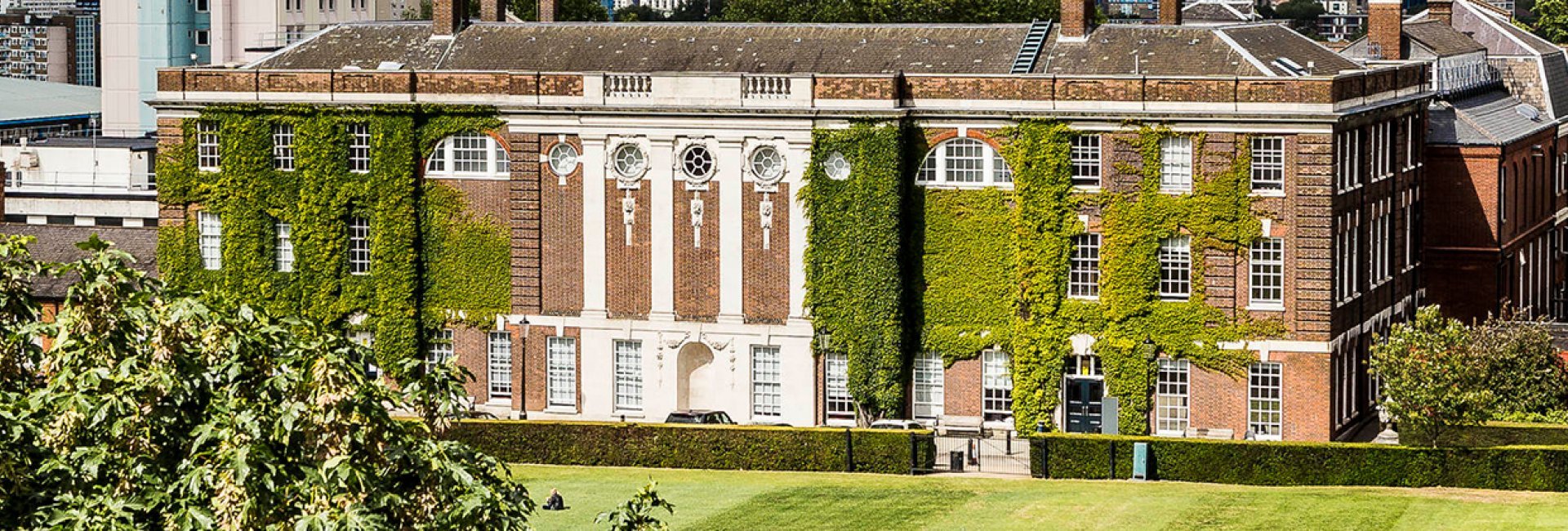
Goldsmiths, University of London - Virtual Campus Tour
25 Nov 2025, 12:00
London

This MA will develop your skills and creative vision in documentary production. It enhances your understanding of the historical context and contemporary modes of documentary production against a backdrop of the wider issues in media production.
This Masters, a pathway of the MA Filmmaking, will encourage your understanding of the politics, aesthetics and ethics of documentary production, and the nature and diversity of documentary practice in contemporary society.
The programme is housed in a new purpose-built media facility equipped with state-of-the-art teaching spaces including a range of digital cameras, Avid Media Composer, and Adobe Premiere Film Editing suites, Digital Special Effects, Pro Tools Audio Postproduction suites.
You will be able to make your own documentaries, learning and refining research, interviewing, self-shooting and editing techniques. The programme encourages you to develop your own distinctive authorial voice and gain a range of skills that will make you highly employable.
You work on at least two films during the year, culminating in a major production towards the end of the degree. In addition you can attend classes in related disciplines such as Cinematography and Editing. This framework is designed to provide you with a breadth of filmmaking knowledge combined with a high level of expertise in your chosen filmmaking discipline.
The MA encourages you to develop:
an awareness of documentary production techniques, ethics and aesthetics
specific filmmaking and production management skills
technical skills (including camera, lighting and sound editing)
an understanding of the workings of the media and their broad cultural and social impacts
You will be taught the skills to be able to self-shoot and edit, but will also have the chance to work with specialised camera-people, editors and producers. You complete several short films and exercises, then make your own 15-25 minute documentary, during which you will fully explore research methods, visual and thematic storytelling, experimental and multi-platform formats and much more.
For two terms you will spend a full day a week in specialised contact with your specific programme convenor, plus a further day working with colleagues across the programme with:
Masterclasses
Pitches
Exercises aimed at using your skills specialism in a variety of live shoot situations
You will also have a variety of research projects to undertake, as well as other module options.
Compulsory modules
You will take the following modules:
Documentary: Specialist Skills
Representing Reality
You will also complete a Final Project, a 20-minute film with a subject and style of your own choice, assessed alongside a portfolio of development work.
Screen School options
As well as your screen documentary specialism, you will choose 1 or 2 option modules to enhance your other skills and critical approaches.
Examples of the modules available include:
Social Activist Film
Adaptation and Script Editing
Archaeology of the Moving Image
Camera Fundamentals
Contemporary Screen Narratives
Experimental Media
Film Producing Fundamentals
Sound Design Fundamentals
The Ascent of the Image
Visual Storytelling
Practical Law for Film-makers
Please note that due to staff research commitments not all of these modules may be available every year.
You should have (or expect to be awarded) an undergraduate degree of at least second class standard in a relevant/related subject as well as a level of practical experience from work in the arts or the media.
You might also be considered for the programme if you aren’t a graduate or your degree is in an unrelated field, but have relevant experience and can show that you have the ability to work at postgraduate level.
Because funding deadlines and requirements vary around the world, applications are considered on a rolling basis from February onwards and places on the programme fill up across the recruitment cycle. For this reason, we strongly advise you to submit your completed application as early as you can.
We accept a wide range of international qualifications.
If English isn’t your first language, you will need an IELTS score (or equivalent English language qualification) of 7.0 with a 7.0 in writing and no element lower than 6.5 to study this programme.
No fee information has been provided for this course
Tuition fee status depends on a number of criteria and varies according to where in the UK you will study. For further guidance on the criteria for home or overseas tuition fees, please refer to the UKCISA website.
No additional fees or cost information has been supplied for this course, please contact the provider directly.
New Cross
Lewisham
SE14 6NW
Visit our website Visit our course page
Email:course-info@gold.ac.uk
Phone:020 7078 5300
At Goldsmiths, University of London