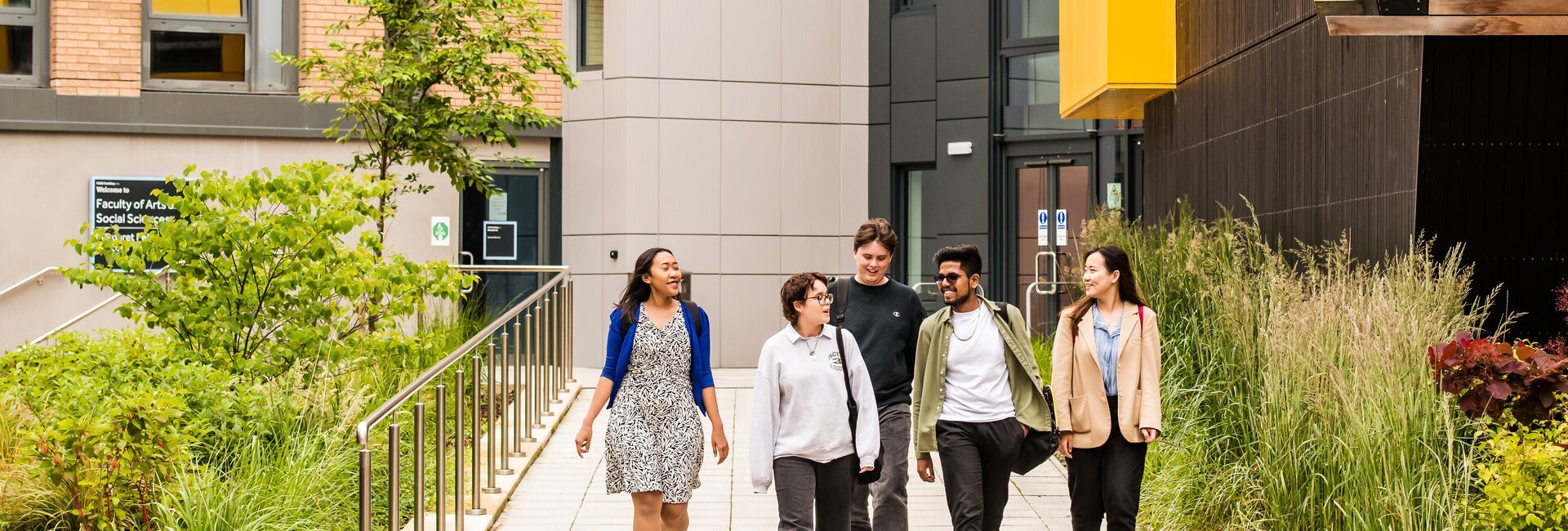
Explore a vast range of literary works, from ancient myth to the contemporary graphic novel, and study a host of historical movements, from the medieval world to the rise of human rights. Through engagement with texts and artefacts crossing continents and centuries, our interdisciplinary programme will immerse you in both literature and history.
Why Lancaster?
-
Explore a city steeped in history and with the Lake District, home of the Romantic poets, on its doorstep
-
Be inspired by our rich programme of free literary and historical events on campus, online, and in the city’s historic Castle Quarter
-
Benefit from internship opportunities, including residential positions at Wordsworth Grasmere in the heart of the English Lake District and placements with local heritage organisations
-
Enhance your professional skills by getting involved with our student-run literary journals
-
Address the challenges to our world past, present and future, from environmental change, to war, and conflict and human rights
-
Be taught by critics, writers and historians with international reputations
Past worlds: world literature
You will engage closely with texts and artefacts crossing continents and centuries, exploring the profound question of where literature ends and history begins. In doing so, you will learn how to understand the worlds of others, both on these shores and far beyond. In your first year, you will be given a broad grounding in both literary and historical analysis. This will help you make informed decisions about the particular literary themes and historical periods that really interest you and, indeed, may lead you to your final-year research project, where you work on a literary and/or historical topic or theme of your own choosing. In Literature, this could be anything from, say, Renaissance sermons to filmic representations of World War One; whilst in History, you could choose, for example, a global phenomenon like the Transatlantic Slave Trade or an episode from Lancaster’s own rich history such as the infamous execution of ten people for witchcraft in 1612.
Literary and historical communities
To supplement your studies, we offer an extensive range of literary and/or historical events, some of which take place in at Lancaster’s spectacular medieval Priory nearby. These include:
-
Talks from visiting scholars and well-known authors taking part in our annual Shakespeare production at the Castle
-
Access to our interdisciplinary Research Centres for Regional Heritage, Digital Humanities, and War and Diplomacy
-
Social events such as our October Evening and May Gathering, both held at the Priory
-
The city of Lancaster and its surrounds – from the Lake District to the Bay coastline and the Forest of Bowland – are steeped in history. From Bronze Age stone circles to Viking-age graves and medieval abbeys, and from Roman forts to memorials of the Transatlantic Slave Trade, the region is rich in the living remains of past cultures for you to explore. Over ten centuries, the Lancaster’s Norman castle has been a fortress, court and prison, now the heart of a vibrant historic city.
To build on your studies, you can discover the latest research with our History seminar series, where guest historians from across the UK come to share their insights and discuss their findings.
Professional development
You will have a range of opportunities to develop real-world skills that will prepare you for your future career. You might, for example, volunteer at Lancaster LitFest or one of the museums, or apply for one our residential internships at Wordsworth Grasmere, or help manage one of our four student-run literary journals (Cake, Flash, Lux and Errant), giving you invaluable experience in writing, publishing, and marketing.
Important Information
For the most up-to-date course information and more details, we recommend that you revisit our website before submitting your application.