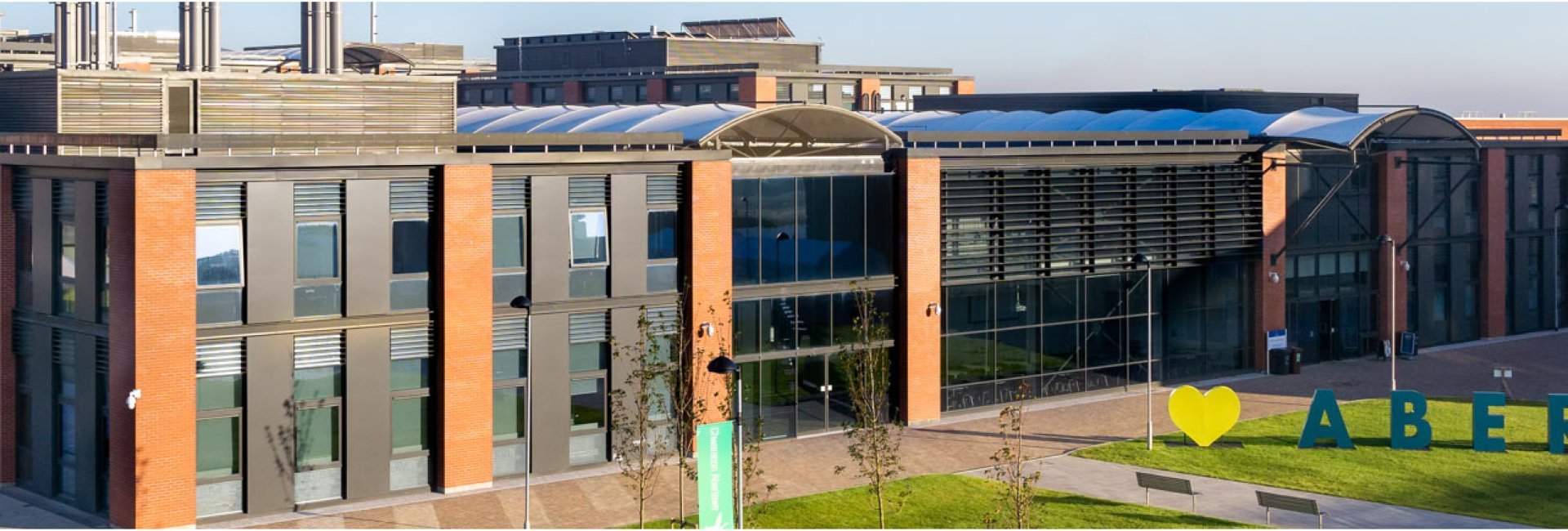
Undergraduate On-Campus Open Day at Swansea University - Singleton Park Campus and Bay Campus - 28 March 2026
28 Mar 2026, 08:30
Swansea

The journalism landscape in the UK, and globally, is evolving rapidly, driven by technological advancements, shifting consumer behaviour, and the changing dynamics of information sharing. Our BA Journalism, Media and Communications programme has been structured to prepare you to step into this evolving new mediascape with confidence.
Traditional print or broadcast journalism is no longer the only focus. As a journalism student, you can become proficient in digital content creation, social media management, podcasting, video production and interactive storytelling, by developing expertise in a range of industry-standard software and technology.
Similarly, in an era marked by misinformation, fake news, and digital manipulation, ethical journalism has never been more important. This programme has a strong emphasis on ethics, media law, and the responsible reporting of sensitive topics. Subjects that are essential for you to be able to navigate the complexities of truth in the digital age, ensuring that you can contribute to an informed, engaged society.
And because journalism is no longer a siloed profession, this programme, in addition to equipping you with the core principles of journalism theory and practice, allows you to study graphic design, PR, video production and branding. This cross-disciplinary approach will prepare you for the reality of working in integrated media teams, where journalistic and creative skills are equally valued.
Journalism is an increasingly global enterprise, which is why we focus on developing your understanding of international news and the ability to report on issues from diverse cultural and geopolitical contexts. By fostering a global perspective, we aim to prepare you for the world of international reporting, building your ability to tell stories across multiple platforms and cater to diverse audiences.
Please visit our course page for more information. https://www.swansea.ac.uk/undergraduate/courses/culture-communication/media-comms-journalism-pr/ba-journalism-media-communications/
In Year 1, you will typically study areas including:
Delivering and Decoding the News, Principles of Mediation, Public Relations: Strategic Communications, Creative Media Platforms, Pitch Invasion: Sport and its Impact on Society
In Year 2, you will typically study areas including:
Theorising the Media, Investigating Text, Process and Audiences, Pop Culture and Alternative News Genres, Introduction to Writing Fiction, Misinformation, Fake News and Fact-Checking, The History of Screen Animation
Your final year will include an optional independent dissertation project, you will typically study areas including:
Reporting the 21st Century, Journalism in Practice, Documentary and Fiction Filmmaking, Sports Public Relations, Strategy, Marketing and Branding, Digital Futures, Practical Web Technologies, Guerrilla Campaigns: Subversive and Interruptive PR
Studying Media and Communications at Swansea University allows students to enhance their future employability prospects through assessments that replicate the kind of experiences you will face in the creative communications industries, often with the involvement of industry professionals to offer feedback and advice. Some examples of these are:
For full breakdown of course structure and assessment please visit our course page: https://www.swansea.ac.uk/undergraduate/courses/culture-communication/media-comms-journalism-pr/ba-journalism-media-communications or get in touch with us at study@swansea.ac.uk
The following entry points are available for this course:
If you are an International Student, please visit our International pages for more information about entry requirements: http://www.swansea.ac.uk/international/students/requirements/
Discover what it's like to study Journalism, Media and Communications at Swansea University: insights on the course, making friends, personal statement tips, uni prep, and recommended books, podcasts, and videos.

English Language Requirements at Swansea University https://www.swansea.ac.uk/admissions/english-language-requirements/
UK applicants who meet course requirements are guaranteed a conditional offer. We assess applications on individual merit. We consider making reduced offers, eg. to Care Leavers or students with extenuating circumstances. We encourage you to disclose any relevant circumstances.
The Advanced Skills Baccalaureate Wales is considered as equivalent to one full A-Level and students can take x2 A-levels alongside this. EPQ students predicted Grade B or above will receive a one-grade offer reduction.
This section shows the range of grades students (with UK A-Levels or Pearson BTEC Level 3 National Extended Diplomas) who received offers were previously accepted with (learn more). It is designed to support your research but does not guarantee whether you will or won't get a place. Admissions teams consider various factors, including interviews, subject requirements, and entrance tests. Check all course entry requirements for eligibility.
We are unable to show previous accepted grades for this course. This could be because the course is new, it's a postgraduate course, there isn't enough historical data, or the provider has opted out of sharing their entry grades data for this course - learn more.
No fee information has been provided for this course
Tuition fee status depends on a number of criteria and varies according to where in the UK you will study. For further guidance on the criteria for home or overseas tuition fees, please refer to the UKCISA website.
For the latest fee information, please check the individual course page on our website. Our full range of programmes are listed here: https://www.swansea.ac.uk/undergraduate/courses/
Further information on tuition fees can be found here: https://www.swansea.ac.uk/undergraduate/fees-and-funding/tuition-fees/
Singleton Park
Swansea
SA2 8PP
Visit our website Visit our course page
Email:study@swansea.ac.uk
Phone:01792 295111
Fax: 01792 295110
At Swansea University