Undergraduate On-Campus Open Day at Swansea University - Singleton Park Campus and Bay Campus - 28 March 2026
28 Mar 2026, 08:30
Swansea
Mathematics can be seen as the most international of subjects – a global ‘language’ with ancient origins and which is now vitally important in our data-driven world.
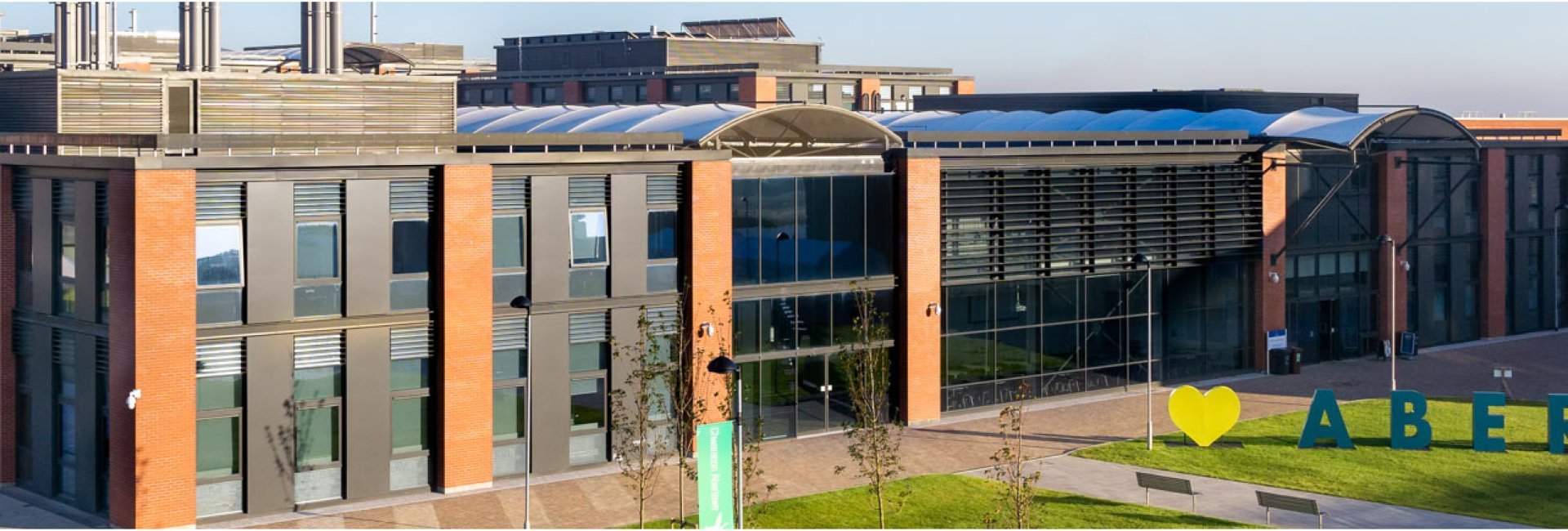
As a student on our four-year MMath Mathematics, you will be taught in our new £32.5m Computational Foundry, a world class centre with state-of-the-art facilities for teaching and research, as well as networking and meeting spaces, to help prepare you for a successful and rewarding career.
Employers place great value on the ability to think rationally and to process data clearly and accurately, and Mathematics graduates earn on average 50% more than most other graduates. The most popular careers are the actuarial profession, the financial sector, IT, computer programming and systems administration, and opportunities within business and industry where employers need mathematicians for research and development, statistical analysis, marketing and sales.
The MMath course is accredited to meet the educational requirements of the Chartered Mathematician designation awarded by the Institute of Mathematics and its Applications. It covers the general range of mathematical material over four years including elements of different aspects of the subject such as Pure Mathematics, Applied Mathematics and Mathematics for Finance.
You will have the chance to explore the number theory that Pythagoras studied, the Financial Mathematics that the highest flyers on Wall Street rely on, and a wealth of other topics reflecting our lecturers’ research expertise in probability, analysis, nonlinear partial differential equations, non-commutative geometry and algebraic topology.
The degree will give you a sound grounding in the basic concepts of Mathematics, allowing you to specialise in your chosen areas. It will also develop your ability to use and evaluate logical reasoning and construct rigorous arguments; and develop your oral and written communication skills as well as your ability to use modern communication tools, especially those most appropriate to mathematics.
This degree is also available as a five-year course with a year abroad (G105).
"Studying at Swansea University has been a pleasure. The past two years have been a wonderful adventure, from discovering some of the Welsh culture, to learning from some of the best lecturers I have ever met. The thing that really stands out about Swansea is the huge support you get as a student - from absolutely everyone! Whenever I have had problems - whether personal, academic or financial - I have had someone to advise me, to listen to me and to help me." - Alissa Kamilova, BSc Mathematics
Please come along to our next Open Day or get in touch for further information
In Year 1, you will typically have the opportunity to study areas including: Geometry: Mathematics, Logic and Communication, Introduction to Modelling and Simulation, Introduction to Analysis, Foundations of Algebra, Introductory Linear Algebra, Mechanics and Dynamics, Biomathematics, Probability and Statistics.
In Year 2, you will typically have the opportunity to study areas including: Differential Equations, Probability Theory, Multi-variable analysis, Metric spaces and measure theory, Vector Spaces, Groups and Rings, and others.
In Year 3, you will typically have the opportunity to study areas including: Higher Algebra, Complex Analysis, Partial Differential Equations, Applied Algebra: Coding Theory, Cashflows and Interest Rates, Lie Theory, and teaching mathematics via a school placement.
In Year 4, you will typically have the opportunity to study areas including: Partial Differential Equations, Applied Algebra: Coding Theory, Cashflows and Interest Rates, Financial Mathematics in Discrete Time, Markov Processes and Applications, Differential Geometry, Machine Learning and others. You will also undertake a project.
You will be taught through a combination of lectures, tutor-led tutorials and regular (non-assessed) coursework. The final year modules are more student-centred, to reflect a progression in teaching methods appropriate to the subjects taught. Throughout, the learner is encouraged to undertake independent reading both to supplement and consolidate what is being taught/learnt and to broaden knowledge and understanding of the subject. You will be assessed through a combination of unseen written examinations, set assignments, presentations and a dissertation.
The following entry points are available for this course:
If you are an International Student, please visit our International pages for more information about entry requirements: http://www.swansea.ac.uk/international/students/requirements
Discover what it's like to study Mathematics at Swansea University: insights on the course, making friends, personal statement tips, uni prep, and recommended books, podcasts, and videos.
English Language Requirements at Swansea University https://www.swansea.ac.uk/admissions/english-language-requirements/
UK applicants who meet course requirements are guaranteed a conditional offer. We assess applications on individual merit. We consider making reduced offers, eg. to Care Leavers or students with extenuating circumstances. We encourage you to disclose any relevant circumstances.
The Advanced Skills Baccalaureate Wales is considered as equivalent to one full A-Level and students can take x2 A-levels alongside this. EPQ students predicted Grade B or above will receive a one-grade offer reduction.
This section shows the range of grades students (with UK A-Levels or Pearson BTEC Level 3 National Extended Diplomas) who received offers were previously accepted with (learn more). It is designed to support your research but does not guarantee whether you will or won't get a place. Admissions teams consider various factors, including interviews, subject requirements, and entrance tests. Check all course entry requirements for eligibility.
Students aged 17/18 who applied to this course were offered a place.
See how students with your grades have been accepted onto this course in the past.
No fee information has been provided for this course
Tuition fee status depends on a number of criteria and varies according to where in the UK you will study. For further guidance on the criteria for home or overseas tuition fees, please refer to the UKCISA website.
For the latest fee information, please check the individual course page on our website. Our full range of programmes are listed here: https://www.swansea.ac.uk/undergraduate/courses/
Further information on tuition fees can be found here: https://www.swansea.ac.uk/undergraduate/fees-and-funding/tuition-fees/
The Mathematics Department will offer prizes/scholarships worth up to a total of £3000 for students starting their university studies in September. The prizes will be awarded on the basis of a competitive two and a half hour examination which will be taken during the Spring. Usually, applicants take the exam in their school or college, but this year arrangements will be made to enable applicants to sit the exam remotely. If you would like to take the exam, you will need to make Mathematics at Swansea one of your UCAS selections.
These scholarships can be used in conjunction with our Excellence and Merit scholarships. If you are interested in taking the scholarship exam, then you should complete and return a Mathematics Scholarship Application to us via email. https://www.swansea.ac.uk/maths/scholarships/
Note: The University will also award Excellence Bursaries worth £3,000 to students who achieve AAA at A-level (or equivalent) and £2000 to students who achieve AAB at A level (or equivalent). For further details please see https://www.swansea.ac.uk/undergraduate/scholarships/excellence-bursaries/
Singleton Park
Swansea
SA2 8PP
Visit our website Visit our course page
Ask us a question - undergraduate enquiries.
Email:study@swansea.ac.uk
Phone:01792 295111
Email:study@swansea.ac.uk
Phone:01792 295111
Fax: 01792 295110