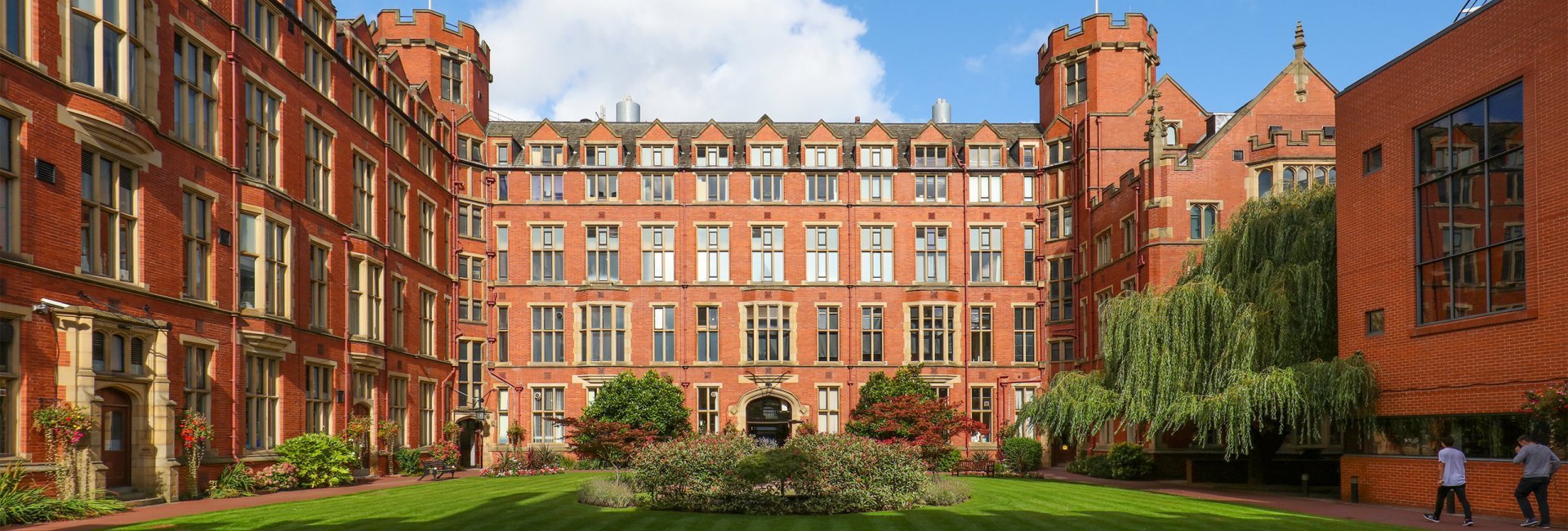
University of Sheffield - undergraduate open day
20 Jun 2026, 09:00
Sheffield

In our core undergraduate degree, you'll discover the underlying principles of materials science, and how these are applied across materials engineering situations. You can keep your course general or tailor your degree in later years with optional materials modules.
Shape the future of engineering by mastering the science of materials, solving real-world challenges, and driving innovation in industries that matter.
On this course, you’ll explore how materials science underpins the innovations driving modern engineering. Designed with your future in mind, the course links theoretical knowledge with hands-on experience to equip you for success in dynamic industries like aerospace, energy, and advanced manufacturing.
From day one, you’ll focus on real-world applications. In the first two years, you’ll build a strong foundation in materials properties, sustainability, and engineering processes. Group projects will challenge you to solve practical engineering problems while developing essential skills like project management, communication, and technical problem-solving, qualities highly valued by employers.
Sustainability is a core theme, integrated into every module. You’ll explore how materials science contributes to a greener world by reducing resource dependency, advancing energy efficient processes, and supporting renewable technologies. Topics like the Materials Lifecycle, energy materials, and nuclear technologies will allow you to explore cutting-edge solutions aligned with global sustainability goals.
In your final year you'll have the opportunity to choose the specialist modules that interest you, from metallurgy to functional materials, composites, biomaterials, nuclear materials and everything in between. Your independent research project will be a chance to showcase your technical skills and push the boundaries of engineering innovation.
You’ll learn from world-leading researchers and have access to cutting-edge facilities, preparing you to meet the engineering challenges of the 21st century. This course equips you with practical skills and knowledge valued by employers, preparing you for diverse roles across a wide range of sectors.
This course is fully accredited by the The Institute of Materials, Minerals & Mining (IOM3), meaning it counts towards later professional registration as an Incorporated Engineer (IEng) or Chartered Engineer (CEng).
Why study this course?
Artefacts and Individual final year projects: Bridging theory and practice, your artefacts project empowers you to explore the use of different materials in commercial products. All students will carry out an open-ended individual final year project where you can explore research level material.
Links with industry and practical training: Our Industrial Advisory Board provides a link between your studies and the professional world, ensuring we teach you the skills in demand from industry. For example, you’ll be using industry standard equipment – making, testing and characterising different materials in our bespoke labs.
Specialist teaching facilities: 'Learning by doing' is the reason The Diamond was built. Dedicated to engineering, you’ll apply the theory you learn in lectures and during lab classes – consolidating your understanding alongside students from other disciplines, and beyond the bounds of the curriculum.
Materials engineers for a sustainable future: Sustainability is a core theme within materials science and engineering, as we look to develop materials and manufacturing methods which ensure the long-term viability of the planet and its resources (UN Sustainable Development Goals 9 and 12).
This is the equal consideration deadline. You can still apply after this date, but your application may not receive guaranteed consideration.

University of Sheffield has participated in the Teaching Excellence Framework. These ratings were awarded in 2023, for four years.
See why these ratings were awarded
What does this TEF outcome mean?
The following entry points are available for this course:
including two of Maths, Physics or Chemistry
in Engineering, Applied Science (inc Biomedical Science, Analytical & Forensic Science or Physical Science) or Blacksmithing and Metalworking + A in A Level Maths
Award of Access to HE Diploma in a relevant subject (to include units in two of Maths, Physics or Chemistry), with 45 credits at Level 3, including 36 at Distinction and 9 at Merit
in Engineering or Applied Science + A in A Level Maths
in two of Maths, Physics, or Chemistry + AABBB in Scottish Highers
34, with 6, 5 in two of HL Maths, Physics or Chemistry; 33, with 5 in two of HL Maths, Physics or Chemistry, and A in a science-based Extended Essay
including two of Maths, Physics or Chemistry
GCSE Maths grade 6/B and 4/C in Physics and Chemistry (if not studied at A Level)
Distinction in either the Maintenance, Installation & Repair for Engineering & Manufacturing or Design & Development for Engineering & Manufacturing T Level, including grade A in the core component + A in A Level Maths
To find out if you're eligible for additional consideration or an alternative offer, visit: ww.sheffield.ac.uk/undergraduate/apply/access-sheffield
Find out more about qualification requirements for this course.
English language requirements for undergraduateshttps://www.sheffield.ac.uk/undergraduate/apply/english-language
The entry grades data only represents a proportion of our cohort. We accept a broad range of qualifications on our degrees and we're committed to ensuring all students with the potential to succeed at Sheffield are informed and feel encouraged to apply. If you meet one or more of our Access Sheffield criteria, we may be able to give your application additional consideration when we receive it and when exam results are released.
This section shows the range of grades that students who received offers were previously accepted on to this course with (learn more).
It is designed to support your research but does not guarantee whether you will or won't get a place.
Admissions teams consider various factors, including interviews, subject requirements, and entrance tests. Check all course entry requirements for eligibility.
We are unable to show previous accepted grades for this course. This could be because the course is new, it's a postgraduate course, there isn't enough historical data, or the provider has opted out of sharing their entry grades data for this course - learn more.
No fee information has been provided for this course
Tuition fee status depends on a number of criteria and varies according to where in the UK you will study. For further guidance on the criteria for home or overseas tuition fees, please refer to the UKCISA website.
Tuition fees for 2026 entry have not been confirmed. Please use 2025-26 information as a guide.
Phone:0114 222 8030
Western Bank
Sheffield
S10 2TN
At University of Sheffield