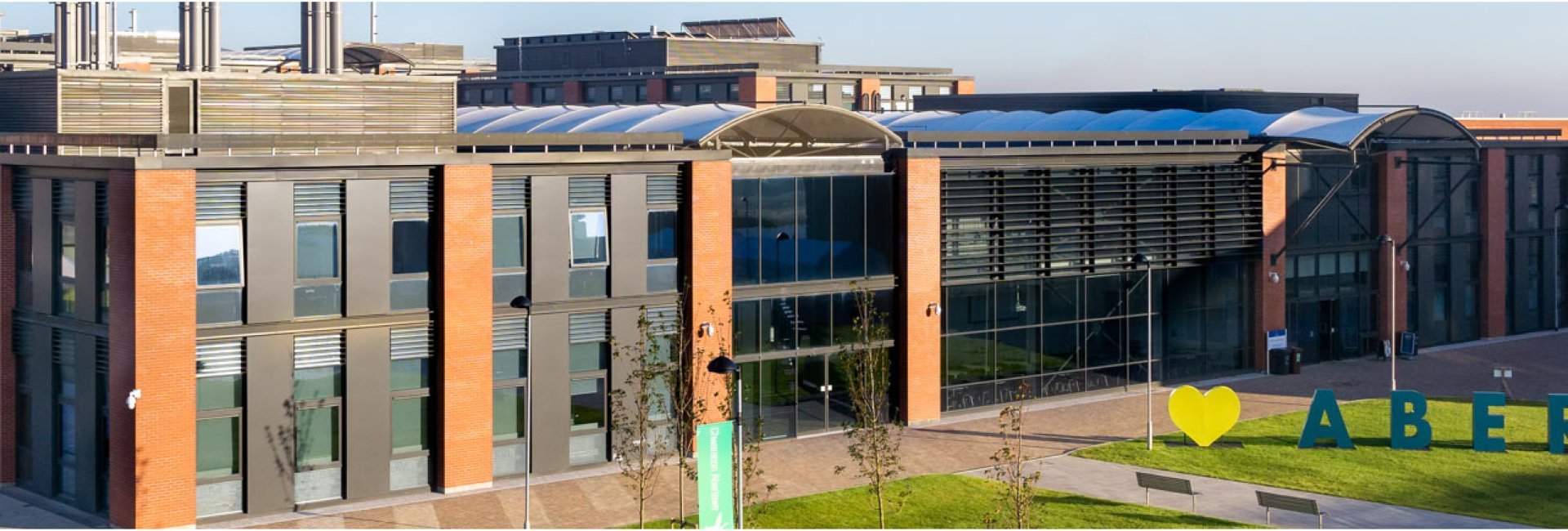
Undergraduate On-Campus Open Day at Swansea University - Singleton Park Campus and Bay Campus - 13 June 2026
13 Jun 2026, 07:30
Swansea

Philosophy, Politics and Economics (PPE) is a multidisciplinary programme that explores many intersecting topics, such as how societies function, how political and economic decisions are made, and the ethical frameworks behind them. It also covers more abstract areas, such as the nature of justice and knowledge.
This degree blends three distinct but interrelated disciplines:
Philosophy sharpens your critical thinking and ethical reasoning. You will tackle questions about morality, justice, logic, truth and reality.
Politics examines power, governance and public policy. It covers political theory, international relations, and the workings of institutions and groups such as governments, political parties and the United Nations.
Economics focuses on how resources are allocated, how markets operate, and how policies affect wealth and welfare. It includes both micro and macroeconomic theory, often with quantitative analysis.
As a PPE student, you will learn to analyse complex problems from multiple angles, debate ideas rigorously, and to communicate with clarity and precision. The degree is intellectually demanding, rewarding, and enables you to develop a variety of skills and abilities, while providing you with a unique perspective on a wide range of practical and theoretical issues and debates.
You will study at our Singleton Park Campus, in beautiful parkland, overlooking Swansea Bay on the edge of the Gower Peninsula.
This PPE degree aims to provide you with a firm grounding in the core topics of philosophy, politics and economics, as well as an appreciation of how these subjects intersect. This is achieved through a careful selection of compulsory modules that ensure you can cover central issues in each subject area, along with a sufficient range of optional modules, that allow you to focus on your preferred areas of study.
In year 1, your studies will provide you with an introduction to economics. Alongside this, you will be introduced to philosophical analysis and argument, as well as examining how philosophical, political and economic issues intersect. You can choose whether to study two modules in philosophy, politics or economics, which is crucial as many 2nd and 3rd year economics modules require you to have studied earlier economics modules.
In your second year, you will learn about some of the most influential philosophers within western philosophy, as well as developing your critical reasoning and analysis. You will also learn how to apply key economic principles to the contemporary economy.
In your final year, you will complete a dissertation, as well as studies that combine philosophical, political and economic perspectives. You can choose to balance your study of the three subjects through your optional module choices.
We have a long-standing collaboration with the Senedd, which enables us to offer an educational work placement for students with an interest in policymaking within the Welsh context. The Senedd module runs across two terms in the final year and serves as a selective option instead of the dissertation. You will be placed with a Senedd Member (MS) and their team for one day a week and experience the workings of the office of a representative as well as the Welsh Parliament itself.
This programme includes opportunities to undertake a Semester or Year Abroad, enhancing your learning and offering invaluable life experience.
This course also offers you the opportunity to spend a Year in Industry, in the UK or overseas, enabling you to gain valuable workplace experience. The University advocates for paid-only placements, which on average have a salary of over £20,000. Unpaid placements are considered on a case-by-case basis.
In Year 1, you will typically study areas including: Principles of Microeconomics; Interpreting Politics: The Faces and Uses of Power; Freedom, Justice and Equality: Key Debates in Political Philosophy; Mathematical Techniques for Economics; Exploring Economic Data; Disinformation, Ideology, and Bias: Researching and examining political data.
In Year 2, you will typically study areas including: Global Justice and Human Rights in the Age of Globalisation; Philosophy of the Enlightenment; Philosophy of Mind; The History of Political Thought; Intermediate Microeconomics and Macro-economics; Economic Development; Economies of the Middle and Far East; International Security; Contemporary Moral Controversies.
In Year 3: Year spent in Industry
In Year 4, you will typically study areas including: Capitalism and Justice; Senedd Cymru/The Welsh Parliament; The Family and Children: Ethics and Policy; Philosophy, Mental Health and Illness; Clear and Present Danger: America and Terrorism; Black Mirror Sociology: Technology and Society; Shadow Wars: US Presidents and covert action from the Cold War to Trump; Economics Independent Study Project; Time Series Econometrics; and many more.
We offer a variety of assessment methods within our programmes. In addition to traditional examinations and essays, examples of alternative assessment include:
• Presentations
• Group Work
• Original Writing
Throughout your undergraduate Politics, Philosophy and Economics degree, you will develop excellent research and analytical skills and learn to present your ideas effectively both verbally and in writing.
The following entry points are available for this course:
If you are an International Student, please visit our International pages for more information about entry requirements: http://www.swansea.ac.uk/international/students/requirements/
Discover what it's like to study Philosophy, Politics and Economics with a Year in Industry at Swansea University: insights on the course, making friends, personal statement tips, uni prep, and recommended books, podcasts, and videos.

Access to Humanities Course D: 21 credits M: 24 credits
International students will also require a score of 4 at Higher Level English Language or Literature, or 5 at Standard Level English Language or Literature.
Swansea University accepts the Advanced Skills Baccalaureate Wales as fully equivalent to x1 A-Level.
Swansea University will accept the Welsh Baccalaureate - Advanced Skills Challenge Certificate as fully equivalent to one A-Level.
We recognise the EPQ as an excellent indicator of success. If you are predicted a Grade B or above in the EPQ, you will receive an offer with a one grade reduction, to include your EPQ with a grade B.
English Language Requirements at Swansea University https://www.swansea.ac.uk/admissions/english-language-requirements/
UK applicants who meet course requirements are guaranteed a conditional offer. We assess applications on individual merit. We consider making reduced offers, eg. to Care Leavers or students with extenuating circumstances. We encourage you to disclose any relevant circumstances.
The Advanced Skills Baccalaureate Wales is considered as equivalent to one full A-Level and students can take x2 A-levels alongside this. EPQ students predicted Grade B or above will receive a one-grade offer reduction.
This section shows the range of grades that students who received offers were previously accepted on to this course with (learn more).
It is designed to support your research but does not guarantee whether you will or won't get a place.
Admissions teams consider various factors, including interviews, subject requirements, and entrance tests. Check all course entry requirements for eligibility.
We are unable to show previous accepted grades for this course. This could be because the course is new, it's a postgraduate course, there isn't enough historical data, or the provider has opted out of sharing their entry grades data for this course - learn more.
No fee information has been provided for this course
Tuition fee status depends on a number of criteria and varies according to where in the UK you will study. For further guidance on the criteria for home or overseas tuition fees, please refer to the UKCISA website.
For the latest fee information, please check the individual course page on our website. Our full range of programmes are listed here: https://www.swansea.ac.uk/undergraduate/courses/
Further information on tuition fees can be found here: https://www.swansea.ac.uk/undergraduate/fees-and-funding/tuition-fees/
You may be eligible for funding to help support your study.
To find out about scholarships, bursaries and other funding opportunities that are available please visit the University's scholarships and bursaries page https://www.swansea.ac.uk/undergraduate/scholarships/
Academi Hywel Teifi at Swansea University and the Coleg Cymraeg Cenedlaethol offer a number of generous scholarships and bursaries for students who wish to study through the medium of Welsh or bilingually. For further information about the opportunities available to you, visit the Academi Hywel Teifi Scholarships and Bursaries page https://www.swansea.ac.uk/academi-hywel-teifi/learn/scholarships/
Email:admissions@swansea.ac.uk
Phone:01792 205678
Fax: 01792 295874
Singleton Park
Swansea
SA2 8PP
At Swansea University