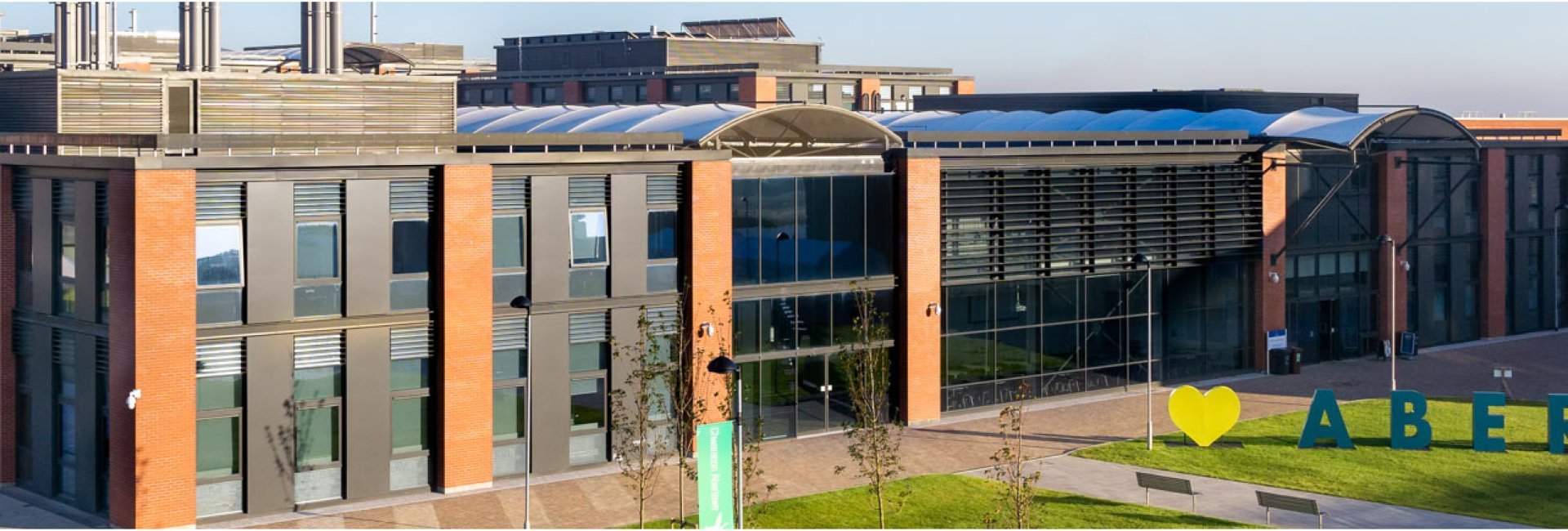
Undergraduate On-Campus Open Day at Swansea University - Singleton Park Campus and Bay Campus - 28 March 2026
28 Mar 2026, 08:30
Swansea

If you’re interested in Biochemistry, how it links to the study of diseases, the development of pharmaceutics and the complex relationship between these and our environment, but don’t have the required entry qualifications to join our BSc programme or are a mature student returning to education, our BSc with a Foundation Year is the right course for you.
The foundation year of this four-year course will introduce you to the key concepts and knowledge you need to progress to the BSc in Medical Biochemistry. Following successful completion of the Foundation Year with at least a 60% overall average, students will progress onto Year 1 of the BSc.
Our Medical Biochemistry degree will give you an in-depth understanding of the biochemical function of living organisms, from bacteria to plants, animals, and humans.
You will develop excellent project management skills and learn how to design experiments and plan work programmes.
You will benefit from access to the state-of-the-art research facilities at the Medical School, including DNA and protein analytical equipment, computer-based image analysers for molecular or cellular studies, and a powerful supercomputer facility.
This degree is a Pathway to Medicine programme. Provided you meet the minimum entry requirements for Graduate Entry Medicine. You have successfully completed this Pathway, you will be guaranteed an interview for our flagship Medicine (Graduate Entry) MBBCH course.
In Year 0, you will typically study areas including: Foundation Biological Chemistry, Metabolism and Homeostasis, The Human Cell, Foundation Skills Development, Introduction to Molecular Biology, Fundamentals of Microbiology & Disease and Organic Chemistry
In Year 1, you will typically study areas including: Genetics, Genomics and Evolution, Biochemistry, Organic and Analytical Chemistry: an Introduction for Life Sciences, Human Physiology, Skills for Medical Sciences and Cell Biology.
In Year 2, you will typically study areas including: Metabolic Regulation: Enzymes & Signal Transduction, Techniques in Molecular Biology, Clinical Biochemistry & Physiology, Advanced Metabolism, Skills for Researchers, Biostatistics, Human Immunology, Introduction to Neuroscience, Human and Medical Genetics, Microbial Molecular Genetics.
In Year 3, you will typically study areas including: Membranes and Energy Transduction, Practical Quantitative Research, Nucleic Acids: Components, Metabolism and Modification, Animal Development, Membrane Trafficking, Advanced Biostatistics, Human Immunopathology, Tissue Engineering and Regenerative Medicine, Advanced Research Topics in Biochemistry, Bioinformatics: From Sequence to Function.
You will be taught through a combination of lectures, workshops, laboratory classes and independent projects
Assessment will take place through a variet of differenr methods including examinations, coursework, laboratory practicals and presentations.
In your final year you will undertake an independent research project, potentially contributing to scientific research at the school, under the guidance of professional research scientists.
The following entry points are available for this course:
We welcome applications from international students from across the globe. Swansea University’s dedicated international team provides advice on applying, fees, funding and settling into life here at Swansea.
For applicants whose first language is not English we require a minimum IELTS score of 6.0 overall with minimum 5.5 in any component (or equivalent) further information can be found here: http://www.swansea.ac.uk/international/students/requirements/
Discover what it's like to study Medical Biochemistry with a Foundation Year at Swansea University: insights on the course, making friends, personal statement tips, uni prep, and recommended books, podcasts, and videos.

If you don't think you meet our standard entry requirements please contact us on study@swansea.ac.uk to discuss entry onto the Foundation Year.
English Language Requirements at Swansea University https://www.swansea.ac.uk/admissions/english-language-requirements/
UK applicants who meet course requirements are guaranteed a conditional offer. We assess applications on individual merit. We consider making reduced offers, eg. to Care Leavers or students with extenuating circumstances. We encourage you to disclose any relevant circumstances.
The Advanced Skills Baccalaureate Wales is considered as equivalent to one full A-Level and students can take x2 A-levels alongside this. EPQ students predicted Grade B or above will receive a one-grade offer reduction.
This section shows the range of grades students (with UK A-Levels or Pearson BTEC Level 3 National Extended Diplomas) who received offers were previously accepted with (learn more). It is designed to support your research but does not guarantee whether you will or won't get a place. Admissions teams consider various factors, including interviews, subject requirements, and entrance tests. Check all course entry requirements for eligibility.
Students aged 17/18 who applied to this course were offered a place.
See how students with your grades have been accepted onto this course in the past.
No fee information has been provided for this course
Tuition fee status depends on a number of criteria and varies according to where in the UK you will study. For further guidance on the criteria for home or overseas tuition fees, please refer to the UKCISA website.
For the latest fee information, please check the individual course page on our website. Our full range of programmes are listed here: https://www.swansea.ac.uk/undergraduate/courses/
Further information on tuition fees can be found here: https://www.swansea.ac.uk/undergraduate/fees-and-funding/tuition-fees/
Singleton Park
Swansea
SA2 8PP
Visit our website Visit our course page
Email:postgraduatemedicine@swansea.ac.uk
Phone:01792 513400
Email:biosci-admissions@swansea.ac.uk
Phone:01792 295720