
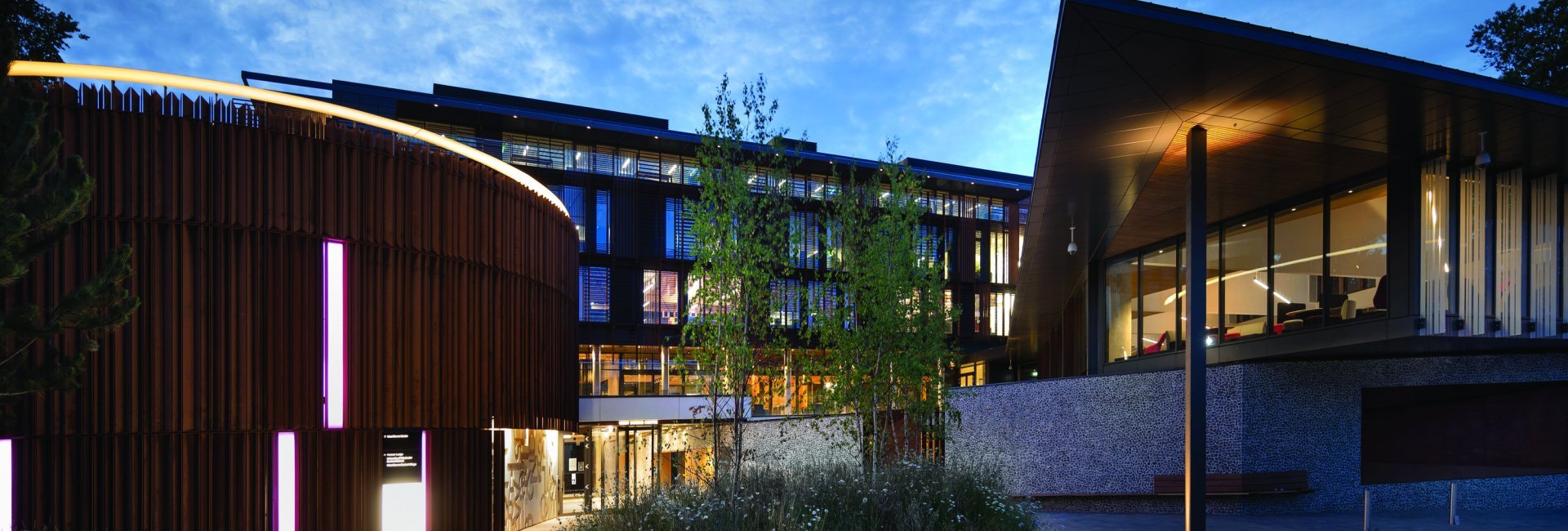
University of Winchester
Sparkford Road
Winchester
Hampshire
SO22 4NR
Course contact details
Course Enquiries and Applications
Email:course.enquiries@winchester.ac.uk
Phone:+44 (0)1962 827234
History achieved 100% for academic support as rated by final-year undergraduate students in the 2023 National Student Survey
Winchester students have secured work placements at leading historic, cultural and entrepreneurial venues such as the Mary Rose and British Museum
Learn from expert tutors and their cutting-edge research
Join a student-led history society on trips to sites of historical interest and talks by major historians
Study in a beautiful city steeped in medieval history
In Britain, we love our crumbling castles, noble cathedrals and bloody representations of the medieval age in popular culture. If you have a passion for history with a special interest in the Middle Ages, then this course is perfect for you.
On our Medieval History programme, you study the great sweep of history in Britain and around the world, from the transformation of the Roman Empire to Renaissance court politics.
Studying how people lived in the medieval world is highly instructive. The word medieval has become synonymous with lawlessness and brutality, but this was not always the case. Some populations had the vote, trade happened over long distances, and witch hunts were restricted to certain periods. Learning more about the medieval world and why it exerts such a strong hold over our imaginations can help you to better understand the contemporary world.
In Year 1, you take core modules that explore the nature of history as a discipline. You look at the changing assumptions, methods and definitions of history and explore the current concerns of historians. You also select from a range of possible optional modules, including Early Medieval Britain 400-1066 and Europe 1300-1500.
Having acquired research skills and knowledge in Year 1, your studies in Years 2 and 3 are more specialised. You take core modules that deepen your understanding of the study of history, including Reading History and Practicing History, and optional modules focused primarily on the Medieval World. You either concentrate on how to use original sources (in translated ad printed form where appropriate) or explore, through thematic approaches, social continuity and change over long periods.
In Year 3, you produce your dissertation and take core modules in Writing History, and how History Matters. Optional modules take the form of Depth Studies, using primary and secondary sources as evidence, and Comparative Studies, where more than one country and culture is examined. Depth Studies options may include Ruling England in the Second Viking Age, The Wars of the Roses 1450-1499. Comparative Studies options include The Black Death and Popular Protest in Late Medieval Europe.
Our degrees, combined with inspiring extracurricular activities, such as field trips both in the UK and abroad, offer a wide and deep experience that opens up numerous career paths. Many Winchester graduates carry on to teaching and heritage roles but our alumni can also be found in political think-tanks, the Civil Service, the BBC, automobile and insurance companies and publishing houses, to mention just a few destinations.

University of Winchester has participated in the Teaching Excellence Framework. These ratings were awarded in 2023, for four years.
See why these ratings were awarded
What does this TEF outcome mean?
This section shows the range of grades students (with UK A-Levels or Pearson BTEC Level 3 National Extended Diplomas) who received offers were previously accepted with (learn more). It is designed to support your research but does not guarantee whether you will or won't get a place. Admissions teams consider various factors, including interviews, subject requirements, and entrance tests. Check all course entry requirements for eligibility.
Students aged 17/18 who applied to this course were offered a place.
See how students with your grades have been accepted onto this course in the past.
Operated by the Office for Students
Employment after 15 months (Most common jobs)
Go onto work and study
The number of student respondents and response rates can be important in interpreting the data – it is important to note your experience may be different from theirs. This data will be based on the subject area rather than the specific course. Read more about this data on the Discover Uni website.
Choose a specific option to see funding information.
Course optionsSparkford Road
Winchester
Hampshire
SO22 4NR
Email:course.enquiries@winchester.ac.uk
Phone:+44 (0)1962 827234