Skip navigation
You are viewing our beta course page.

Music Production & Event Management

Course details
  • BA (Hons)
  • 3 Years
  • Full-time
  • 09/2026
  • Undergraduate
Course location
DBS Institute Manchester
Awarded by:
Falmouth University

Course summary

For DJs and music producers who want to combine their creative music-making with the practical skills needed to run live events and festivals. You’ll develop advanced production techniques alongside hands-on experience in live sound, event logistics, and festival staging, giving you the tools to thrive both behind the decks and behind the scenes.

You’ll dive into core areas such as music production, DJing, live event fundamentals, mixing, and live event production. The course also covers event law, logistics, and sustainable event practice, supporting your development as a versatile artist-manager. Optional modules in Years 2 and 3 enable you to specialise further in immersive audio, marketing and promotion, commercial music creation, performance technologies, and festival production.

As part of a collaborative community with musicians, vocalists, producers, and event managers across our music degrees, you’ll work on real-world projects that reflect the interconnected nature of today’s music industry. Whether you aim to build your career as a DJ-producer with strong event management skills or want to lead innovative live music experiences, this course equips you to succeed.

Why you'll love this course

  • Front of stage or backstage - Produce tracks, DJ and plan events, from small gigs to full-scale festival projects, you’ll create unforgettable music experiences from both the stage and behind the scenes.

  • Collab with artists, DJs and creatives - Join a vibrant community of performers, producers, engineers and promoters. Work together on real gigs, live briefs and cross-disciplinary projects that reflect the way the industry works.

  • Build your own path into the music industry - Whether you want to run a festival, launch a label, manage artists or improve your productions skills, choose from optional modules in festival production, marketing, immersive audio and more.

Year 1
In your first year, you’ll build a strong foundation in music production, live event design, DJing, and mixing. You’ll explore essential tools and workflows using industry-standard software and hardware, while gaining practical experience in planning and delivering small-scale music events. Through modules focused on creative production, performance, and event logistics, you’ll begin to shape your artistic identity and develop the core skills needed to thrive in the live music industry.

Year 2
In Year 2, you’ll deepen your technical and creative skillset across music production and event delivery. Core modules focus on professional practice, event law and logistics, and advanced production. You’ll also begin to tailor your direction through optional modules in immersive audio, hardware production, commercial music creation, integrative performance technologies, and marketing. This year supports greater independence, encouraging you to apply your learning to real-world projects and interdisciplinary collaborations.

Year 3
Your final year is focused on professional readiness, innovation, and self-directed work. You’ll complete two major projects: one that explores bold new ideas in music production or event design, and another that builds a professional portfolio aligned with your career goals. Optional modules allow you to explore areas such as leadership, collaborative practice, or music education. You can choose to take a research-led module in Sound Cultures, developing critical thinking and contextual insight, or focus on hands-on event planning through a practical module in festival production. Both pathways support your growth as a confident, adaptable, and industry-aware creative professional.

Modules

Year 1 - Core Modules

  • Industry Foundations
  • Music Production
  • Live Event Fundamentals
  • Mixing
  • Live Event Production
  • DJing & Live Performance

Year 2 - Core Modules

  • Industry Practice
  • Event Law & Logistics
  • Creative Research Practice
  • Sustainable Event Practice

Year 2 - Option Modules

  • Advanced Music Production
  • Hardware Production
  • Composition & Arrangement
  • Integrative Performance Technologies
  • Commercial Music Creation
  • Marketing & Promotion
  • Immersive Audio

Year 3 - Core Modules

  • Innovation: Exploration
  • Industry Portfolio Development
  • Innovation: Realisation
  • Industry Portfolio Delivery

Year 3 - Option Modules

  • Music Education & Wellbeing Practice
  • Signature System Design
  • Management & Leadership in the Music Industry
  • Collaborative Creative Practice
  • Sound Cultures
  • Festival Production: Sound, Staging and Technical Design

Please note. Option modules are subject to availability and may change, depending on factors such as demand, staffing and timetabling. As part of our process of continuous improvement, we routinely review course content to ensure that all our students benefit from a high-quality and rewarding academic experience. As such, there may be some changes made to your course which are not immediately reflected in the content displayed on our website. Any students affected will be informed of any changes made directly.

Assessment method

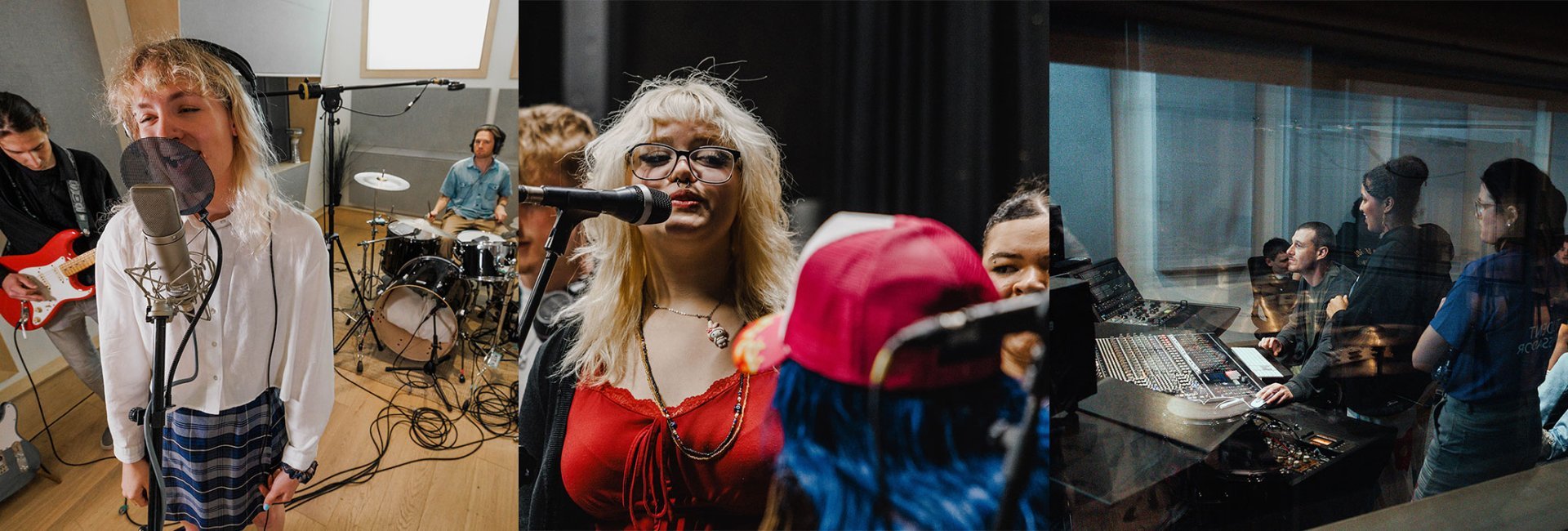
Learning is hands-on, collaborative, and grounded in real-world creative practice. You’ll work in professional studios, event spaces, and production labs using industry-standard tools for music production, DJing, and live event delivery.

Your learning is shaped through workshops, seminars, collaborative briefs, and live projects. These experiences build your confidence across event planning, sound production, creative direction, and team-based delivery.

Assessment methods:

  • Assessments are 100% coursework
  • Portfolio development of live performance, creative, practical and/or technical work.‍
    ‍- Written assignments.
  • Presentations.

How to apply

Apply by
14 January

This is the deadline for applications to be completed and sent for this course. If the university or college still has places available you can apply after this date, but your application is not guaranteed to be considered.

Application codes

Course code:
W478
Institution code:
D16
Campus name:
DBS Institute Manchester
Campus Code:
J

Points of entry

The following entry points are available for this course:

  • Year 1

International applicants

We regret that this course is not available to international applicants who would require a Student Visa. At this time, we are currently unable to accept international students on our on-campus undergraduate degree programmes. Students who hold settled or pre-settled status may qualify, more detail can be found on our website.

Open days

Entry requirements

Qualification requirements

UCAS Tariff - 96 - 112 points

As a guide our typical offer at undergraduate level is 96-112 UCAS Tariff points, primarily from Level 3 qualifications such as but not limited to A-levels, a BTEC/UAL Extended Diploma or a Foundation Diploma. ‍We welcome applications from all subject backgrounds, whether you’ve specialised in STEM, the arts or humanities. If you do not hold the minimum entry requirements but can demonstrate aptitude, enthusiasm and motivation you will be considered on an individual basis. For applicants whose first language is not English, we accept a variety of English language tests and they are listed on Falmouth University's International Entry Requirements page.

Who's this course for?

We’re looking for the scene starters, the self-taught DJs, bedroom producers, and grassroots promoters already putting on shows, making music, or organising parties. You might be running club nights, programming events, or building your profile as a live performer. You’re entrepreneurial, creatively driven, and ready to turn your passion into something bigger. Whether you want to manage artists, launch a label, start a festival, or take your productions and events to the next level, this course is for those ready to make their mark on the music industry.

Find out more about qualification requirements for this course.

Additional entry requirements

Interview
Portfolio

English language requirements

For applicants whose first language is not English, we accept a variety of English language tests. Where an offer of a place is conditional on you meeting our English language requirement, you will need to meet that condition before your offer is made unconditional and you can begin studying. We can only accept tests that have been completed within the last two years.

You can find full information of accepted qualification on our validating partner's website. https://www.falmouth.ac.uk/study/international/english-language-requirements

Contextual admissions

Universities and colleges consider more than grades when assessing applications and may make offers based on a range of criteria. Learn more about contextual offers.

‍We consider all applications on their own individual merit and potential, you will be invited to an interview/audition, where you will have the opportunity to discuss your experience and suitability for the course.

Historical entry grades data BETA

This section shows the range of grades students (with UK A-Levels or Pearson BTEC Level 3 National Extended Diplomas) who received offers were previously accepted with (learn more). It is designed to support your research but does not guarantee whether you will or won't get a place. Admissions teams consider various factors, including interviews, subject requirements, and entrance tests. Check all course entry requirements for eligibility.

Not enough data available

We are unable to show previous accepted grades for this course. This could be because the course is new, it's a postgraduate course, there isn't enough historical data, or the provider has opted out of sharing their entry grades data for this course - learn more.

Fees and funding

Tuition fees

LocationFeeYear
England£9535Year 1
Northern Ireland£9535Year 1
Scotland£9535Year 1
Wales£9535Year 1
Channel Islands£9535Year 1

Tuition fee status depends on a number of criteria and varies according to where in the UK you will study. For further guidance on the criteria for home or overseas tuition fees, please refer to the UKCISA website.

Additional fee information

No additional fees or cost information has been supplied for this course, please contact the provider directly.

Like this page