Course contact details
Main Contact - Admissions
Email:admissions@qmu.ac.uk
Phone:0131 474 0000
Fax: 0131 474 0001
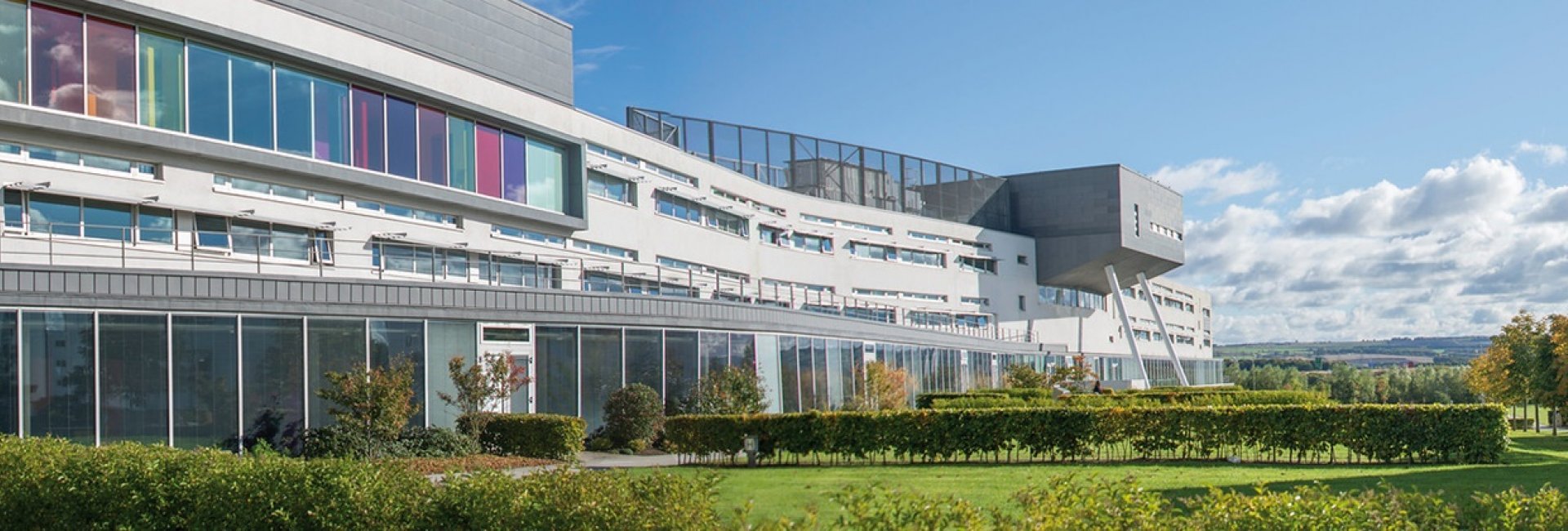
Queen Margaret University, Edinburgh
Queen Margaret University Drive
Musselburgh
Edinburgh
EH21 6UU

Diagnostic Radiographers specialise in using advanced imaging technologies to acquire and interpret medical images of the human body, supporting the diagnosis and management of a wide range of health conditions from fractures to complex diseases. This four-year integrated undergraduate Masters*/BSc (Hons) degree course will give you the theoretical understanding and practical skills you will need to build a rewarding career as a diagnostic radiographer. Practice placements are an integrated part of the course and allow you to put your theoretical knowledge into practice.
*Please note all students apply and enrol onto the master’s route and there will be an option to later switch to the Bachelor's route.
Diagnostic radiographers are healthcare professional who acquire and evaluate images of the human body to diagnose disease and trauma. They use a range of high-technology imaging equipment and techniques and work closely with a multidisciplinary team to provide a person-centred service.
Radiography is invaluable in the diagnosis and treatment of disease and trauma. As a diagnostic radiographer your skill, judgement and professionalism will be a vital part of a team’s clinical work, and affect patients’ lives, day after day. Awaiting a diagnosis can be a stressful time for patients and in this career you must be technically adept, an excellent communicator and provide person-centred care. This is why our diagnostic radiography course places high importance on clinical placements. Placements are essential to build self-confidence, practice radiographic techniques and develop clinical knowledge in a real-life hospital setting.
On this course you will:
Learn from staff with an outstanding reputation for the quality of teaching;
Gain all the knowledge and skills that you require to work as a diagnostic radiographer;
Develop your expertise through in-depth theoretical learning, clinical placements each year and the close support of our very experienced staff;
Benefit from the interprofessional working focus of this course. We aim for all our graduates to be confident in their own professional identity; and
Have the additional skills that will allow you to work as an effective multidisciplinary team member.
This course is accredited by the Society and College of Radiographers and approved by the Health & Care Professions Council (HCPC). Successful completion enables application for registration with the HCPC as a diagnostic radiographer which is essential for employment in the UK.
Year 1:
Anatomy and Physiology
Becoming an Allied Health Professional
Developing Resilience of Self and Others
Introduction to Diagnostic Practice, Diagnostic Practice 1
Finding your Academic Voice
Year 2:
Health Coaching Conversations
Developing a Spirit of Enquiry
Cross Sectional Imaging Science
Diagnostic Practice 2
Diagnostic Imaging Placement A
Year 3:
Active Citizenship
Health Literacy
Specialist Imaging and Advancing Diagnostic Practice
Theoretical and Clinical Approaches to Multidisciplinary Team Working
Understanding and Appraising the Evidence for Practice
Diagnostic Imaging Placement B
Year 4:
Applying Skills of Critical Enquiry
Professional Development for Health Practice
Leadership and Enterprise in Healthcare
Preliminary Clinical Evaluation
Diagnostic Imaging Placement C
These modules are correct at the time of posting but may differ to those offered in 2027. Please check on our course webpage for any updates.
Teaching, learning and assessment: You will be taught in lectures, seminars, tutorials, practical workshops. There will be a mix of classroom and online learning. Outwith timetabled sessions you will be expected to continue learning through self-study. You will be assessed by a variety of assessment methods (eg written and practical exams, written assignments, presentations and viva voce) at the end of each module. Placements: Placements are invaluable in consolidating theoretical study into practical expertise by working directly with patients and qualified staff. You will complete practice placements in each year. You will attend a variety of placements within the NHS at various locations across Scotland. QMU manages the sourcing and allocation of placements for each student. Placements take place across Scotland. It is therefore likely that students will have to relocate for at least some of their practice-based learning unless they have individual requirements (eg specific health needs or school age children) that mean they must remain in a specific location.
You must be 18 years old by 1st February 2028 to undertake the first year placement when starting September 2027.
Professionally accredited courses provide industry-wide recognition of the quality of your qualification.
The following entry points are available for this course:
One science (from Biology, Chemistry, Physics) at grade C or above at A Level is required.
Plus English, Maths and a science (from (Biology, Chemistry, Physics) at grade C or above at GCSE are also required.
With B in graded unit
HNC Healthcare Practice
HNC Applied Science
One science (Biology, Chemistry, Physics) at grade C or above at Higher is required.
Plus English, Maths and a science (from Biology, Chemistry, Physics) at grade C or above at Nat 5 are also required.
We can accept National 5 Application of Maths.
Assessed on a case by case basis
One Higher science subject required and lower science subject required (from Biology, Chemistry, Physics)
Also English and Maths are required.
Applied Science preferred
Assessed on a case by case basis only.
GCSE Maths, English and one science (from Biology, Chemistry and Physics) are also required.
One Higher science subject required (from Biology, Chemistry, Physics)
Also, English and Maths at H5/04 are also required.
One science (Biology, Chemistry, Physics) at grade C or above at Higher is required.
Plus English, Maths and a science (from Biology, Chemistry, Physics) at grade C or above at Nat 5 are also required.
We can accept National 5 Application of Maths.
IELTS of 6.0 with no element lower than 6.0.
This section shows the range of grades that students who received offers were previously accepted on to this course with (learn more).
It is designed to support your research but does not guarantee whether you will or won't get a place.
Admissions teams consider various factors, including interviews, subject requirements, and entrance tests. Check all course entry requirements for eligibility.
We are unable to show previous accepted grades for this course. This could be because the course is new, it's a postgraduate course, there isn't enough historical data, or the provider has opted out of sharing their entry grades data for this course - learn more.
| Location | Fee | Year |
|---|---|---|
| Scotland | £1820 | |
| England, Wales, Northern Ireland & Republic of Ireland | £10050 | |
| International | £17325 |
Tuition fee status depends on a number of criteria and varies according to where in the UK you will study. For further guidance on the criteria for home or overseas tuition fees, please refer to the UKCISA website.
No additional fees or cost information has been supplied for this course, please contact the provider directly.
Email:admissions@qmu.ac.uk
Phone:0131 474 0000
Fax: 0131 474 0001
Queen Margaret University Drive
Musselburgh
Edinburgh
EH21 6UU
At Queen Margaret University, Edinburgh