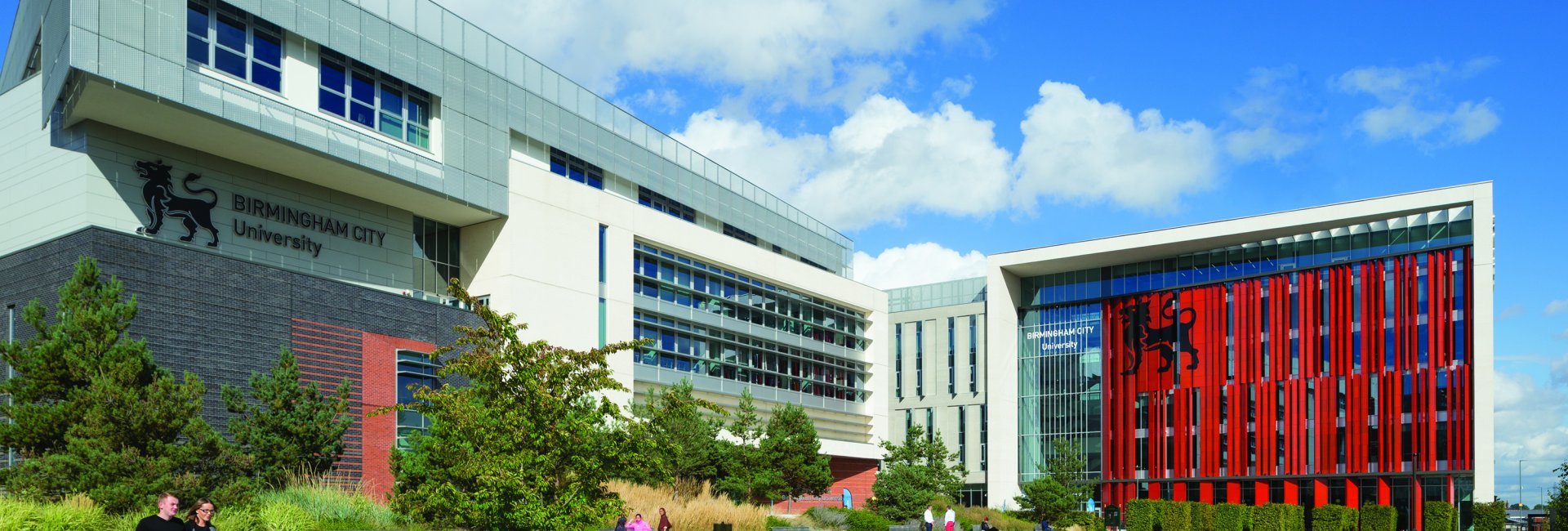
Birmingham City University Undergraduate Open Day, Friday 26 June 2026
26 Jun 2026, 08:00
Birmingham

Do you love to innovate, design and solve problems? Our BEng (Hons) Mechanical Engineering with a Foundation Year degree, with applied Automotive and applied Manufacturing pathways, will enable you to apply your passion and skills to become an engineer of the future.
Our approach to Engineering is unique. You will not have traditional lectures or be assessed by exams, instead you will learn through practical-based tasks that respond to real-life engineering problems across industries including automotive and transport, manufacturing, technology, energy and construction. This course has been carefully designed in collaboration with industry to ensure that you graduate ready for employment, with core technical skills and knowledge as well as employability skills such as communication, leadership and collaboration.
The foundation year
This foundation year is a preparatory year designed for students who are passionate about engineering but may not yet meet the entry requirements for our degree programmes. Over the course of a year, you’ll build a solid grounding in key subjects such as mathematics, engineering principles, and problem-solving, while developing practical skills through hands-on projects and lab work. The foundation year will provide you with a smooth transition to progress on to one of our engineering degrees and set you up for a successful educational journey.
The second year is a common year to provide you with a solid understanding of what engineering is. You will also learn about the different types of engineering to enable you to choose a suitable pathway to continue to after your first year. You will have the option to specialise in the following pathways after your second year of study:
Automotive Engineering
If you choose this pathway, you will explore vehicle dynamics, propulsion technologies, and sustainable mobility to address the evolving needs of the transport sector. This pathway is ideal for those wishing to pursue a career in the automotive or transportation industries in jobs such as Powertrain Engineer, Motorsport Engineer and Crash Safety Engineer.
Manufacturing Engineering
This pathway focuses on improving processes and ensuring products maintain high standards. You will learn about advanced manufacturing processes, automation, and Industry 4.0, equipping graduates to lead in modern production environments in sectors like Automation & Robotics Engineering, Quality & Plant Control Engineering, and Supply Chain & Logistics Engineering.
Mechanical Engineering
This pathway continues on the Mechanical Engineering degree through to your final year. This route focuses on core engineering principles, materials science, and thermofluid systems, to prepare you for diverse roles in mechanical system design and development in jobs such as Project Engineer, Energy Engineer, Design Engineer and Systems Engineer.
This is the equal consideration deadline. You can still apply after this date, but your application may not receive guaranteed consideration.

Birmingham City University has participated in the Teaching Excellence Framework. These ratings were awarded in 2023, for four years.
See why these ratings were awarded
What does this TEF outcome mean?
The following entry points are available for this course:
A Level: 80 UCAS tariff points / CDD (or equivalent). AS Level: Must be in a different subject to A Levels. A maximum of four subjects will be considered
80 UCAS tariff points. Diploma accepted with one A Level or equivalent level 3 qualifications. Extended Certificate accepted with two A Levels or equivalent level 3 qualifications
Pass with 60 credits, 45 credits at level 3
80 UCAS tariff points from three Advanced Highers (DDD) or two Advanced Highers (DD) plus two Highers (DD)
80 UCAS tariff points. Diploma accepted with one A Level or equivalent level 3 qualifications. Extended Certificate accepted with two A Levels or equivalent level 3 qualifications
80 UCAS tariff points. Diploma accepted with one A Level or equivalent level 3 qualifications. Extended Certificate accepted with two A Levels or equivalent level 3 qualifications
80 UCAS tariff points from three Advanced Highers (DDD) or two Advanced Highers (DD) plus two Highers (DD)
Obtain a minimum of 24 points overall. For students who do not already hold a GCSE in Mathematics at Grade C/4 or above, Grade 5 in Maths (Standard level) from the IB Diploma will be accepted
Minimum of 80 UCAS tariff points, achieved in five Higher level subjects
This course does not require evidence of GCSE qualifications. Please see A Level, BTEC and other Level 3 requirements.
Pass overall (C or above on the core). All subjects considered
Welsh Baccalaureate: 80 UCAS tariff points. Considered with two A Levels or equivalent level 3 qualifications
OCR Cambridge Technical qualifications: 80 UCAS tariff points
NCFE CACHE Level 3 qualifications: 80 UCAS tariff points
WJEC Level 3 qualifications: 80 UCAS tariff points. Considered with two A Levels or equivalent level 3 qualification(s)
| Test | Grade | Additional details |
|---|---|---|
| IELTS (Academic) | 6 | overall with no less than 5.5 in any level |
This section shows the range of grades that students who received offers were previously accepted on to this course with (learn more).
It is designed to support your research but does not guarantee whether you will or won't get a place.
Admissions teams consider various factors, including interviews, subject requirements, and entrance tests. Check all course entry requirements for eligibility.
We are unable to show previous accepted grades for this course. This could be because the course is new, it's a postgraduate course, there isn't enough historical data, or the provider has opted out of sharing their entry grades data for this course - learn more.
| Location | Fee | Year |
|---|
Tuition fee status depends on a number of criteria and varies according to where in the UK you will study. For further guidance on the criteria for home or overseas tuition fees, please refer to the UKCISA website.
*The Government is proposing to increase the cap on full-time regulated tuition fees to £9,790 for 2026/27 and the University is planning on increasing fees to that maximum level once legislation is enacted. Part-time fees are charged pro-rata, where applicable.
Email:courseenquiries@bcu.ac.uk
Phone:0121 331 6295
Curzon Building
4 Cardigan Street
Birmingham
B4 7BD
At Birmingham City University