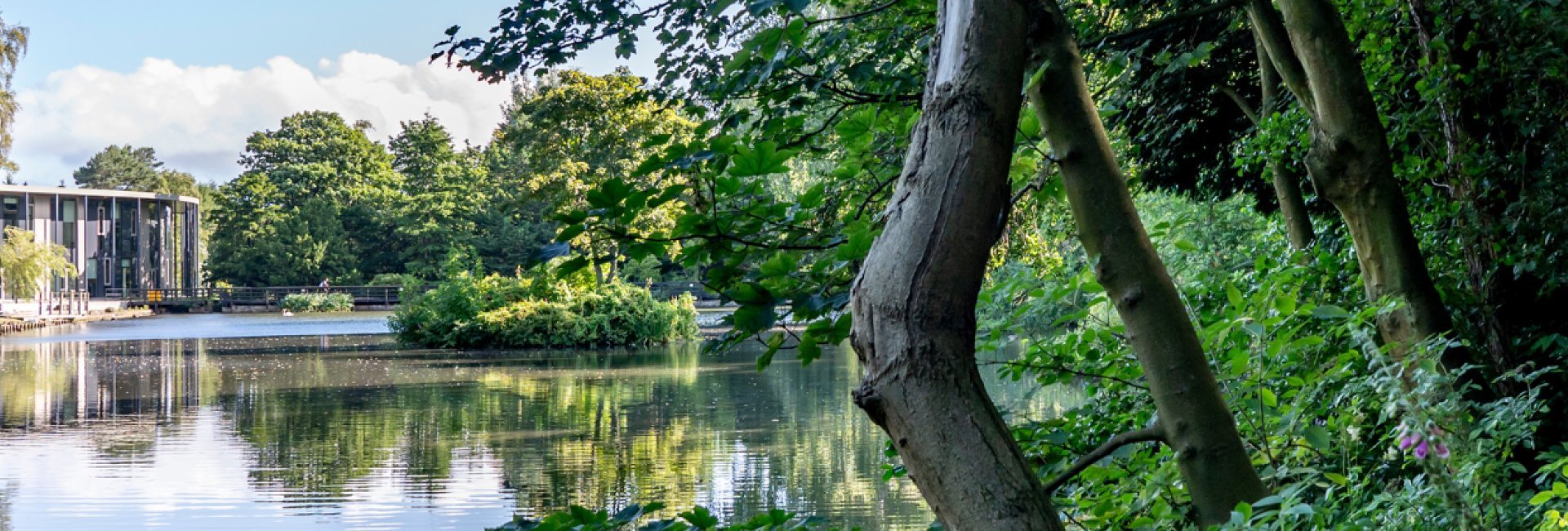
Heriot-Watt University - Edinburgh Open Day (September)
26 Sept 2026, 09:00
Edinburgh

The MEng Electrical and Electronic Engineering is a 5-year programme, which shares a common structure with the BEng degree for the first 3 years. Students study a broad-based range of topics from low current electronics to high power systems. At the end of year 3, candidates are selected to progress to the MEng course for a further 2 years of study.
During the 4th and 5th years, technical studies are advanced to a Masters level and the syllabus is greatly extended in the area of engineering management. A six-month industrial placement takes place over summer, after 4th year, and runs until the end of the first semester of the final year.
Year 1
Circuit Theory, Digital Design, Mathematics, Computer Programming and Electronic Design form the core subjects. In addition, students choose an elective option from a list that includes Mechanics and Physics.
Year 2
Further study of Electronic Design, Digital Design, Embedded Programming and Mathematics is complemented by introductions to Signals and Electromechanical Systems supported by appropriate lab and project work.
Year 3
Emphasis turns to design synthesis. Subjects include Energy Systems, Analogue Electronics, Electromagnetics, Physical Electronics and Communications. A quarter of the year is spent working on a large team-based project, incorporating Digital and Software Design, Mechanics and Management.
Year 4
Students work on a group project during both semesters and select taught topics from a list that includes Embedded Systems, Sustainable Energy and Power Systems, Communications, Image Processing, RF Communications, Analogue Electronics and Microwave Techniques.
Year 5
The summer and the first semester form a six-month industrial placement. During the second semester students choose from a range of advanced Electrical and Electronic Engineering topics.
Eligible applicants may be able to commence their studies from year 2 of the 5 year program. Please visit our website for further information.
Graduate destinations
Our Electrical and Electronic Engineering graduates are highly employable and have progressed to careers in a wide range of industries, working for organisations such as Bosch, Rolls Royce, Leonardo, Mott MacDonald, BP and Texas Instruments. Explore our alumni profiles to find out more about electronic engineering graduate destinations.
Accreditation
Accredited by the Institution of Engineering and Technology on behalf of the Engineering Council for the purposes of fully meeting the academic requirement for registration as a Chartered Engineer.
The following entry points are available for this course:
including Maths and Physics/Electronics for entry to Year 1.
For entry to Year 2: ABB including Physics and Maths
We will consider T Levels as suitable for entry to our degree programmes, however, certain subject requirements may be required for entry to specific programmes. Where this is not evident as part of the T Level studies, we may ask for additional qualifications.
HNC in a relevant subject (including sufficient Mathematics & Physics) with A in graded unit including SQA Engineering Maths 1 and one of Engineering Maths 2 or 3 for entry to Year 1.
HND in relevant subject (including sufficient Maths and Physics) with BB in graded units including SQA Engineering Maths 1 and one of Engineering Maths 2 or 3 for entry to Year 1.
For Year 2 entry: HND in a relevant subject (including sufficient Maths and Physics) with AA in graded units.
to include Maths and one of Physics / Technological Studies / Engineering Science. Physics is preferred.
It is also a requirement of every applicant to have English and Mathematics at a minimum of National 5 Grade C or GCSE Grade C or 4 (or equivalent)
in Mathematics and Physics plus AAAB at Higher for entry to Year 2.
with Mathematics and Physics at Higher Level 5 for entry to Year 1.
For entry to Year 2: 34 points with Mathematics and Physics at Higher Level 6.
in a relevant subject (including sufficient Mathematics and Physics) for entry to Year 1.
For entry to Year 2: DDD in a relevant subject (including sufficient Mathematics and Physics).
We accept Foundation Apprenticeships in combination with other qualifications such as SQA Highers and Advanced Highers.
We accept a wide range of other qualifications from the UK, Europe and International countries. Please contact the Undergraduate Admissions Office for further information on the entry requirements for these.
including Maths and Physics/Electronics for entry to Year 1.
For entry to Year 2: ABB including Physics and Maths
HNC in a relevant subject (including sufficient Mathematics & Physics) with A in graded unit including SQA Engineering Maths 1 and one of Engineering Maths 2 or 3 for entry to Year 1.
to include Maths and one of Physics / Technological Studies / Engineering Science. Physics is preferred.
in a relevant subject (including sufficient Mathematics and Physics) for entry to Year 1.
For entry to Year 2: DDD in a relevant subject (including sufficient Mathematics and Physics).
Applicants whose native language is not English and who have not previously been educated in English must provide evidence of their English language ability to ensure they can cope with the demands of a Heriot-Watt programme taught and assessed in English. Further information about the English language tests, school-level qualifications and Heriot-Watt English language programmes currently accepted as proof of English proficiency can be found on our website.https://www.hw.ac.uk/study/how-to-apply/entry-requirements/english-language-requirements
We realise that not everyone has an equal opportunity to evidence their full potential from school or college qualifications alone, so we use all the information you provide on your application form to assess both your current achievements and potential to thrive at university. Our minimum entry levels apply to MD20, POLAR 4 Q1 and care experienced students. Students from other widening access backgrounds may get an adjusted offer which is slightly lower than our standard entry requirements.
We accept a wide range of qualifications from the UK, Europe, and countries worldwide. If your qualification is not listed on https://www.hw.ac.uk/study/international-students/study-in-the-uk/information-for-your-country, please contact the Undergraduate Admissions Office for further information about entry requirements.
Some qualifications may be suitable for direct entry to Year 2, allowing you to complete your degree in three years. If your qualifications are not suitable for direct entry to one of our undergraduate programmes, we may be able to offer you a place on one of our Foundation programmes.
As an international student, you are likely to require a Student Visa to study in the UK. Please see the FAQ section on our website at https://www.hw.ac.uk/study/how-to-apply/international-students for further information about the Confirmation of Acceptance for Studies (CAS) process required for a Student Visa application. https://www.hw.ac.uk/study/international-students/study-in-the-uk/information-for-your-country
This section shows the range of grades that students who received offers were previously accepted on to this course with (learn more).
It is designed to support your research but does not guarantee whether you will or won't get a place.
Admissions teams consider various factors, including interviews, subject requirements, and entrance tests. Check all course entry requirements for eligibility.
Historical entry grades data is not currently available for Heriot-Watt University - we are working with them to try and make it available soon - learn more.
| Location | Fee | Year |
|---|---|---|
| England, Wales, Northern Ireland, Channel Islands & Republic of Ireland | £9790 | |
| Scotland | £1820 | |
| EU & International | £25808 |
Tuition fee status depends on a number of criteria and varies according to where in the UK you will study. For further guidance on the criteria for home or overseas tuition fees, please refer to the UKCISA website.
Subject to confirmation
Email:studywithus@hw.ac.uk
Phone:0131 451 3376
Riccarton
Edinburgh
EH14 4AS
At Heriot-Watt University