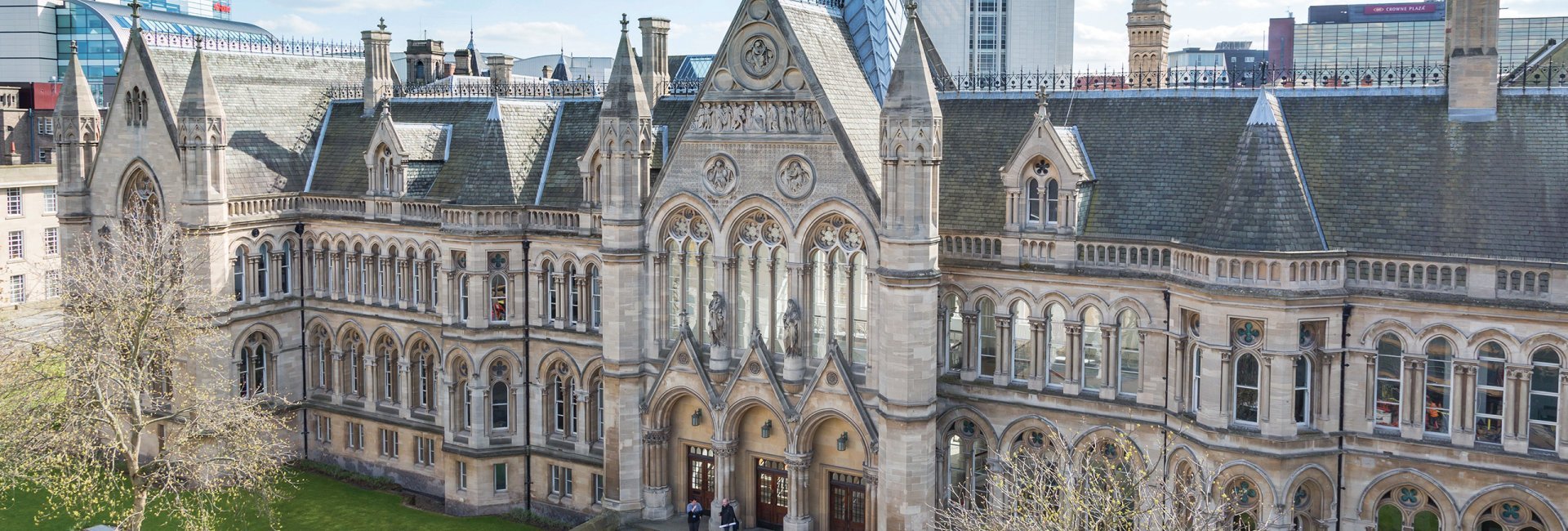
Nottingham Trent University - 7 March Open Day
7 Mar 2026, 09:00
Nottingham
Communication is key to understanding the contemporary world and our place within it. To understand language is to empower ourselves for the challenges of the future.
In the 21st century, as professional work becomes ever more specialised and shaped by the demands of the digital world, there will be a corresponding need for the next generation of graduates to become highly skilled communicators with a capacity to speak and write effectively, eloquently, with cultural sensitivity and technological sophistication – across a range of different media.
The Communications and Linguistics degree will address these issues explicitly by developing your knowledge and understanding of the way in which linguistic processes and practices shape and continue to shape the fundamental contours of culture and society. You will study the syntactic, semantic and pragmatic dimensions of language, explore the globality of spoken and written English, as well as develop an understanding of the psychological, sociological, and political dimensions of contemporary communications processes and practices.
With these in focus, the course will offer an interdisciplinary approach to language and communication in order to analyse and explain the complex interrelations between social, political, institutional and technological dimensions of language in its multivariate forms, with a specific emphasis upon the way that an understanding of these is key to unlocking the employability potential of undergraduates in the Humanities for future, high skilled, professional roles.
Why study Communications and Linguistics at NTU?
NTU is 7th in the UK for the number of UG students in Media, journalism and communications (HESA 2023/24).
98% of Linguistics students are positive about the teaching on their course (National Student Survey 2023).
The course is fully interdisciplinary – both subjects work together to produce a unified course and a coherent student experience. Interdisciplinary options available in both the second and the final year.
You will get the best preparation for your future career through work-like experiences that are embedded throughout the length of the course.
The course will allow you to develop the knowledge and critical skills that are valued by employers and are required to become an expert practitioner across a range of future professions.
Throughout the course, modules will cover a variety of subjects, a few examples include: Understanding the Communications Revolution, Journalism and Promotional Cultures, Language, Society and Culture, Problems of Language, Journalism and PR: Critiques and Practice, and What's New: the Future of Media Communications.
To view the full list of modules, visit the course page: https://www.ntu.ac.uk/course/arts-and-humanities/ug/ba-hons-communication-and-society-and-linguistics#what-you-will-study
We use a varied and diverse range of coursework assessments to develop your skills and support your progress. These include digital projects, reviews, case-studies, essays, presentations and reports.
Our innovative approach to assessment means that in Year One you will develop and enhance a complementary set of key skills for success in second and third year, and throughout the degree the varied assessment pattern will enable you to engage with the past and prepare for your future through an exciting array of projects
The following entry points are available for this course:
A lower offer may be made based on a range of factors, including your background (such as where you live and the school or college you attended), your experiences and individual circumstances (you may have been in care, for example). This is called a contextual offer and we get data from UCAS to make these decisions. NTU offers a student experience like no other, and this approach helps us to find students who have the potential to succeed here, but may have faced barriers that can make it more difficult to access university.
We also consider equivalent qualifications and combinations. Please contact Nottingham Trent University Admissions team for further information.
NTU makes contextual offers for this course to give everyone a fair chance to access their chosen degree.
Contextual offers are lower than our standard entry criteria or may be an unconditional offer for courses that require a portfolio. We also take individual circumstances into account when we receive results and may accept grades lower than our published criteria.
We use a range of data from UCAS to make our offers and more information on our approach is available at the link below.
This section shows the range of grades students (with UK A-Levels or Pearson BTEC Level 3 National Extended Diplomas) who received offers were previously accepted with (learn more). It is designed to support your research but does not guarantee whether you will or won't get a place. Admissions teams consider various factors, including interviews, subject requirements, and entrance tests. Check all course entry requirements for eligibility.
Students aged 17/18 who applied to this course were offered a place.
See how students with your grades have been accepted onto this course in the past.
| Location | Fee | Year |
|---|---|---|
| England | £9790 | Year 1 |
| Northern Ireland | £9790 | Year 1 |
| Scotland | £9790 | Year 1 |
| Wales | £9790 | Year 1 |
| EU | £17950 | Year 1 |
| International | £17950 | Year 1 |
Tuition fee status depends on a number of criteria and varies according to where in the UK you will study. For further guidance on the criteria for home or overseas tuition fees, please refer to the UKCISA website.
The tuition fees above are subject to parliamentary procedure. They haven't been confirmed yet, but we expect them to be finalised by May 2026. The level of tuition fees for the second and subsequent years of your undergraduate course may increase in line with inflation and as specified by the UK government.
50 Shakespeare Street
Nottingham
NG1 4FQ
Visit our website Visit our course page
Phone:+44(0)115 848 4200
Phone:+44 (0) 115 848 4200