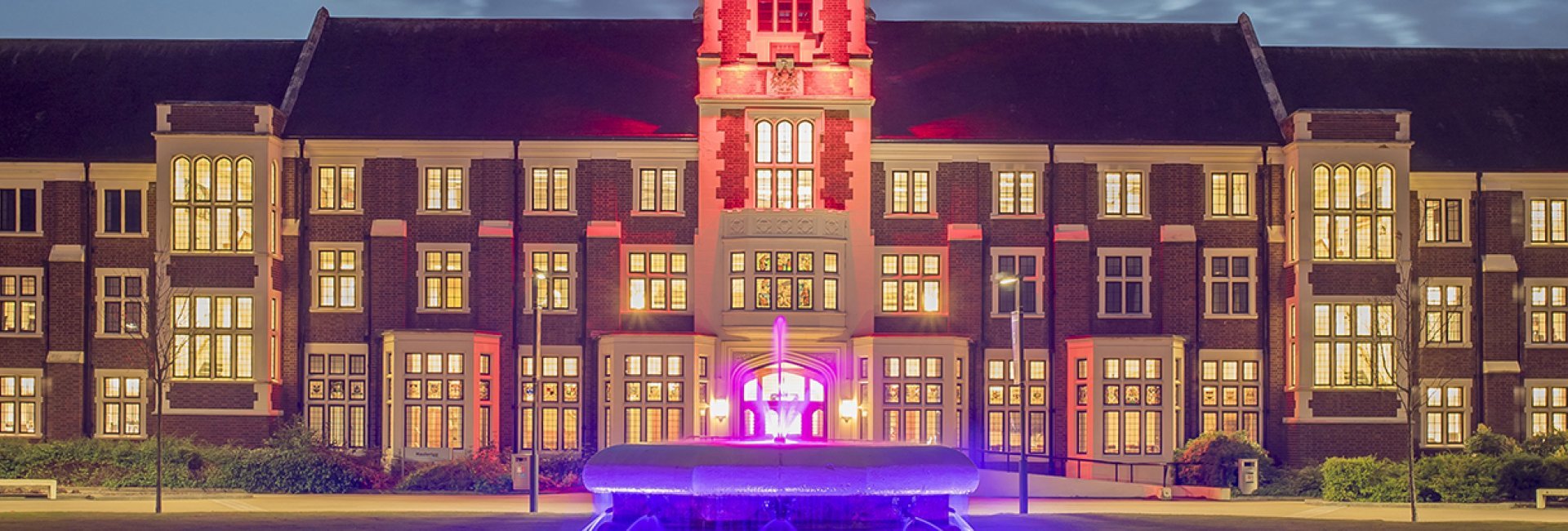
Loughborough University - open day event
19 Jun 2026, 08:00
Loughborough

This joint honours programme brings English and History together in exciting and meaningful ways, letting you explore how the two subjects complement and deepen each other.
This joint honours programme brings English and History together in exciting and meaningful ways, letting you explore how the two subjects complement and deepen each other. Our academics specialise in the nineteenth, twentieth and twenty‑first centuries, however you will also have the chance to study earlier periods — including early modern literature and Shakespeare — as well as modules in American studies, creative writing and the visual arts. The programme is designed to feed your enthusiasm and intellectual curiosity across literary, historical, and cultural studies.
Our English and History degree gives you real freedom to shape your studies around your interests, choosing from a broad range of topics across both disciplines to build a course that inspires and challenges you. You’ll learn in a stimulating environment supported by passionate academic staff who are committed to helping you succeed. Along the way, you’ll develop valuable transferable skills — from critical thinking to communication — that will support your future career, whatever path you choose.
In Year 1, you will have the opportunity to study forms of narrative, writing through history, and the Atlantic world since the 15th century, with a wide range of History, English, and creative writing options.
In Year 2, you will study the History of Britain and the British Empire, and research design, with a choice of a wide range of optional modules including Renaissance writings, Victorian literature, writing from the Modernist era, modern China, and African states and nations 1850-1990, Literature from 1990, 20th-century America, and weird fiction.
You then have the option to complete a professional placement and/or overseas study.
Final year students will complete a compulsory dissertation in either English or History, but which may combine elements of both. You will also have the opportunity to choose from a wide range of optional modules, such as modern poetry, utopian and dystopian writing, Shakespeare, Empire, War and Popular Culture 1880-1914, the Soviet security state since 1917, and feminist philosophy.
The critical thinking and presentation skills you will learn while studying with us, as well as the ability to communicate effectively, will provide you with the confidence and transferrable skills prized by a wide range of industries from archiving to web editing, publishing to policymaking. Many recent graduates now have marketing roles with publishers, as well as companies such as Curve Theatre and the Royal Opera House.
Graduates on our existing single honours programmes BA English Literature and BA History have progressed to roles in advertising, archiving, the civil service, creative arts, journalism, human resources, marketing, product development, management, the media (both TV and radio), public relations, publishing, research, teaching, and law.
Methods of assessment include essays, reflective commentaries, journals, online in-class tests, annotated bibliographies, in-class presentations, research projects, workbook/log books, group work, peer assessments, and the final dissertation.
Exposure to such a wide range of written and oral methods of communication builds a broad set of skills and professional competencies for maximum employability. This course is assessed entirely through coursework, as opposed to exams.
This is the equal consideration deadline. You can still apply after this date, but your application may not receive guaranteed consideration.

Loughborough University has participated in the Teaching Excellence Framework. These ratings were awarded in 2023, for four years.
See why these ratings were awarded
What does this TEF outcome mean?
The following entry points are available for this course:
ABB including one of the following subjects: English (Literature, Language, or both), any Language subject, Geography, History, Classical Civilisation, Law, Philosophy, Politics, Psychology, Religious Studies or Sociology.
BTEC Level 3 National Extended Diploma DDM plus an A level grade B in a required subject.
Preferred BTEC: Performing Arts, Art & Design, Digital Film and Video Production, Business IT, Applied Science, Sport, Sport and Exercise Science, Health & Social Care.
32 (6,5,5 HL) to include one of the following subjects at Higher Level: English (Literature, Language or both), any Language subject, Geography, History, Philosophy, Global Politics, Psychology, World Religions, Social and Cultural Anthropology.
Pass Access with 60 Credits overall including 45 at Level 3. To include 23 Level 3 Distinction grades
This qualification is accepted in combination with other qualifications. For details please contact Loughborough University
We recognise the benefit of the Extended Project in developing independent research and critical thinking skills. We would consider this as evidence of motivation to study a specific subject in more depth, and while we do not generally include it as part of our offer conditions, it may be used to further consider an application upon receipt of final examination results. www.lboro.ac.uk/study/undergraduate/apply/entry-requirements/
We accept a wide range of international qualifications for entry as outlined on our website – please view the individual course typical offers on our website and choose Ireland in the Country/region drop-down field for more information.
BTEC Level 3 National Diploma: DD plus one A Level in a required subject at Grade B.
Preferred BTEC: Performing Arts, Art & Design, Digital Film and Video Production, Business IT, Applied Science, Sport, Sport and Exercise Science, Health & Social Care.
BTEC Level 3 National Extended Certificate: D plus two A levels at Grades BB including one required subject.
Preferred BTEC: Performing Arts, Art & Design, Digital Film and Video Production, Business IT, Applied Science, Sport, Sport and Exercise Science, Health & Social Care.
GCSE English Language grade 4/C
AB including English, plus Highers at majority B grades.
Applicants taking the Welsh Baccalaureate Advanced Diploma will be asked to achieve the A level requirements for their course as part of their qualification. The Skills Challenge Certificate will be accepted alongside two A levels providing individual course entry and subject requirements are met. www.lboro.ac.uk/study/undergraduate/apply/entry-requirements/
Loughborough accepts a wide range of qualifications for entry as outlined on our website www.lboro.ac.uk/study/undergraduate/getting-started/applying/entrance-requirements/
This information details the general requirements and should be read in conjunction with the information given for each course.
Loughborough also accepts a wide range of international qualifications for entry as outlined on our website www.lboro.ac.uk/international/applicants/country/
Loughborough uses contextual data in the admissions process to provide insights into the context in which your academic qualifications have been achieved. This may influence the typical offers outlined in the information given for each course. www.lboro.ac.uk/study/undergraduate/getting-started/applying/contextual-data/ https://www.lboro.ac.uk/study/undergraduate/apply/entry-requirements/
We consider contextual information as part of the assessment of an application to provide us with further insight into your achievements. This may lead to reduced offers, up to two grades lower than the typical offer requirements, as well as additional consideration when your results are received. For further information about Contextual Admissions at Loughborough including our Access Loughborough Contextual Offer please visit our we
This section shows the range of grades that students who received offers were previously accepted on to this course with (learn more).
It is designed to support your research but does not guarantee whether you will or won't get a place.
Admissions teams consider various factors, including interviews, subject requirements, and entrance tests. Check all course entry requirements for eligibility.
We are unable to show previous accepted grades for this course. This could be because the course is new, it's a postgraduate course, there isn't enough historical data, or the provider has opted out of sharing their entry grades data for this course - learn more.
| Location | Fee | Year |
|---|---|---|
| EU & International | TBC | |
| England, Scotland, Wales & Northern Ireland | £10050 |
Tuition fee status depends on a number of criteria and varies according to where in the UK you will study. For further guidance on the criteria for home or overseas tuition fees, please refer to the UKCISA website.
The fees stated above are for the 2027/28 academic year; international fees are still to be approved. We will update this information as soon as it is available. Fees are reviewed annually and are likely to increase to take into account inflationary pressures.
While the cost of your tuition covers lots of things, it doesn’t cover everything. For instance this course doesn’t cover the cost of any stationery, printing, books or re-assessments which you might need.
UK tuition fees align with the applicable fee caps set by the UK government, and as such they are subject to changes made to the agreed cap in a specific year.
Email:admissions@lboro.ac.uk
Phone:01509 274 403
Loughborough
LE11 3TU
At Loughborough University