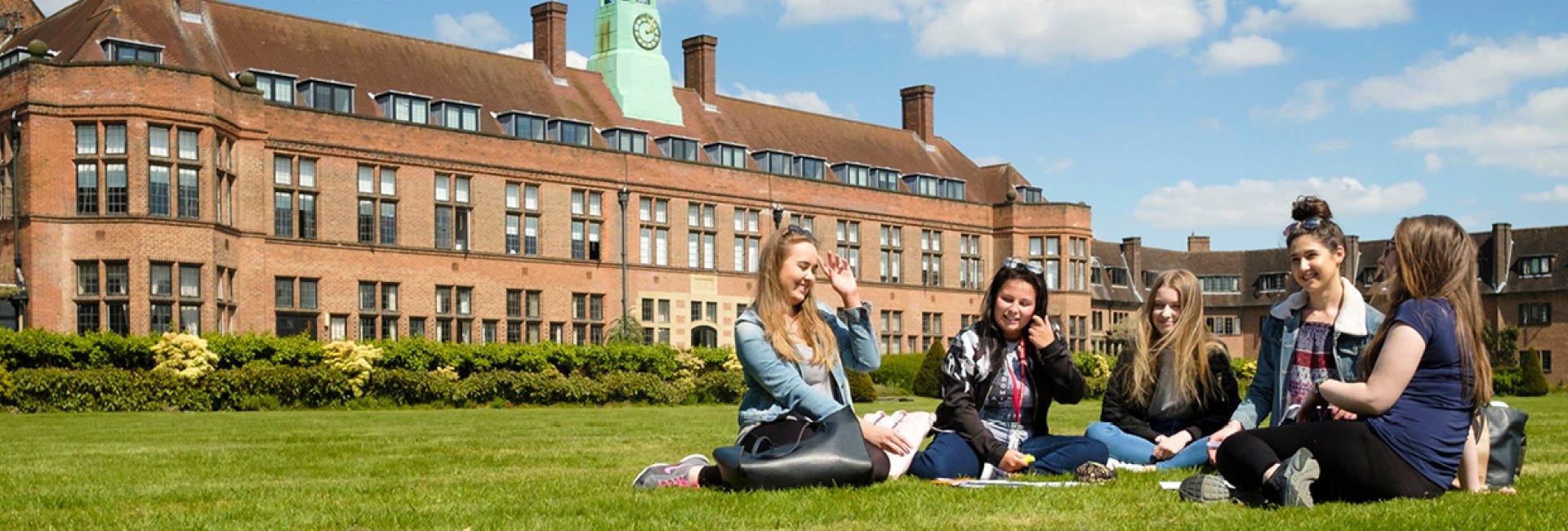
Please note that Combined Honours degrees at Liverpool Hope University are split 50/50. This means both subjects will be studied equally.
History
The study of History helps you to understand how individuals, communities and societies have lived in the past and how those past experiences have helped to shape the present world. History helps us make sense of our world and understand what may lie ahead because the future is shaped by its history in so many ways. Our History degree gives you the opportunity to study a wide-range of historical periods from the Early Modern period to more recent contemporary historical events.
By studying with us, you have the opportunity to study the Tudors; Witchcraft; the court of Charles I; the British civil wars; the British Empire; European Nationalism and Imperialism; the birth of Modern Europe; The British Empire; Gender politics; Fascism, Nazism and the Holocaust; British-Irish relations and the Northern Ireland conflict; the role of food in human conflict; the Spanish Civil War; and Museum and Heritage studies.
You will engage with a wide variety of historical evidence throughout the whole of your degree programme. History at Liverpool Hope is part of the supportive and friendly environment within the subject areas of History, Politics and International Relations. You will benefit from being taught by a team of recognised scholars, who have published widely in their fields and who are dedicated and experienced teachers.
Throughout your degree, you will be able to take advantage of the rich library, archival, museum and heritage resources available in Liverpool and further afield. Working with resources of the many Liverpool museums forms an important part of your learning experiences. The History team run a range of fieldwork activities every year in the local area and beyond, and offers the opportunity for study visits to major European cities on an annual basis.
International Relations
Every day, international issues are in the news headlines – this is your chance to become an expert on relations between states, economies, ideas and societies. In a world where global pandemics threaten our very existence, nuclear weapons remain primed for use, the world economy teeters on the brink of collapse, and delicate ecosystems are under threat, it is little wonder that our International Relations degree is proving a popular choice among students who wish to better understand the world’s most challenging problems.
International Relations is a multidisciplinary subject, which draws in contributions from politics, history, media, sociology, law, economics and religion. Global issues dominate the news headlines on a daily basis and International Relations will allow you to focus on this dimension of politics. This is an opportunity to become an expert in international issues in a historical, political and cultural context.
All our academics are conducting internationally published research. Our key strengths are in Theories of International Relations; Peace and Conflict; British and US foreign policy and EU and UN politics. Our subject deals squarely with some of the most daunting, intractable but important challenges of today.